 Eski Pano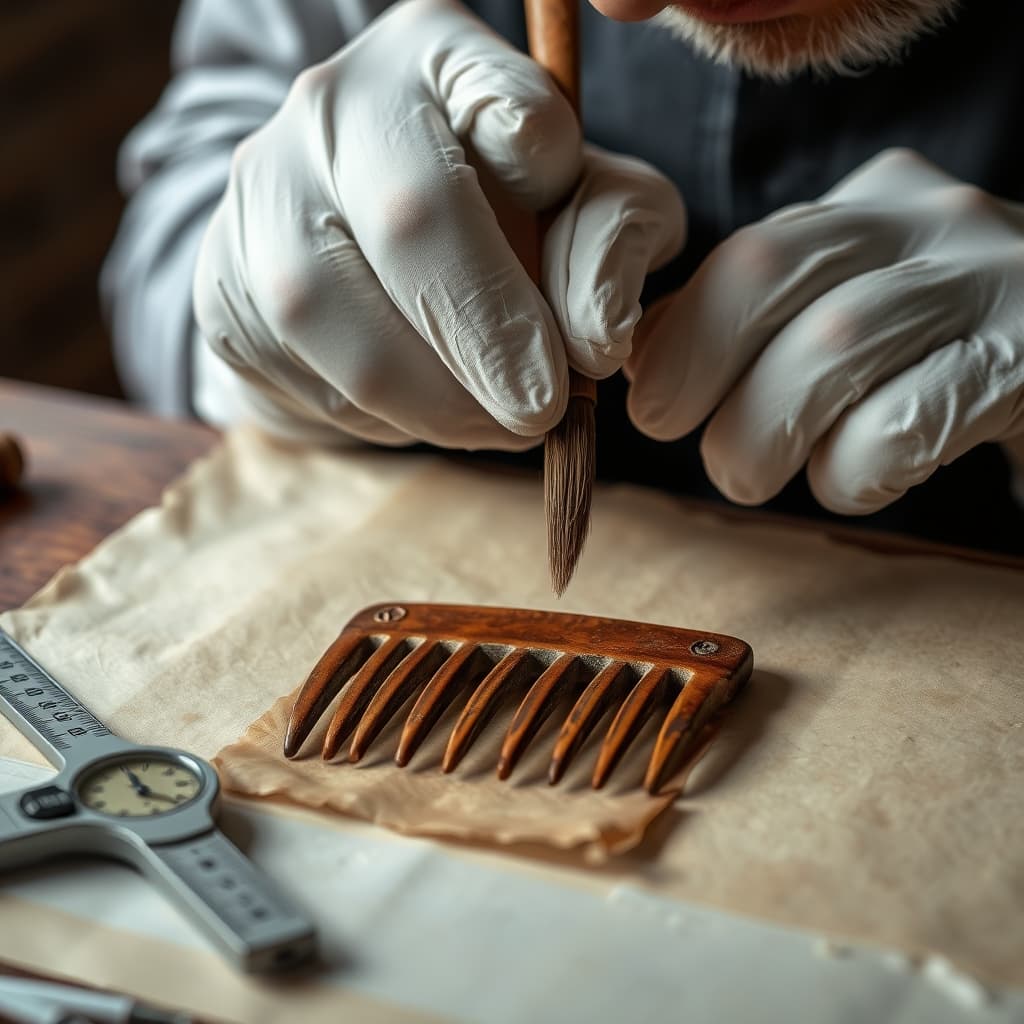
An old brown comb may be remembered as Bakelite because that name became a convenient description for many early plastics. Colour and weight, however, are not enough to identify the material. A comb might be phenolic resin, celluloid, hard rubber, casein, horn or a later plastic made to resemble an older object. The safest first entry in a catalogue is therefore descriptive: “brown moulded comb, material unconfirmed.” Certainty should follow evidence rather than family habit or an online photograph.
Begin with the story that came with the object. Record who used it, where it was kept, when it entered the household and whether its case or dressing-table set survives. Write down the source of each statement. A relative’s recollection is valuable provenance even when the date is approximate, but it should not quietly become a manufacturer’s fact. Photograph the full comb, both faces, spine, teeth, ends and any marks under neutral light with a scale.
Identification Should Not Damage the Object
Look for mould lines, stamped marks, tooth shape, surface pattern, repairs, oxidation and areas protected from light. These details can help a conservator compare manufacture and ageing. They do not make one home test conclusive. Internet advice sometimes recommends hot needles, vigorous rubbing, chemical cleaners or smelling a warmed object. Such tests can scar the comb, release irritating vapour or ignite a vulnerable material. They also destroy precisely the evidence an archive is meant to preserve.
Celluloid deserves particular caution because it can deteriorate and is highly flammable. A sharp acidic or camphor-like odour, warping, cracking, powder, sticky deposits or unusual discolouration should be recorded without prolonged handling. Isolate a suspect object from heat and other collection items and seek conservation advice. Do not seal a visibly deteriorating comb into an improvised airtight container or experiment with household chemicals.
Cleaning Starts With the Least Intervention
Before cleaning, ask whether the dirt is harmful or historically meaningful. Hair, cosmetic residue and dust may help explain use, but they can also attract pests or make handling unhygienic. Photograph the condition first. For an unidentified material, gentle dry cleaning with a soft brush, directed away from the face and onto a clean surface, is a cautious starting point. Avoid soaking, dishwashers, alcohol, acetone, polish, bleach, abrasive paste and essential oils unless a qualified specialist has identified the material and recommended a method.
A comb intended for an archive should not return to personal use merely because it looks clean. Fine cracks can trap residue, broken teeth can scratch skin and old treatments can be unknown. Do not share it for a demonstration. If the story of combing is important, use a modern prop and clearly label it as such. Gloves are not automatically safer: clean, dry hands may provide better control for a stable object, while deteriorating or contaminated material calls for professional guidance.
Support the Teeth Instead of Displaying the Shine
Long teeth and a cracked spine are vulnerable to leverage. Store the comb flat in an inert, supportive enclosure so it cannot slide or carry weight. Keep it away from radiators, direct sun, high humidity and rapid temperature changes. Do not hang it by a tooth or force it into a fitted case that has warped. A separate label should carry the catalogue number; adhesive tape, sticky labels and ink should not touch the object.
Repair is not simply a matter of choosing strong glue. An adhesive can stain, shrink, make future treatment difficult or react with an unknown plastic. Keep detached teeth or fragments in a labelled packet within the same enclosure and consult a conservator before joining them. Record any historic repair rather than removing it automatically. The repair may belong to the comb’s working life, even if it is not aesthetically neat.
Digital photographs should include ordinary wear rather than hiding it with filters. Capture colour references and keep an unedited master. Note which observations are visible, which come from family testimony and which are tentative material identifications. If a maker’s mark leads to a catalogue or advertisement, cite that source without claiming that every similar comb shares the same composition.
The value of the comb lies in more than a prestigious material name. Worn teeth, a repaired corner and a remembered place beside a mirror can document grooming, thrift and daily care. By resisting dramatic tests and cosmetic restoration, a Digital Nostalgia Archive preserves both the object and the limits of what is known. “Possibly Bakelite” is not a weak conclusion; when honestly supported, it is a durable invitation to future research.