 Eski Pano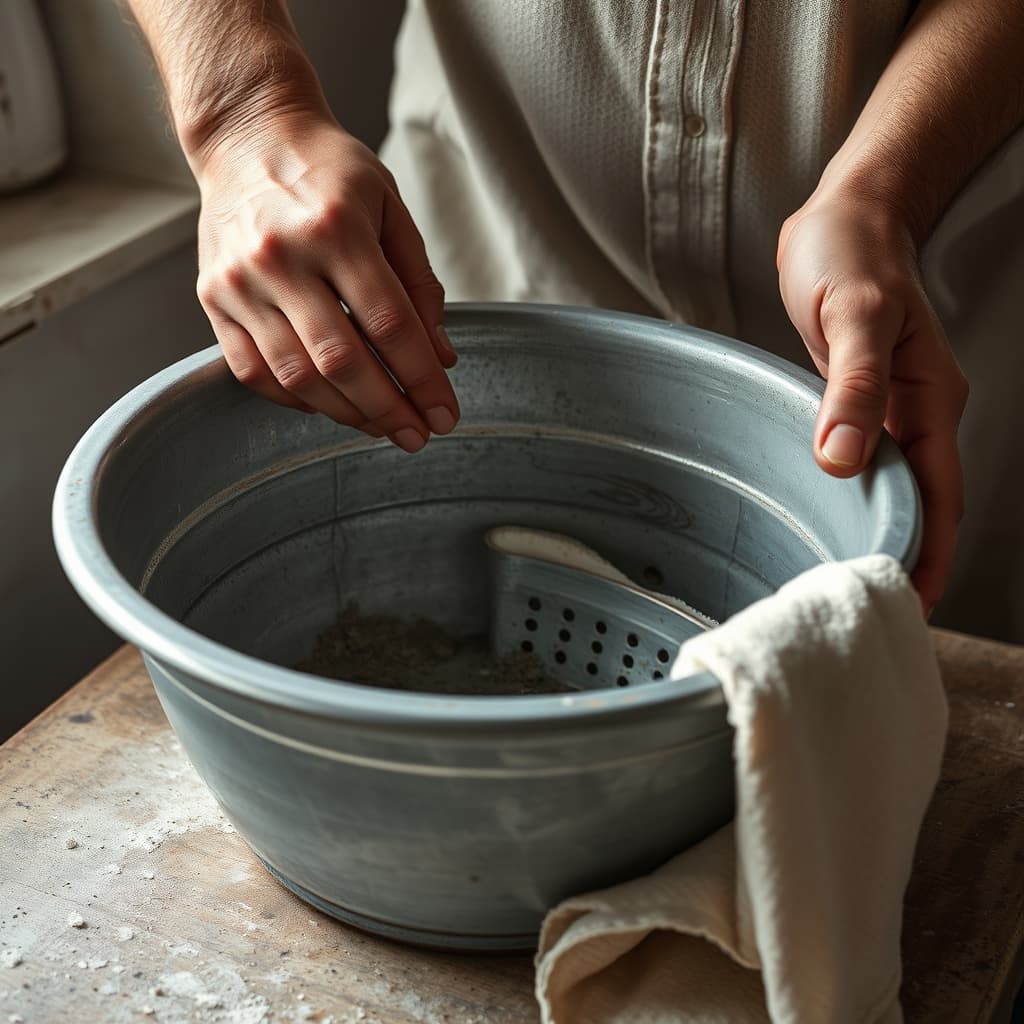
The zinc basin remembered from holiday cleaning is often described through renewed brightness. Water, cloth and repeated effort made a familiar household object look ready for an important day. For an inherited basin, however, brightness is not automatically preservation. Polishing can alter coatings, thin surfaces and remove residues that help explain how the object was made and used.
“Zinc basin” may describe zinc sheet, galvanised metal or another surface understood through household language. Visual inspection alone may not settle composition. Before choosing any treatment, record the object and seek material-specific advice, especially where corrosion, flaking, holes or old repairs are present.
Dents Map Work Better Than Shine
A flattened rim, broad dent or abrasion on the base can indicate repeated handling and contact with floors or other vessels. It cannot by itself identify the task or the person. Measurements, photographs and family testimony should be combined without turning every mark into a confident episode.
Seams and folded edges deserve attention. They show construction and may trap moisture or cleaning material. Forcing a distorted edge back into shape can crack or weaken it. The urge to make the basin symmetrical again should wait until its structure is understood.
Holiday Cleaning Used the Basin as a Tool
The basin could hold water, cloths or objects being washed, depending on the household. Its role changed during a sequence of tasks rather than a single ceremonial moment. Ask where it was placed, who filled and emptied it, and how water was carried. This recovers labour that a photograph of the polished result often hides.
The work was not necessarily shared equally. Age, gender, mobility and household hierarchy affected who knelt, lifted or cleaned. A warm family memory should leave room for fatigue and obligation. The shining surface may represent pride and unequal labour at the same time.
Cleaning and Conservation Are Different Decisions
A household cleaning method used when the basin was an everyday tool may be unsuitable after decades of corrosion and storage. Abrasive powder, strong chemicals and vigorous scrubbing can remove evidence or create damage. Do not test an inherited object with improvised remedies simply because someone remembers them being used before.
Document before intervention: overall views, underside, seams, repairs, stains and any labels. If treatment is necessary, record the method, materials and date. A stable, dull surface may be historically more informative than a newly bright but altered one.
Display the Labour, Not a False Newness
A basin can be exhibited with photographs, cleaning cloths or oral testimony without being returned to use. Supports should protect the base and avoid pressure on weak rims. If a modern replica demonstrates a task, label it clearly so viewers do not confuse reenactment with the original object.
The most respectful shine may be the one preserved in memory rather than recreated on metal. The zinc basin carried water, pressure, knocks and the rhythm of work before a holiday. Its worn face does not mean the family failed to care for it. It is the accumulated record of care itself, and preserving that record sometimes requires resisting the cloth.