 Eski Pano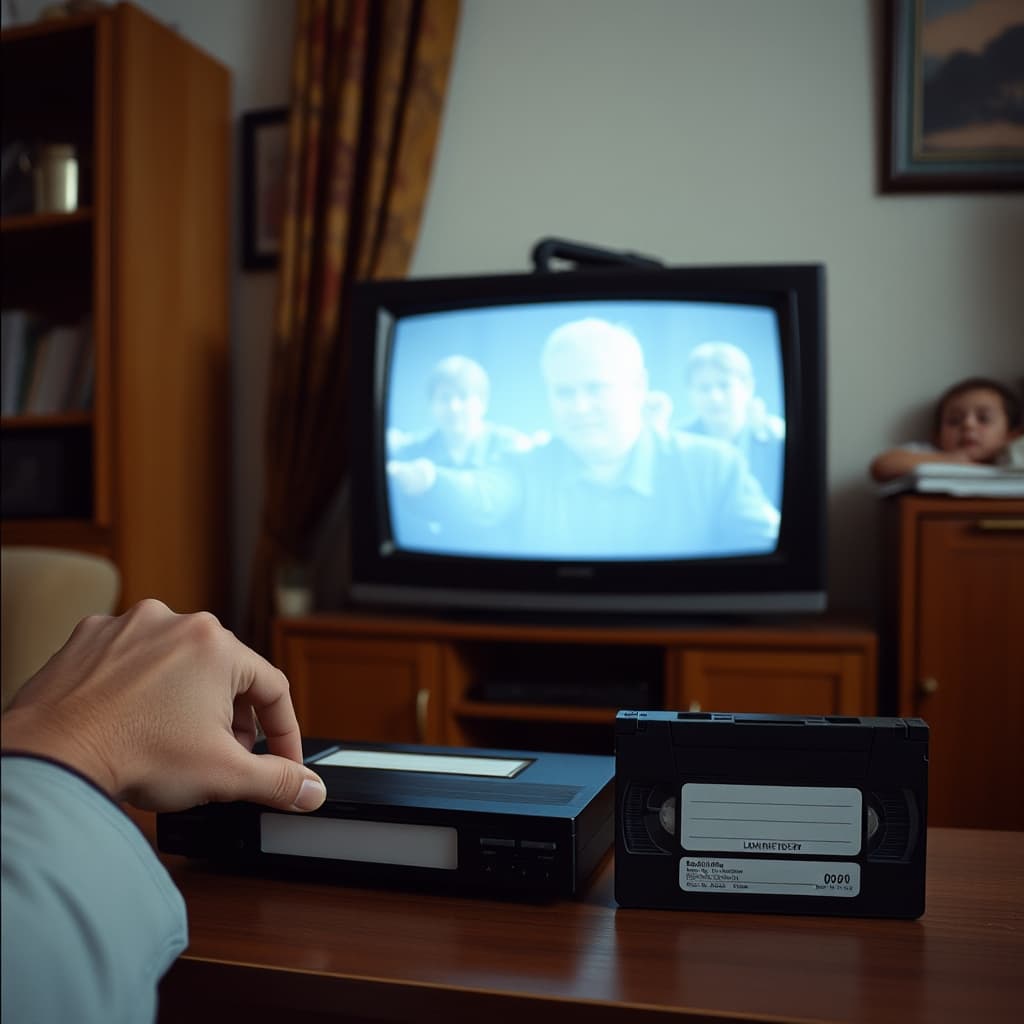
A family film night with a video player did not begin at the first scene. It began with a cassette whose position, condition and identity had to be understood. Was it rewound? Did its label match the recording? Would the picture remain stable? The quiet excitement in the living room depended on several technical decisions made before anyone could settle into the story.
Video formats, machines and control layouts varied. Terms remembered from one system should not be applied automatically to another. A cassette and player should be identified where possible, and an old tape should not be tested simply for atmosphere when its condition or the machine’s safety is unknown.
Rewinding Was Part of Borrowing Etiquette
A tape left near its end required waiting before the intended programme could start. Rewinding returned it to a useful position but also added operation and wear. In borrowed or rented circulation, returning a cassette ready for the next viewer could become a small courtesy. That practice should be linked to an actual household or lending context, not declared universal.
Counter displays or windows, when available, helped estimate position, but labels and recorded contents did not always agree. A family might discover another programme, a partial recording or an overwritten section. Such surprises reveal how reusable media blurred the boundary between object and content.
Tracking Was an Adjustment, Not a Magic Repair
Visible noise or an unstable picture could prompt use of an accessible tracking control on compatible equipment. The result depended on tape, recording and playback conditions. Tracking could not repair physically damaged tape or solve every image problem. Repeated experiments with an unknown cassette risked both tape and machine.
The person who adjusted the picture acquired authority in the room. Others waited, offered suggestions or asked when the film would begin. This social role came from practical familiarity. It did not mean the person could safely open the player or diagnose internal electrical and mechanical faults.
A Handwritten Label Needed Context
A cassette label could name a film, date or family recording, but it might describe only part of the tape. Handwriting can identify an association when supported, not automatically the recorder or owner. Photograph labels before cleaning and protect personal names or private recordings in public catalogues.
The recording itself may contain copyrighted programmes and private voices beyond the intended film. Digitisation and public access require separate rights and consent decisions. Creating an access copy does not make all captured content suitable for publication.
Preserve the Start-Up Sequence Without Risk
Oral history can reconstruct who selected the cassette, checked the label, rewound and adjusted the picture. Service receipts or instruction manuals can clarify model-specific operation. Keep the player disconnected if its electrical condition is uncertain; photographs of controls and testimony can preserve the ritual without running fragile equipment.
A useful catalogue links cassette, case, machine and any notes while retaining them as separate objects. Record whether contents were actually verified, inferred from a label or remembered by a family member. That distinction prevents a confident title from concealing an unexamined tape.
The video ritual mattered because playback was prepared rather than summoned instantly. Rewinding, identifying and adjusting turned the room’s anticipation into shared technical time. Preserving those preliminary minutes explains why pressing play felt consequential: the image arrived only after people and machine had been brought into alignment.