 Eski Pano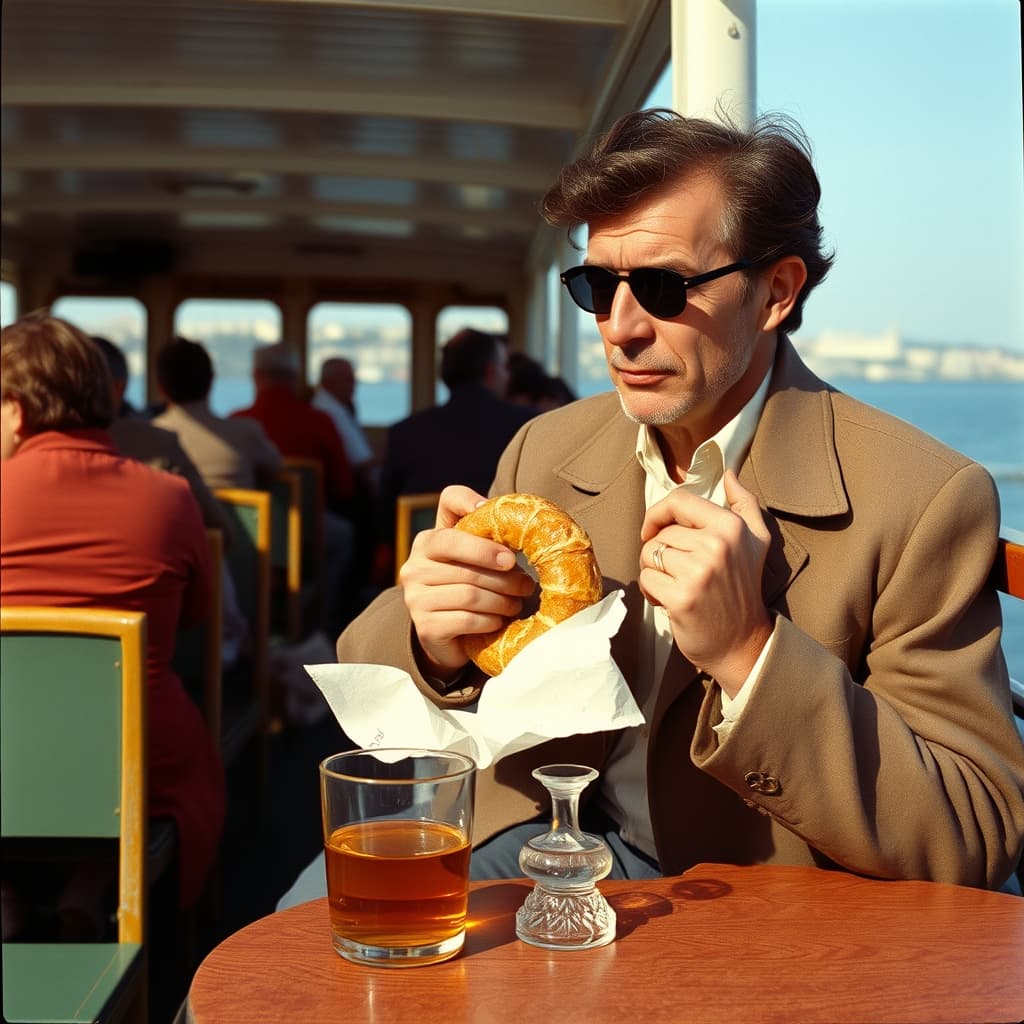
The smell of simit on a city ferry was produced by more than warm bread and toasted sesame. It travelled through a moving, windy public space in which passengers balanced bags, tickets, tea and conversation. Eating during the crossing required small adjustments: protecting the food, choosing when to unwrap it and keeping crumbs from spreading across a shared seat or deck.
Routes, vessels and onboard services varied by period and journey. Simit might have been bought before boarding, carried from home or obtained in another way. A remembered aroma should therefore be tied to a particular account rather than turned into a claim that every ferry offered the same scene.
The Wrapper Was Part of the Journey
Paper, a bag or another simple covering helped the simit travel from bakery or vendor to landing. The wrapping protected clothing and made the food easier to hold when the vessel moved. It could also collect sesame and crumbs. A photograph of the food without its carrier misses the practical object that connected the street purchase to the ferry seat.
Opening it too early exposed the simit to rain, spray or crowded handling; waiting too long meant the crossing might nearly be over. The moment of unwrapping was shaped by finding a place, settling belongings and judging the movement of the boat. These actions made eating part of travel rather than a separate meal.
Wind Changed the Etiquette of Crumbs
On an open deck, loose paper and crumbs did not stay where they fell. Passengers had to hold the wrapping, gather waste and consider nearby people. Indoors, smell moved differently and the food occupied limited space among coats and bags. The familiar scene was therefore governed by shared-space manners as much as appetite.
Stories about feeding birds often accompany ferry nostalgia, but they should not be inserted into every memory or encouraged without regard to current wildlife and transport guidance. The archive can document a witnessed practice while keeping it distinct from advice for present-day passengers.
Tea and Simit Had Separate Timings
Tea could accompany the food, but cup, service and availability differed. Handling a hot drink while the vessel moved demanded another kind of care. One passenger might finish the simit first; another might soften each bite with tea. These variations are more useful than describing the pairing as an unchanging ritual.
The aroma also mixed with the ferry environment: air, coats, engine-related smells and whatever other passengers carried. Memory isolates the sesame because it became meaningful, not because it was the only scent present. Oral history can ask where the person sat, whether the food was warm and what happened to the wrapper afterward.
Preserve a Route-Specific Meal
A strong record combines a dated route or ticket with testimony about purchase, seating and companions. It should distinguish a present-day staged photograph from a historical image. Avoid readable personal documents, and do not claim a vendor, price or service without evidence.
The tenderness of this memory lies in coordination. A modest food had to survive the walk, queue and boarding, then be eaten in a space shared with strangers and altered by wind. The smell entered the day because simit was not merely tasted; it was carried through the city and opened at a point where streets briefly gave way to water.