 Eski Pano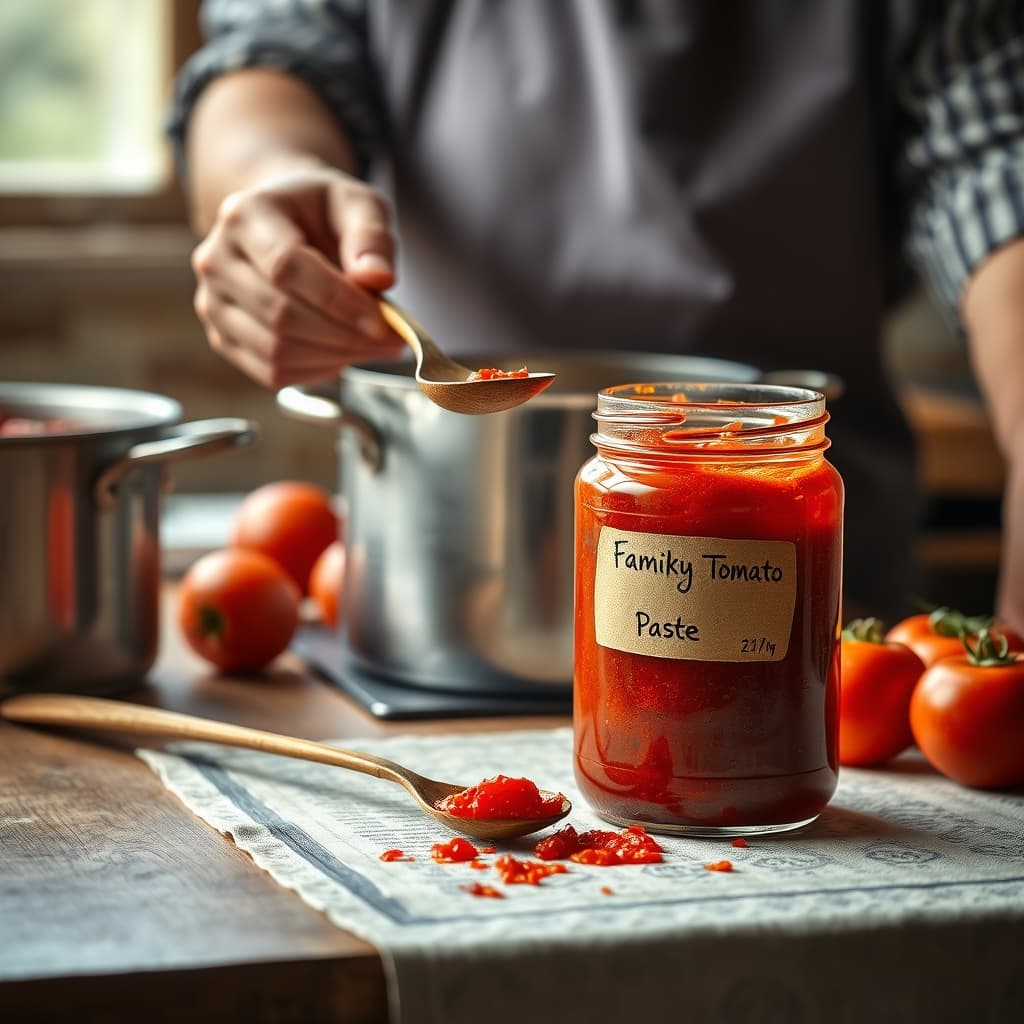
A jar of tomato paste influenced meals long after the preparation day ended. Its colour, salt and concentration determined how much a cook added to soup, rice, vegetables or a pot of beans. The family “recipe” therefore lived not only in making the paste but in learning how that particular batch behaved by the spoonful.
Tomato-paste traditions vary by region, climate, household and whether the product was prepared at home or acquired elsewhere. Sun exposure, cooking, salt and tomato variety can all differ. This article is not a full recipe and does not identify one authentic method. It focuses on the later kitchen knowledge created by a batch with its own strength and texture.
The First Spoon Was a Test
A newly opened jar did not always perform exactly like the previous one. A cook could judge thickness, aroma and colour before deciding how much belonged in the pot. A dense paste might cling to the spoon and require careful mixing; a softer one dispersed differently. The familiar “one spoon” was therefore a household measure calibrated by experience, not a universal quantity.
Spoon size mattered too. A serving spoon, wooden spoon and teaspoon do not carry the same amount. Family instructions often relied on a known utensil and shared observation. When documenting a recipe, photograph or measure the actual spoon rather than translating it silently into an exact standard volume.
The Batch Connected Many Dishes
Using the same jar across weeks or months created a flavour thread through different meals. The paste could add acidity, sweetness, salt, colour and body in varying balance. Cooks adjusted other seasonings accordingly. A family might remember the final dish without recognising how much of its character came from the stored base.
This connection also made inconsistency visible. A batch that was saltier, darker or looser required adaptation. Such variation should not be described automatically as failure. It can reveal tomato condition, process and storage, although a specific cause requires evidence. The cook’s response is often easier to document than the chemistry.
Labels Protected Memory From Guesswork
Jars that looked similar could belong to different dates or preparations. A label, notebook entry or storage order helped distinguish them. Record who prepared the batch, approximate date, ingredients known with confidence and any later observations. Do not infer a harvest location or named family author merely from the colour of the paste.
Safe preservation matters. Present-day tomato products should be prepared, stored and checked using current authoritative food-safety guidance. A nostalgic account is not a substitute for tested preservation instructions. Containers with uncertain seals, mould, gas, leakage or other signs of spoilage should not be tasted to recover a memory.
Preserve the Working Notes, Not Only the Jar
A useful food archive follows the paste into actual dishes. Ask how the cook changed salt, liquid or cooking time after adding it, and which utensil served as the measure. Record a present-day reconstruction clearly as contemporary. Photographs of the tomato, preparation surface, labelled jar and first spoonful can preserve stages without publishing a prescriptive recipe.
Family accounts may disagree about whether the paste was cooked, sun-finished, shared with neighbours or made every year. Attribute each version and seek dated notebooks or images. Variation across years may be the history itself, showing how weather, labour, housing and available space changed the practice.
Tomato-paste days left a mark because their result entered ordinary cooking in small, repeated portions. The visible jar was only a reservoir of decisions: how concentrated it had become, which spoon understood it and how the rest of a dish should respond. Preserving that chain turns a broad seasonal memory into precise culinary knowledge carried from one family table to the next pot on the stove.