 Eski Pano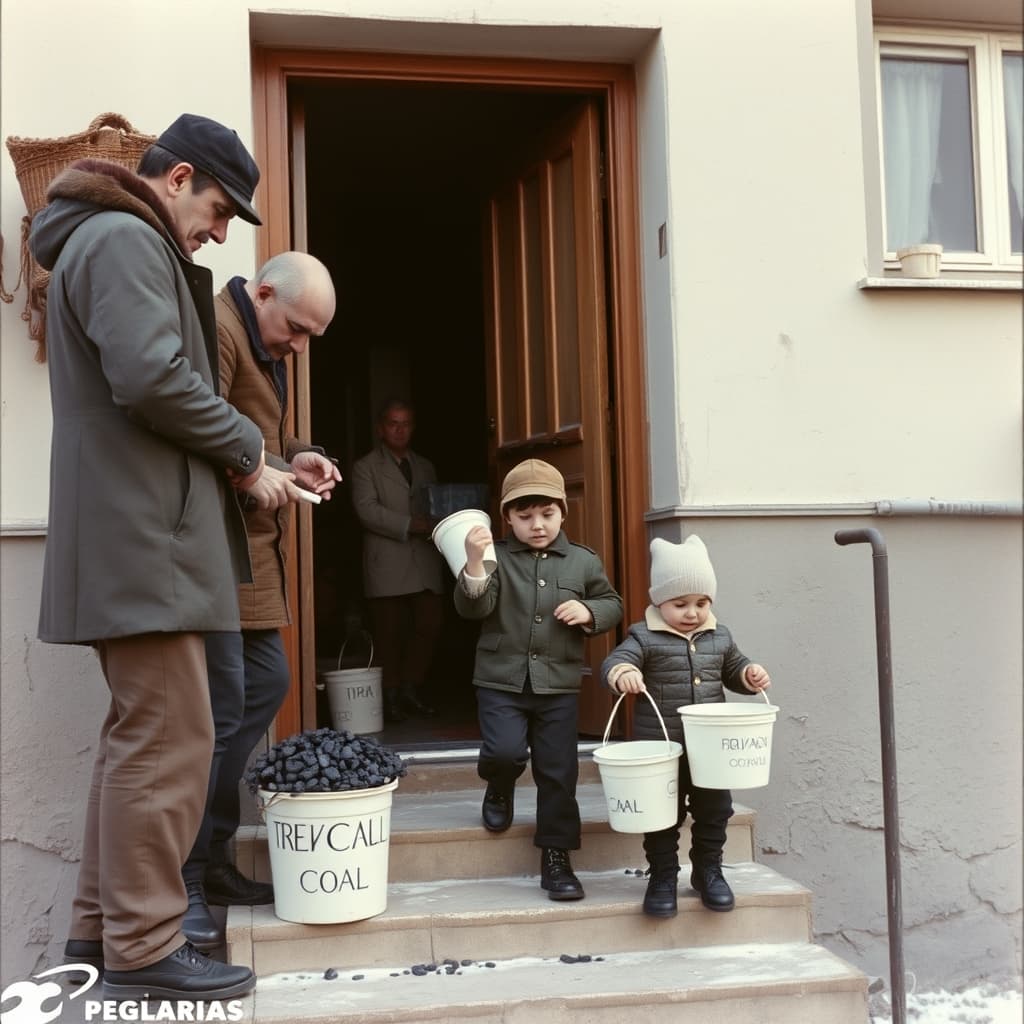
Before a coal stove warmed a room, fuel had to cross the neighbourhood and enter the building. Sacks were unloaded, divided, carried through gates or up stairs, then stored somewhere dry enough for use. Children sometimes performed part of this chain. Their presence in winter memory should not be softened into a picturesque errand: carrying coal was physical work shaped by household need, age, income and unequal expectations.
Arrangements differed. Fuel could be delivered close to storage, left at a street edge or transferred in smaller loads. Not every child carried the same weight or worked under the same conditions. A credible account identifies the actual route, container and task rather than treating “children carried coal” as one uniform tradition.
The Sack Defined the Burden
A large delivery sack and a smaller bucket or bag created very different demands. Families might divide fuel into manageable quantities, but what counted as manageable was not always suitable for a child. Stairs, ice, narrow passages and poor lighting increased strain. Coal dust added another layer, settling on hands, clothing, walls and floors.
The work continued after the load arrived. Someone swept the route, arranged storage and cleaned the container. These tasks were often separated by age or gender and may be remembered less clearly than the dramatic arrival of a load. Asking who cleaned is as important as asking who carried.
Neighbourhood Help Could Reduce or Conceal Inequality
A neighbour might hold a door, lend a container, share information about delivery or help move a load. Such cooperation mattered, particularly where access was difficult. It did not make the underlying burden fair. A child helping another household might be praised for responsibility while still missing rest, study or play.
Some children may remember pride in contributing; others may recall embarrassment, fatigue or no choice at all. These accounts can coexist. Nostalgia becomes misleading when it selects only the pride and uses it to recommend hardship as character-building. Historical understanding requires listening to the child’s position as well as the household’s need.
Warm Rooms Hid a Supply Chain
The stove made heat visible through a glowing or warm domestic centre, while the work of fuel transport remained outside the frame. Storage space, daily replenishment, ash removal and ventilation also shaped life with solid fuel. This article is not an operating guide; present-day heating must follow current safety, ventilation and local regulations.
Photographs of coal routes should be read for thresholds, steps, containers and clothing, not only faces. A posed child with a bucket does not establish the usual weight or frequency. Oral history can ask how far the load moved, whether adults supervised and what happened when weather made the route harder.
Document Labour Without Recreating It
There is no need to ask children to carry coal for a nostalgic photograph. Empty or safely weighted containers, route mapping and adult testimony can explain the process without reenacting risk. Protect identities and addresses in contemporary documentation. Historical images involving minors also deserve careful contextualisation.
Records can link fuel receipts, delivery notes, building plans and family accounts. Each answers a different question. A receipt may show quantity and price but not who climbed the stairs; a memory may describe exhaustion without preserving the exact amount. Keeping those limits visible strengthens the archive.
Children carrying coal entered city memory because their labour connected the street delivery to the heated room. That contribution deserves recognition without becoming a sentimental emblem of tougher, better childhoods. The most honest account follows the load all the way—through weight, dust, stairs and cleanup—and asks why essential warmth depended on the smallest shoulders in the household.