 Eski Pano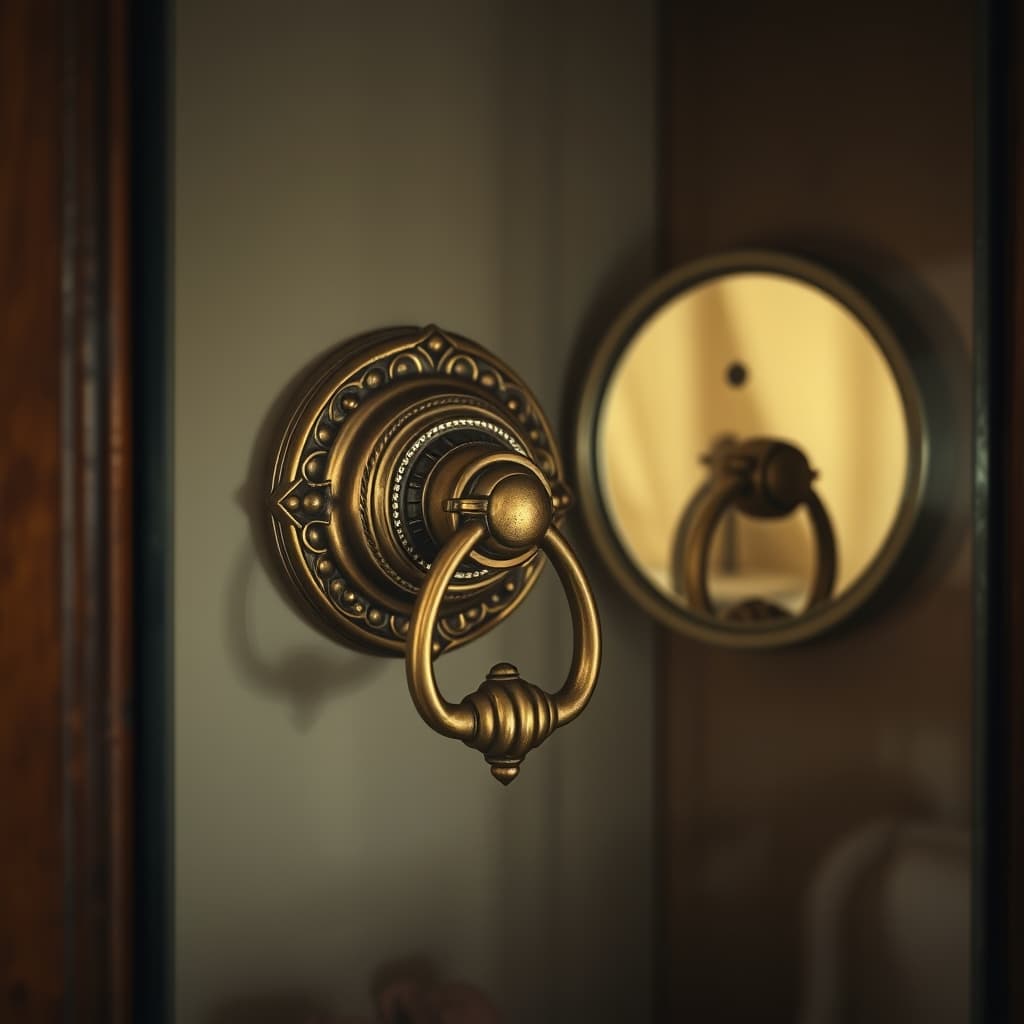
Inside a living-room display cabinet, a brass door knocker becomes a small sculpture. Light catches its raised surfaces, visitors can examine it closely and the object appears to express a household’s taste. Yet the cabinet also removes the knocker from the structure that made it functional. Without its door, mounting height, sound and relation to an entrance disappear.
A yellow metallic surface may be brass, another alloy or a plated finish. Material should be described provisionally unless properly identified. Likewise, ornamental style cannot establish age, region or hand manufacture by itself. The most useful evidence may be on the back, where the display hides it.
Mounting Holes Remember the Door
Fastener holes, posts, wear marks and the shape of the rear surface can show how the knocker once met another material. Wood fibres, paint or old packing may survive in protected recesses. They should be photographed before cleaning and assessed carefully; a trace can indicate contact without identifying the exact building.
Measurements can help reconstruct scale. The distance between fittings, the arc of movement and the striking point clarify operation. A generic old door should not be assigned simply because dimensions seem plausible. A family photograph, renovation record or labelled storage note provides stronger context than visual resemblance online.
Hand Wear Is Not a Complete Visitor List
Repeated contact may polish a grip or soften a high point. Oxidation and scratches can also result from storage, cleaning or later handling in the cabinet. Wear proves interaction more readily than it proves who interacted. It cannot by itself tell whether the knocker served a busy street entrance, an interior gate or a decorative installation.
Sound is another missing property. The knock depended on the object, striking plate, door material, mounting and force. Tapping a detached heirloom against an improvised surface does not faithfully recreate its former sound and may cause damage. Oral descriptions can be preserved as attributed memories rather than converted into an audio “reconstruction” presented as authentic.
The Cabinet Created a Second Installation
A stand, wire, adhesive or fabric pad may have been added to keep the object upright. These supports reveal how the household wanted it seen. They also can scratch, stain or place stress on older material. Record the cabinet arrangement before changing it, then seek suitable conservation support if the mounting is unstable.
The choice of the most visible shelf can express value without proving the object’s earlier history. It may have been admired for workmanship, family association, fashion or simply the way it caught light. Ask who moved it to the cabinet and when. “Always there” often describes the speaker’s lifetime, not the entire life of the object.
Catalogue Both Sides of the Threshold
Create views of front, back, profile, fittings and display support, with dimensions and condition. Link the knocker to any known door record while keeping uncertainty explicit. If a modern mount is fabricated, label it and avoid drilling, polishing or permanent adhesive. The aim is reversible support, not an imagined restoration.
Its shift from entrance to salon is itself meaningful. A working fitting became a collected object, and architectural hardware entered domestic display culture. That change can reflect renovation, displacement or appreciation, but the reason must come from evidence rather than a standard nostalgia narrative.
The brass knocker’s most revealing feature behind glass may therefore be its incompleteness. Its shine tells us how it was displayed; its rear fittings tell us what is absent. Preserving both views allows the object to represent taste without forgetting function—and keeps an attractive cabinet piece connected to the threshold where hands, sound and architecture once met.