Eski Pano
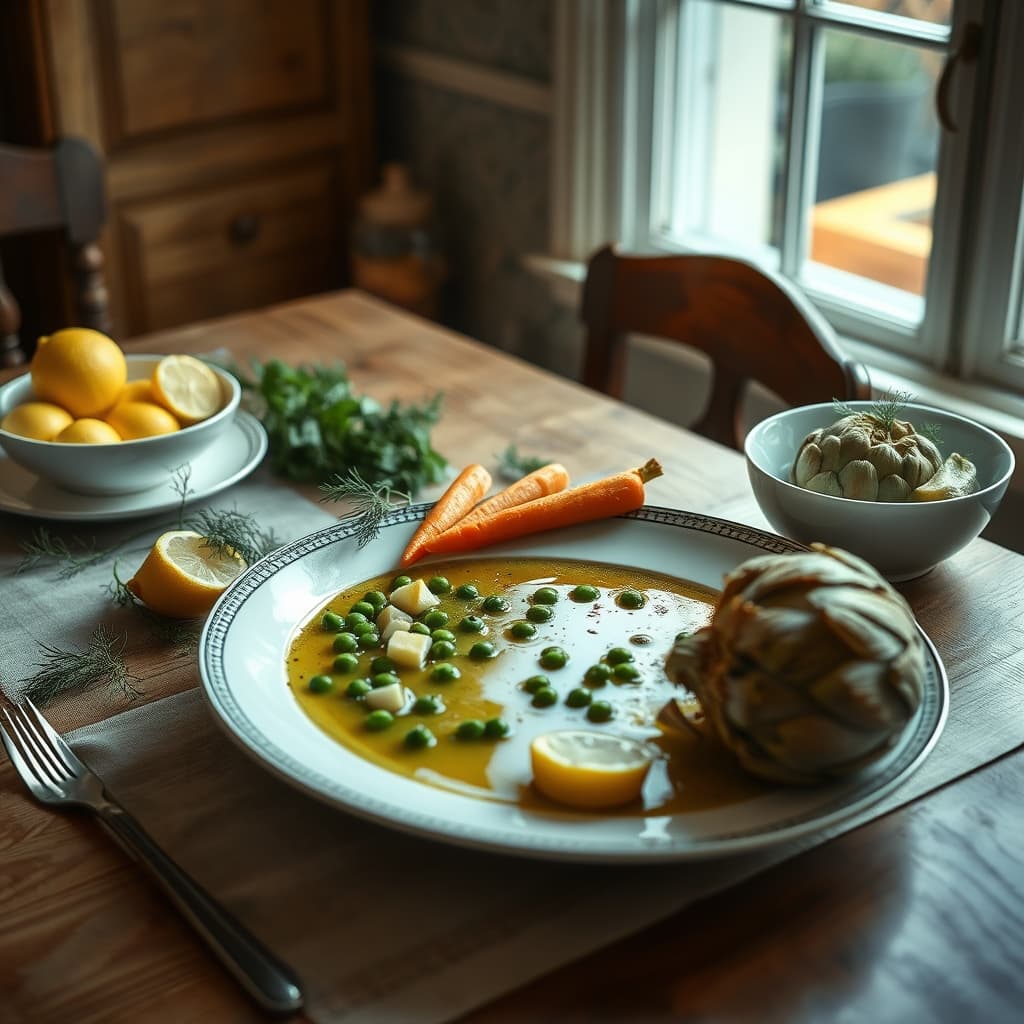
Some dishes bring back not only a flavor when they arrive at the table, but an entire kitchen order. Olive oil artichokes are one of those dishes. When the lid of the pot is lifted, the gentle scent of lemon, the soft colors of peas and carrots, and the calm arrangement in which the dish is served cold awaken not only appetite, but also the memory of an older domestic discipline. This is not a food produced in haste. It belongs to a kitchen understanding in which vegetables are carefully cleaned, olive oil is poured with measure, and the dish is allowed to rest after cooking. That is why, when olive oil artichokes are eaten, what returns from the past is not taste alone, but also preparation, seasonal knowledge, and table manners.
From the perspective of taste memory, olive oil artichokes carry some of the most refined qualities of old culinary culture. The recipe asks for respect toward freshness and the rhythm of the season. Artichokes bought at the market must be cleaned before they darken, lemon water should be waiting in a bowl, peas or broad beans must be prepared, carrots sliced with care, and the cooking time observed attentively. The result is not always eaten immediately. Quite often it is expected to cool, even to wait until the next day. That waiting itself is another form of patience in the kitchen. Perhaps one of the forgotten habits of the age of speed is exactly this: understanding that not every flavor is completed instantly, but through a careful process.
The reason olive oil artichokes call forgotten kitchen habits back is also that they remind us of the kitchen as a collective space. In older homes, cleaning artichokes was often not the work of one person alone, but of several hands. One prepared the lemon water, another removed the outer leaves, another sorted the garnish, while someone else watched the pot. The kitchen thus became a quiet place of collaboration. At the same time, a sense of measure was essential. The oil should not be excessive, the sugar should not dominate, and the vegetable’s own taste should never disappear. This balance was one of the clearest marks of old culinary culture. Food was meant to reveal itself not through showiness, but through a graceful simplicity.
The culture kept alive by this dish is hidden not only in the cooking technique, but in its place on the table. Olive oil dishes in many homes were prepared in advance, serving as something that would not embarrass the host if a guest arrived and as a sign of taking the season seriously at the family table. The garnish placed in the center of the artichoke, a little dill scattered over the top, or a lemon wedge on the side completed the etiquette of the dish. In this way the kitchen ceased to be only a site of feeding the body and became instead a cultural memory where seasonal knowledge, aesthetic sense, and moderation met. Olive oil artichokes remain one of the quiet representatives of that old table culture.
It is no coincidence that many people still feel a certain softness inside when faced with a plate of olive oil artichokes. This dish calls back forgotten habits not only through words, but through taste itself. Respect for seasonal vegetables, preparation without haste, shared labor in the kitchen, the patience of letting food rest, and the value given to simplicity at the table all continue to live inside it. Old culinary culture sometimes survives not at grand feast tables, but on such simple yet carefully prepared plates. The trace nostalgia leaves on the palate appears exactly here: one remembers not merely an old dish, but the rhythm of life built around it. That is why olive oil artichokes remain one of the rare flavors still capable of gently bringing the past back to the table.
Olive Oil Artichokes: How Does It Call Back Forgotten Kitchen Habits and Keep Old Culinary Culture Alive