Eski Pano
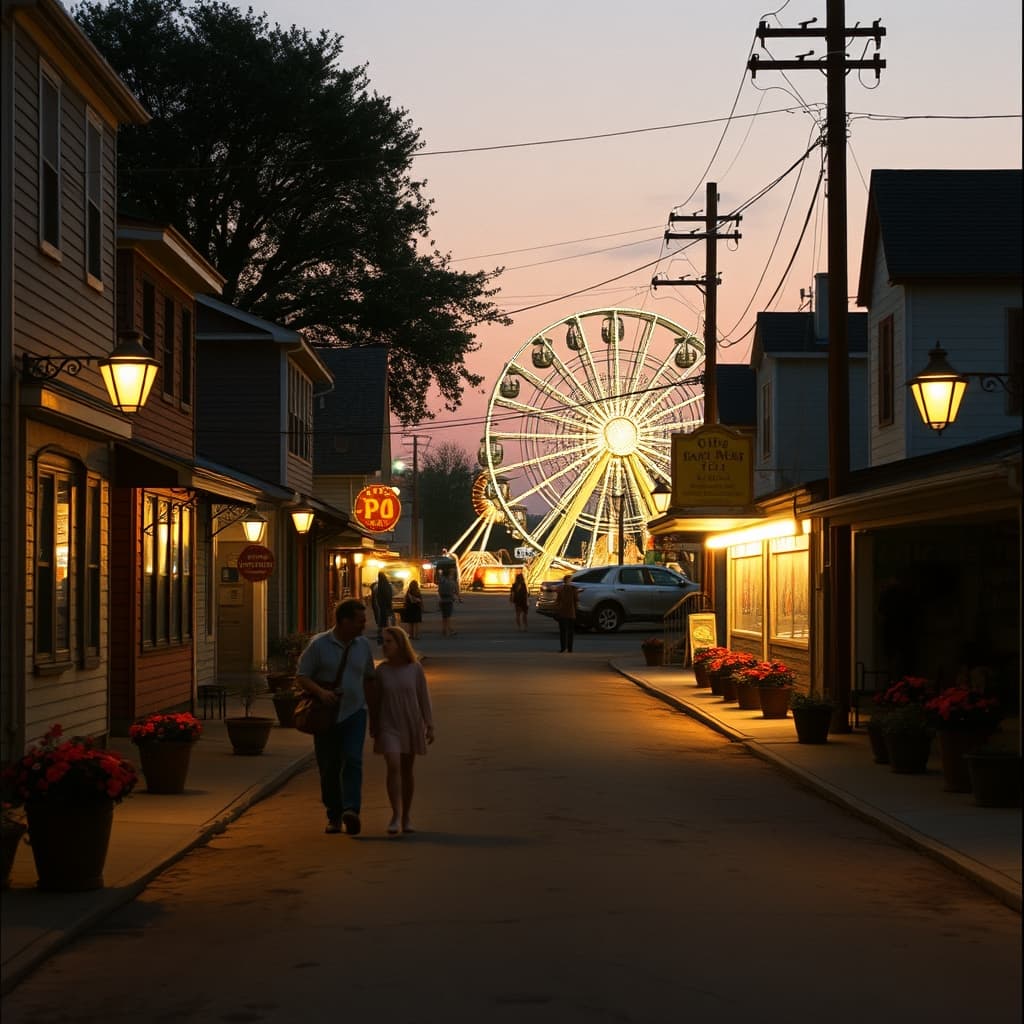
There was a time when, as summer evenings began to cool, the liveliest direction in the neighborhood was always the street leading to the amusement park. Carnation pots stood beside dusty pavements, soda bottle caps glimmered on the ground, and the distant lights of the Ferris wheel made the heart race before anyone had even arrived. Mothers adjusted children’s clothes, fathers checked the coins in their pockets while waiting in ticket lines, and young people treated their slow walk beneath the brightest bulbs almost like a ceremony. Those old amusement parks did not merely promise entertainment; they placed a feeling of small miracle inside the evening itself. Passing through flower-scented streets and entering that illuminated space felt like stepping briefly out of ordinary neighborhood life and into another world.
Seen through the lens of time, the strength of old amusement parks in memory comes not only from the rides themselves, but from the everyday ritual built around them. In old newspapers, reports about amusement grounds set up during holiday weeks described them almost as signs of urban life itself. These places made the bright face of modernization visible on the scale of the neighborhood. Strings of colored bulbs, metallic noises, token machines, cotton candy carts, and muffled announcements rising from loudspeakers all carried the technological wonder of their era. For children, this was not only play; it was a new urban experience built from light, movement, and crowd. For adults, the amusement park opened a short yet unforgettable window inside lives otherwise shaped by work and routine seriousness.
What lasted most from those evenings was the way going to the amusement park shaped neighborhood habits. In some homes, the cleanest cardigan was worn before leaving, and roasted seeds or candy apples came back through the front door afterward. Children were given small handkerchiefs to hold tightly, and the warning, “Don’t get separated in the crowd,” was always repeated. Shopkeepers joined the rhythm too; the simit seller stayed open later, and those sitting in front of the tailor’s shop watched the people heading toward the lights. An evening walk along the street stopped being mere passage and became a shared neighborhood habit in which people noticed one another on the way to the same brightness. Even today, the instinct to stroll slowly on a summer evening, pause before a shop window, or move through a crowd without haste may be a quiet urban habit inherited from those nights.
One of the habits old amusement parks left behind may also be the courage to experience wonder openly. People then could look for a long time at a row of glowing bulbs, a reflection in a mirrored hall, or the sparks over bumper cars. In today’s fast screen culture, what is missing may be precisely that shared state of amazement. In the amusement park, everyone raised their head at the same moment to watch the swinging gondolas and unknowingly joined one another’s curiosity. Those who passed through flower-scented streets into that field of light carried its shimmer home on their faces. That is why the memory of old amusement parks survives not only in the Ferris wheel, but in the care given to evening outings, the way people entered crowds, and the ability to make small joys feel large.
Perhaps the deepest legacy of those spaces was that they softened the hardness of the city for a little while. Between concrete, summer heat, workday fatigue, and household calculations, amusement park lights suggested another rhythm to everyone at once. In that rhythm there was room for childhood and adulthood together: cotton candy in one hand, a small toy to take home in the other, and on every face the hope that the evening would not end too soon. Even where the old amusement parks no longer stand, the little miracles they created can still be felt in city dwellers who like to linger in the street, pay attention to evening light, and know how to walk slowly even inside a crowd.
The Little Miracles Old Amusement Parks Built with Lights on the Dusty Shelves of Memory: Which Quiet Habits Did the Flower-Scented Streets Leave to Today