Eski Pano
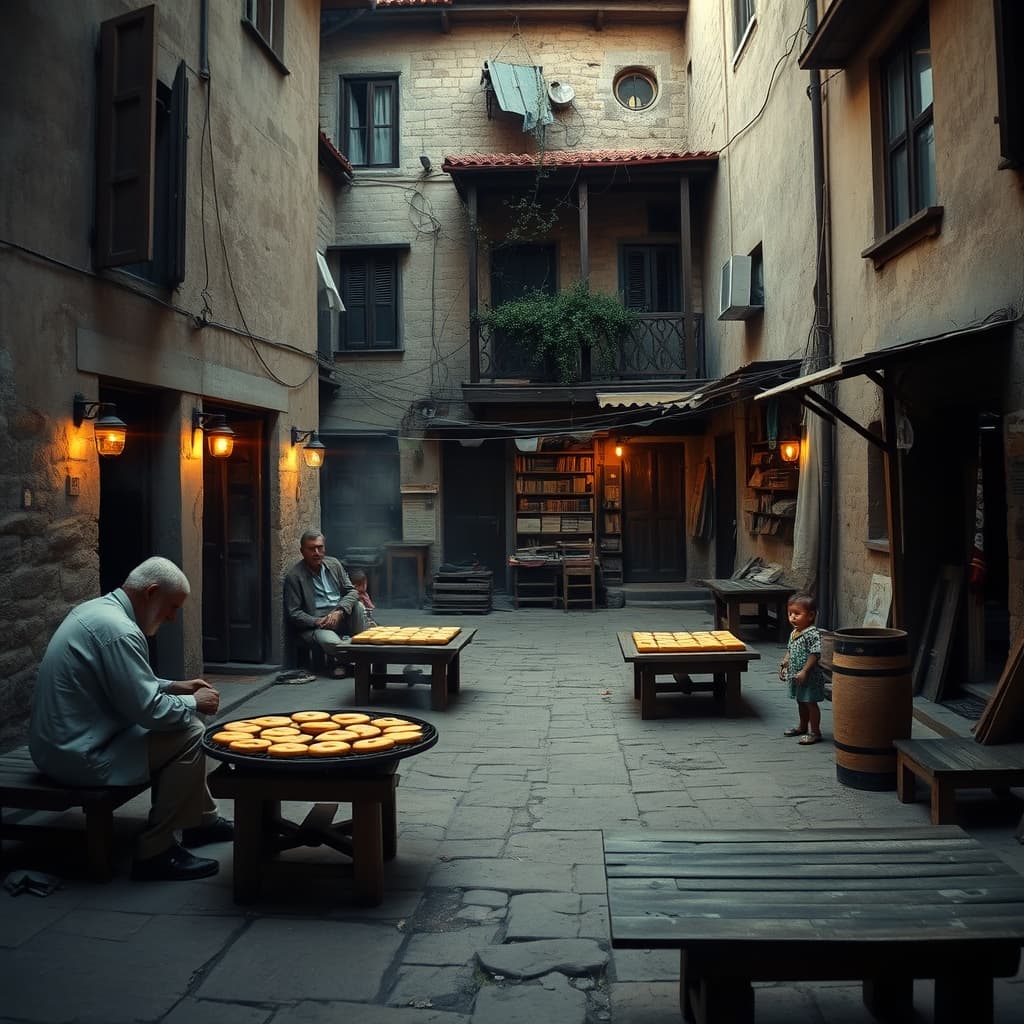
There was a time when, in certain neighborhoods, morning began not in the kitchen but in the courtyard. Before the sun had fully risen above the wall, doors would open, low wooden tables would be carried outside, cloths would be spread, and rolling pins laid side by side. On mornings when yufka was rolled out, the neighborhood did not merely wake up; it entered the rhythm of working together. Flour came from one house, the griddle stand from another, ayran or freshly brewed tea from a third, and in the middle of the courtyard an invisible yet strong order formed. The sound of dough being rolled, the smell of flatbread swelling on the hot iron, children lingering at the edges, and the overlapping sentences of women turned the morning into something more than preparation. The warmth did not come only from the fire. It also rose from the ease of being together.
Seen through the lens of neighborhood culture, these courtyard mornings showed one of the clearest forms of neighborliness. In old urban life, being neighbors did not mean only exchanging greetings or trading a few words at the door. It meant sharing labor, making time collective, and turning domestic work into a social space. Rolling out yufka was one of the finest examples of this, because even though it could be done by one person, its meaning grew when done together. One woman divided the dough, another rolled it, another baked it, another wrapped the finished bread, and another handed warm pieces to the children. In that way, the division of labor did more than make the work easier. It nourished trust between people. The courtyard was where labor spilling out of the kitchen joined itself to neighborhood life.
Part of the reason this warmth feels absent in today’s housing complexes lies in the change of both space and rhythm. Gated entrances, elevators, closed apartment layouts, and fast individual routines make it harder for the old courtyard culture to create its spontaneous closeness. People may still be good neighbors, yet the chance to gather around shared work is more limited. On mornings of yufka-making, labor was visible. Flour clung to hands, sweat gathered beside the iron griddle, and one person waited for the movement of another. That shared tempo made it possible to feel that living together was not only spatial, but emotional. The warmth that seems missing in modern complexes has much to do with the fading of visible labor and of the small repeated rituals that once tied people to one another.
Another reason old courtyards remain strong in memory is that children formed a natural part of that order. While playing at the edge, they overheard the elders’ conversations, knew which neighbor had brought what, waited for the first hot piece of bread, and sometimes took on small duties such as carrying water or gathering cloths. In this way, neighborliness did not remain a bond existing only among adults; it became something learned across generations. In courtyard conversations people spoke of the season, shared wedding news, planned visits to the sick, and remembered old recipes. A yufka morning was more than feeding the household. It was one of the moments when the neighborhood recognized itself again.
Perhaps when people say the same warmth cannot be found today, what they truly miss is less the physical courtyard than the shared rhythm it held. Warmth is sometimes created not by stone walls or broad gardens, but inside the work done together. On courtyard mornings of yufka-making, people came to know not only one another’s faces, but also one another’s labor. Who moved quickly, who rested the dough well, who brought the tea at the right moment, who kept the children occupied without slowing the work, all this drew the invisible map of respect within neighborhood culture. What feels missing in today’s complexes is precisely that: living in the same building while seeing less of one another’s everyday worth. The warmth of old courtyards remains unforgettable for this reason, because there, relationships were rolled out together as surely as bread.
The Days of Courtyard Mornings When Yufka Was Rolled Out: Why Is the Same Warmth Not Found in Today’s Housing Complexes?