Eski Pano
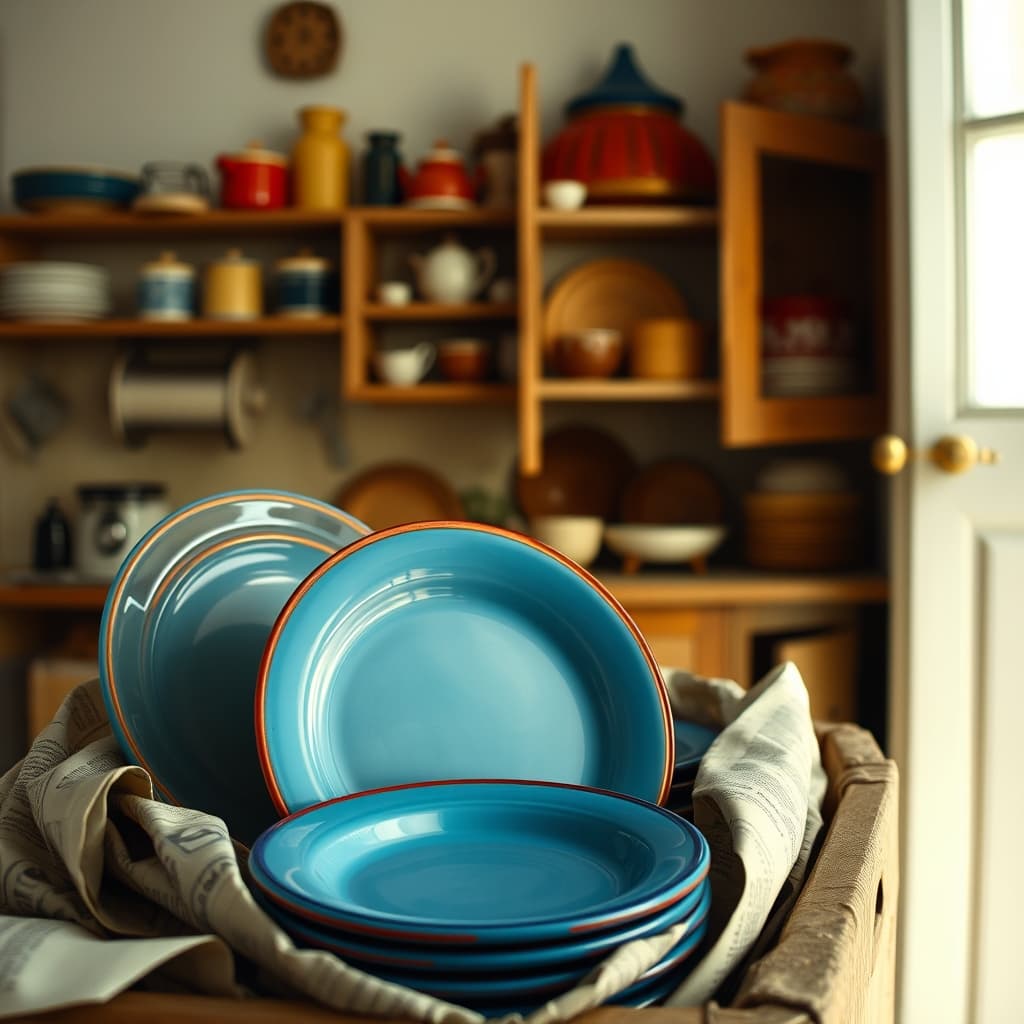
There was a time when enamel plates standing in kitchens or on open shelves were not counted among the most showy objects in the house. They might carry a fine scratch along the edge, a soft dullness on the surface, or a small fading of color left by the years. Yet those very imperfections were what made them belong to the home. A plate was never only an object used at the table. It was the quiet witness of breakfast, a hurried lunch, fruit sliced for a guest, and bread placed in a child’s hand. On moving days, when plates were wrapped in newspaper, the enamel ones were handled with a particular kind of care. They were not the costly pieces people feared would break, but the familiar ones whose loss would make the house feel slightly incomplete.
Seen through the lens of object stories, the enamel plate settles in memory as much through the way it was used as through its design. The practicality of enamel, its durability, and its plain aesthetic mixed with daily life made it an indispensable part of many homes for years. A white surface bordered in blue or red, a few modest flowers, or a lined rim created a quiet but strong character within the order of the house. Part of the reason these plates shine so quickly in the eyes of nostalgia enthusiasts lies here. They are not objects distant enough to belong only in a museum; they are close enough to be held in the hand. Because they are among the rare old things that recall not only form, but habit, the sight of them immediately brings back the sound of a kitchen, the creak of a chair, or the smell of freshly washed dishes.
The memory of accompanying the home through moves forms the deepest layer of that shine. When a family moves to another neighborhood, another city, or a smaller apartment, many objects can change. Curtains are replaced, cupboards are left behind, and some chairs disappear along the way. Yet the enamel plate often finds its place again inside the boxes. What travels is not simply kitchenware, but the continuity of ordinary life. In the new house, before everything is fully arranged, cheese and bread are eaten from that plate, something quick is prepared for the children, and life feels as though it has started again. In that way, the plate becomes less a possession than a vessel of habit. Its memory remains strong because it is tied not to a single grand moment, but to small scenes repeated over many years.
Part of the reason it shines so quickly today in the eyes of nostalgia enthusiasts comes from its unaffected simplicity. The enamel plate is unpretentious, yet never characterless. It leaves a slight coolness in the hand, gives a sense of firmness through its metal rim, and makes lived time visible even through small traces of wear. Next to today’s perfect-looking but quickly consumed kitchen products, the enamel plate leads the mind directly to an older ethic of use: caring for things, keeping them for years, and growing more attached rather than more distant as they gathered marks. That is why, when it appears on an antique shelf, in an old home photograph, or in a forgotten package opened after a move, it rises at once like a warm light.
In truth, what shines is not only the plate itself, but the continuity of home carried within it. The fact that an object has witnessed more than one address, more than one kitchen, and more than one table gives it a depth within family life. For that reason, the enamel plate becomes more than a nostalgic object. It is one of the material forms of order that does not disappear between moves, of habits that remain the same, and of the feeling of home itself. When nostalgia enthusiasts see it, they do not simply admire an old design. They sense how a home could preserve itself even while being carried from one place to another. That is precisely what makes it shine so quickly.
The Enamel Plate and the Memory That Accompanied the Home Through Moves: Why Does It Immediately Shine in the Eyes of Nostalgia Enthusiasts?