 Eski Pano
Some objects do not merely take up space in a home. They take up time. The quilt chest is one of the clearest of these. Standing in a corner, often covered with lace, sometimes used as a bench, and sometimes locked with a key known only to the eldest in the house, it represented far more than storage. Inside lay folded quilts, embroidered sheets, bundles scented with mothballs, and fabrics brought out only for special occasions. Yet what the chest really held was not cloth, but order. It quietly kept track of what belonged to which season, what had come from whose dowry, and which quilt was reserved for which guest.
From the perspective of object stories, the quilt chest belongs to that category in which use and memory cannot be separated. The kind of wood, the weight of the lid, the click of the metal lock, the friction marks on the corners, and sometimes the motifs carved onto it made it immediately clear that this was not a neutral household item. Even when moved from one room to another, it seemed to carry with it a sense of domestic center. It was opened during wedding preparations, approached again when winter arrived, and aired out before holidays. In this way, the object itself became a kind of calendar for the home’s rhythm. It is no surprise that it shines so quickly in the eyes of nostalgia lovers, because it stands for one of the most tangible forms of order from the past.
During moves, the quilt chest acquired a special story of its own. While other belongings were packed in haste, the chest was handled with greater care. Sometimes it was closed first, sometimes loaded last. What it carried was not only bedding, but the private memory of the household. To a child’s eye, watching that large chest lifted onto the truck was one of the most serious moments in the passage from an old home to a new one. Once arrived, it was among the first heavy pieces placed in position, and with that gesture the temporary feeling of the new house began to recede. The smell of mothballs, the aged sound of wood, and the familiar creak of the opening lid helped reduce the strangeness of moving.
The small scenes that formed around the chest in daily life explain even better why it still glows in memory. As winter approached, quilts were laid out in the sun, and children were told not to disturb the careful order as elders arranged the inside. When guests were expected, the finest pillowcases came out of it; when a young woman’s dowry was being prepared, it was there again; and sometimes old letters or an unused handkerchief bundle appeared unexpectedly between the layers. In that sense, the chest stored not only household textiles, but intergenerational transmission itself. A coverlet received by a mother from her own mother could reappear years later from the same chest in a different home. The object did not merely evoke the past. It proved that the past had actually been carried forward.
One reason the quilt chest shines so quickly for nostalgia lovers today is that modern homes lack that sense of weight. New furniture is lighter, more functional, and more temporary. The chest, by contrast, was heavy both physically and emotionally. It was difficult to move, ceremonial to open, and required a certain seriousness from anyone touching what lay inside. For that reason, it symbolizes permanence in a way that differs sharply from today’s quickly replaced domestic arrangements. Looking at it, one does not see only an old piece of furniture, but also seasonal preparation, the tension of moving, the quiet of dowry-making, and the discipline of interior family life.
In the end, the quilt chest and the memory that accompanied the home through each move are not simply the romantic glow of an old object. That chest makes visible the order of the household, the labor of generations, the culture of careful keeping, and the continuity of family life that survives even when a house changes. That is why it shines so quickly in the eyes of nostalgia lovers. Inside it rests not only bedding, but the heavy and warm time of a home. Every time the lid opens, something of the patient rhythm of older life can still be heard.
The Quilt Chest and the Memory That Accompanied the Home Through Every Move: Why Does It Shine So Quickly in the Eyes of Nostalgia Lovers?
🇹🇷 Yorgan Sandığı Ve Taşınmalar Boyunca Eve Eşlik Eden Hatırası: Nostalji Meraklılarının Gözünde Neden Hemen Parlıyor
🇵🇹 O Baú de Edredons e a Memória que Acompanhou a Casa Ao Longo das Mudanças: Por que Brilha Tão Rapidamente Aos Olhos dos Apaixonados Pela Nostalgia?
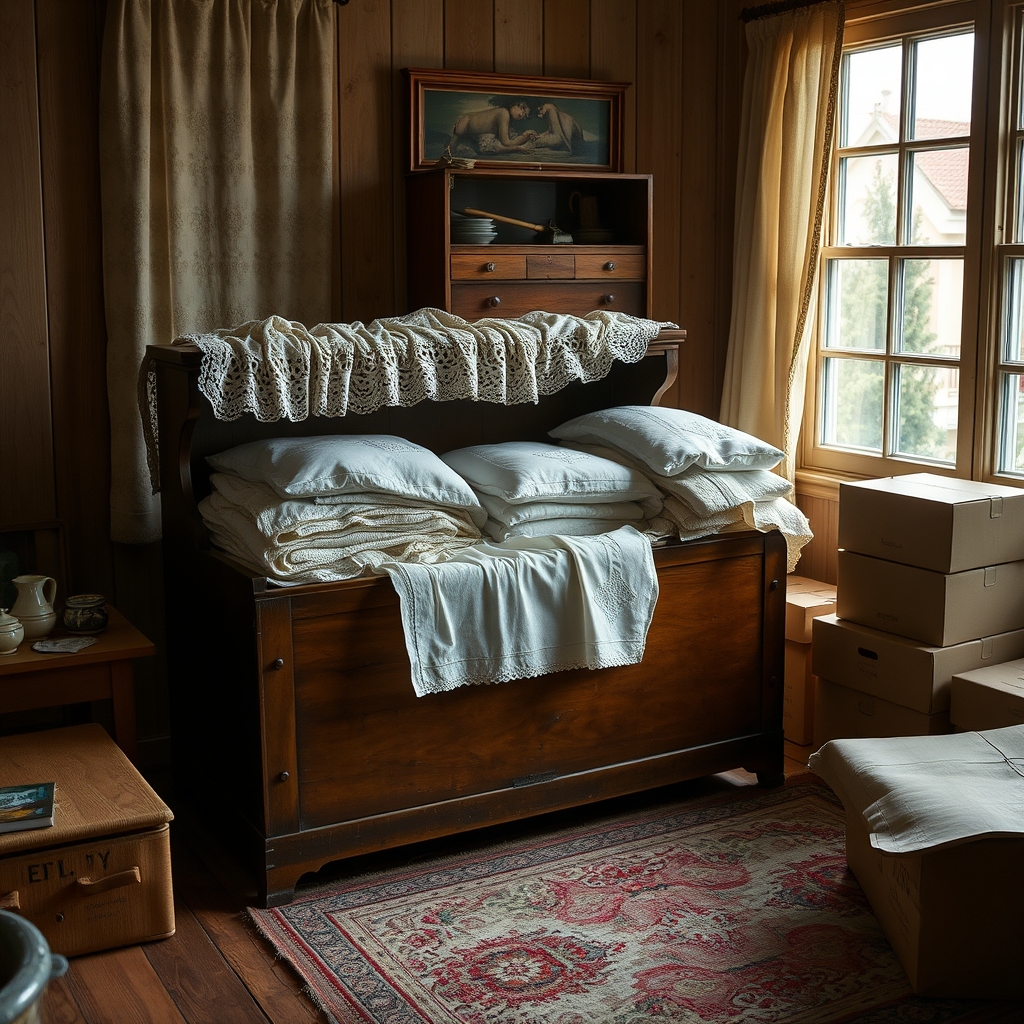
🇬🇧 The Quiet Domestic State Carried by the Quilt Chest
🇹🇷 Yorgan Sandığının Sessiz Taşıdığı Ev Hâli
Bazı eşyalar vardır; evde yalnız yer kaplamaz, zaman kaplar. Yorgan sandığı bunların en belirgin olanlarından biridir. Odanın bir köşesinde, çoğu zaman üstüne dantel serilmiş, bazen oturak yerine kullanılmış, bazen de anahtarının yeri yalnız evin en büyüğü tarafından bilinen bu sandık, sıradan bir depolama aracı olmaktan çok daha fazlasını temsil ederdi. İçinde kat kat yorganlar, işlemeli çarşaflar, naftalin kokusuna karışmış bohçalar ve yalnız özel günlerde çıkarılan kumaşlar dururdu. Ama aslında sandığın asıl taşıdığı şey kumaş değil, evin düzeniydi. Hangi mevsimde ne serileceği, kimin çeyizinden ne kaldığı, hangi yorganın hangi misafir için saklandığı hep onun içinde sessizce yerini bulurdu.
Obje Hikayeleri açısından bakıldığında yorgan sandığı, kullanım ile hatıranın birbirinden ayrılmadığı nesnelerden biridir. Ahşabının cinsi, kapağının ağırlığı, metal kilidinin sesi, köşelerindeki sürtünme izleri ve bazen üzerine işlenmiş motifler, onun yalnız bir eşya olmadığını hemen hissettirir. Sandık çoğu evde bir odadan diğerine taşınırken bile önemini korur; nereye konsa oraya bir aile merkezi duygusu getirirdi. Düğün hazırlıkları sırasında açılır, kış bastırınca önüne inilirdi, bayramdan önce içi havalandırılırdı. Böylece eşyanın kendisi, ev ritmini tutan bir takvime dönüşürdü. Bu yüzden nostalji meraklılarının gözünde hemen parlaması şaşırtıcı değildir; çünkü o sandık, geçmişin elle tutulur düzenlerinden birini temsil eder.
Taşınmalar sırasında yorgan sandığının ayrı bir hikâyesi olurdu. Evin diğer eşyaları aceleyle toplanırken, sandığa daha dikkatli davranılır, kimi zaman ilk önce kapatılır, kimi zaman en son araca yüklenirdi. Çünkü içinde yalnız yatak takımları değil, evin mahrem hafızası taşınırdı. Çocuk gözünde o büyük sandığın kamyona çıkarılışı, eski evden yeni eve geçişin en ciddi anlarından biriydi. Yeni eve varıldığında yerleştirilen ilk ağır eşyalardan biri yine sandık olur, onun yerine konmasıyla sanki evin geçici hâli biraz sona ererdi. Naftalin kokusu, ahşabın yıllanmış sesi ve kapağın açılırken çıkardığı tanıdık gıcırtı, taşınmanın yabancılığını azaltan ayrıntılar arasındaydı.
Gündelik yaşam içinde sandığın etrafında oluşan küçük sahneler, bu nesnenin neden hâlâ ışıldadığını daha iyi anlatır. Kışa girerken yorganlar güneşe serilir, büyükler sandığın içini düzeltirken çocuklara karıştırmamaları söylenirdi. Misafir geleceği zaman en iyi yastık kılıfı oradan çıkar, genç kızların çeyizi yine orada tamamlanır, bazen saklanan eski mektuplar ya da kullanılmayan bir mendil bohçası ansızın aradan görünürdü. Sandık, bu yönüyle yalnız ev tekstilini değil, kuşaklar arası aktarımı da saklardı. Bir annenin annesinden aldığı örtü, yıllar sonra başka bir evde aynı sandıktan çıkardı. Böylece nesne, yalnız geçmişi hatırlatmaz; geçmişin gerçekten aktarıldığını da gösterirdi.
Bugün yorgan sandığının nostalji meraklılarının gözünde hemen parlamasının bir nedeni de modern evlerde eksilen ağırlık duygusudur. Yeni mobilyalar daha hafif, daha işlevsel ve daha geçicidir; ama sandık hem fiziksel hem duygusal olarak ağırdı. Yer değiştirmesi zordu, açılması törenseldi, içindekilere dokunmak belli bir ciddiyet gerektirirdi. Bu yüzden sandık, bugünün hızlı tüketilen ev düzeninden farklı olarak kalıcılığı simgeler. İnsan ona bakınca yalnız eski bir mobilya görmez; mevsim hazırlıklarını, taşınma telaşını, çeyiz sessizliğini ve ev içi terbiyeyi bir arada hatırlar.
Sonuçta yorgan sandığı ve taşınmalar boyunca eve eşlik eden hatırası, yalnız geçmişe ait bir eşyanın romantik parıltısı değildir. O sandık, evin düzenini, kuşakların emeğini, saklama kültürünü ve yer değiştirse bile dağılmayan aile devamlılığını görünür kılar. Bu yüzden nostalji meraklılarının gözünde hemen parlar; çünkü onun içinde yalnız yorgan değil, bir evin ağır ama sıcak zamanı durur. Açılan her kapakta biraz da eski hayatın sabırlı ritmi duyulur.
🇵🇹 O Estado Silencioso da Casa Carregado Pelo Baú de Edredons
Há objetos que não ocupam apenas espaço dentro de uma casa. Eles ocupam tempo. O baú de edredons é um dos exemplos mais claros disso. Ficado num canto do quarto, muitas vezes coberto por renda, às vezes usado como assento e às vezes trancado com uma chave conhecida apenas pela pessoa mais velha da casa, ele representava muito mais do que um móvel para guardar coisas. Dentro havia colchas dobradas, lençóis bordados, trouxas com cheiro de naftalina e tecidos reservados para ocasiões especiais. Mas o que o baú realmente guardava não era apenas pano. Guardava ordem. Ali se sabia o que pertencia a cada estação, o que vinha do enxoval de alguém e qual coberta estava separada para determinado hóspede.
Do ponto de vista das histórias dos objetos, o baú de edredons pertence à categoria em que uso e memória não podem ser separados. O tipo de madeira, o peso da tampa, o som da fechadura metálica, as marcas de atrito nos cantos e até os desenhos talhados em alguns modelos deixam claro que não se trata de um item doméstico neutro. Mesmo mudando de um cômodo para outro, ele parecia levar consigo um centro afetivo da casa. Era aberto durante preparativos de casamento, procurado quando o inverno se aproximava e arejado antes das festas. Dessa forma, o próprio objeto se transformava numa espécie de calendário do ritmo doméstico. Não é surpresa que brilhe tão rapidamente aos olhos dos amantes da nostalgia, porque representa uma das formas mais palpáveis de ordem do passado.
Nas mudanças, o baú tinha uma história particular. Enquanto outros móveis eram embalados às pressas, ele recebia mais cuidado. Às vezes era fechado primeiro, às vezes subia por último no caminhão. O que levava não era apenas roupa de cama, mas a memória íntima da casa. Para os olhos de uma criança, ver aquele grande baú sendo colocado no veículo era um dos momentos mais sérios da passagem de um lar antigo para um novo. Ao chegar, ele estava entre os primeiros móveis pesados a ganhar lugar, e com isso a sensação provisória da casa recém-chegada começava a diminuir. O cheiro de naftalina, o som envelhecido da madeira e o rangido conhecido da tampa ajudavam a aliviar a estranheza da mudança.
As pequenas cenas do cotidiano ao redor do baú explicam ainda melhor por que ele continua brilhando na memória. Quando o frio se aproximava, as colchas iam para o sol, e as crianças eram advertidas a não bagunçar a ordem enquanto os mais velhos arrumavam tudo por dentro. Quando vinham visitas, as melhores fronhas saíam dali; quando se preparava o enxoval de uma moça, ele voltava a ser aberto; e às vezes cartas antigas ou um embrulho de lenços apareciam inesperadamente entre as dobras. Nesse sentido, o baú guardava não só os tecidos da casa, mas a própria transmissão entre gerações. Uma peça recebida por uma mãe da sua mãe podia reaparecer anos depois, em outra casa, saída do mesmo baú. O objeto não apenas evocava o passado. Ele provava que o passado havia sido realmente transportado.
Uma razão para o baú de edredons brilhar tão depressa aos olhos de quem gosta de nostalgia é que as casas atuais perderam muito do senso de peso. Os móveis novos são mais leves, mais funcionais e mais temporários. O baú, ao contrário, era pesado física e emocionalmente. Era difícil de mover, solene ao abrir e exigia certa seriedade de quem tocava no que havia dentro. Por isso ele simboliza permanência de um modo muito diferente dos arranjos domésticos que hoje são trocados com rapidez. Ao olhar para ele, não se vê apenas um móvel antigo, mas também os preparativos das estações, a tensão da mudança, o silêncio do enxoval e a disciplina da vida interna da família.
No fim, o baú de edredons e a memória que acompanhou a casa ao longo das mudanças não são apenas o brilho romântico de um objeto antigo. Esse baú torna visíveis a ordem da casa, o trabalho de várias gerações, a cultura de guardar com cuidado e a continuidade familiar que resiste mesmo quando o endereço muda. É por isso que ele brilha tão rapidamente aos olhos dos apaixonados pela nostalgia. Dentro dele repousa não só roupa de cama, mas o tempo pesado e acolhedor de um lar. A cada tampa aberta, ainda se pode ouvir um pouco do ritmo paciente da vida antiga.