Eski Pano
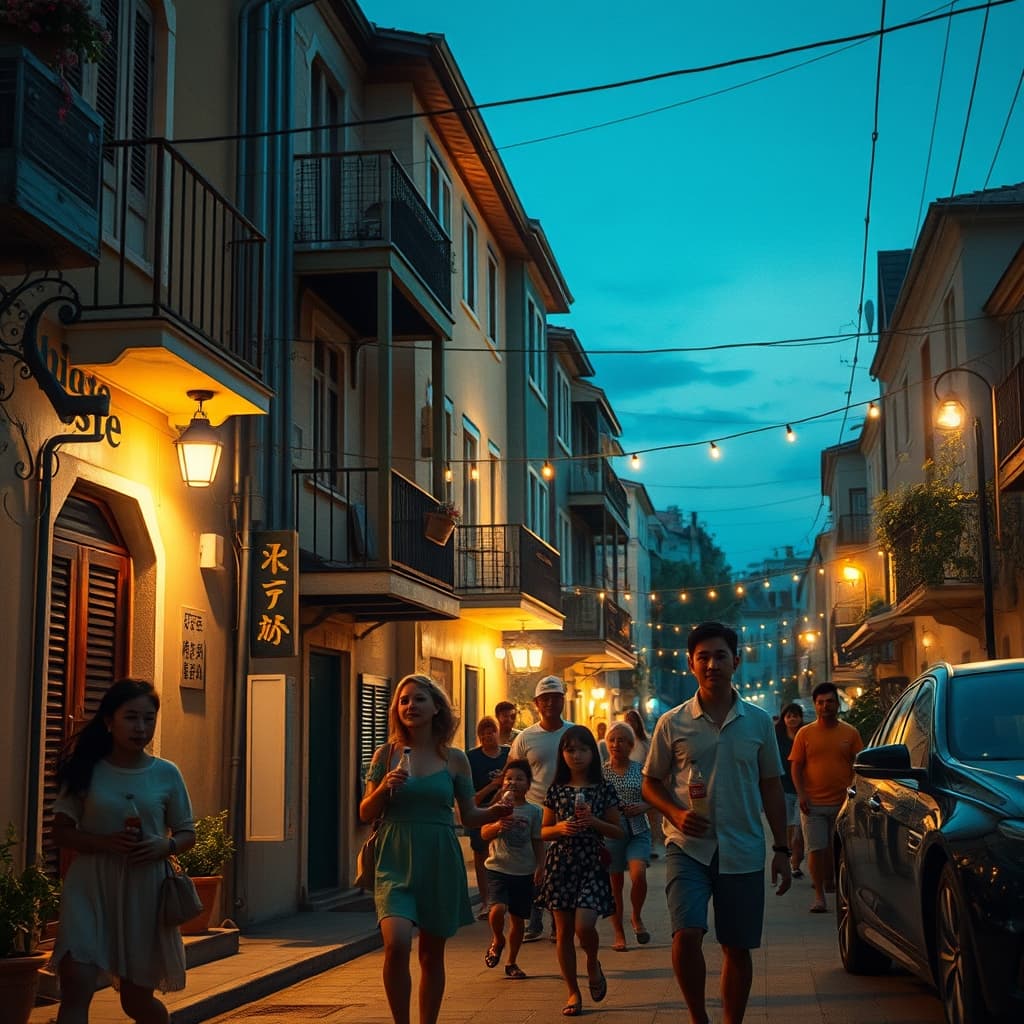
What made summer cinema evenings unforgettable was not only the scenes left behind on the screen, but the shape the street took on the way home. Once the film ended, wooden chairs emptied with a creak, children moved toward the gate holding soda bottles or paper cones of sunflower seeds, and adults began discussing the most striking scene before they had even left the grounds. During that short walk back into the neighborhood, the night cool had just begun to settle, windows were still open, balcony lights were spilling outward, and every corner of the street seemed filled with the echo of people who had watched the same story. That is why the streets after the summer cinema were never only a route of return. At that hour, the street became the neighborhood's shared sitting room. Everyone felt a little more familiar, a little more talkative, and a little more inside the same story.
As neighborhood culture, the summer cinema was not merely entertainment. It was a summer-evening stage on which collective feeling took shape. Old newspapers often mentioned the programs of neighborhood open-air cinemas, the custom of attending under the stars as a family, and the fact that streets remained lively long after screenings had ended. That is because the story did not end when the screen went dark. It continued in the street. How an actor cried, which scene made everyone laugh, whether the ending had surprised people, all of it was retold in small clusters while walking home. Cinema thus ceased to be something merely watched and became a shared neighborhood language. The next day, people would continue discussing the same film outside the grocer's shop.
What turned the street into a shared home was precisely this extended togetherness. On nights when there was no rush to arrive, small pauses formed before doorways, children ran one last time, mothers smiled at neighbors and said they would talk tomorrow, and fathers exchanged a few words if they knew the cinema owner or the worker stacking chairs. Voices rose from balconies asking how the film had been, and answers came immediately from below. In some streets the scent of jasmine accompanied those exchanges, while elsewhere the delayed cry of the ice cream seller still drifted through the air. Such small encounters transformed the street from a passageway into a common living room. Even while everyone returned to separate houses, the neighborhood remained together a little longer.
Another reason those nights stayed so deeply in memory is that they gave childhood a feeling of safety within the dark. The street no longer seemed frightening. It seemed full of known voices. Neighbors walking in the same direction, siblings holding hands, the sound of slippers on stone, the light rustle of summer dresses, and the discussion of the film continuing all along the road transformed night into something to be shared rather than feared. Doors did not close immediately. Sometimes stools were carried outside and people sat a few minutes longer in the cool air. In that way, the cinema exit created a second neighborhood scene after the film itself. The feeling of a shared home was built in those extended evenings.
Today, among enclosed halls, fast returns, and more individualized evening routines, the trace left by those summer-cinema streets becomes easier to understand. In those days, the street was not merely crossed. It was shared. The film was completed by neighborliness, and the walk home became a ritual through which the neighborhood recognized itself again. Perhaps that is exactly where the street turned into a shared home. Everyone arrived at a separate door, yet until that moment they remained together inside the same summer night.
The Days of Streets After Returning from the Summer Cinema: How Did They Turn the Street into a Shared Home?