Eski Pano
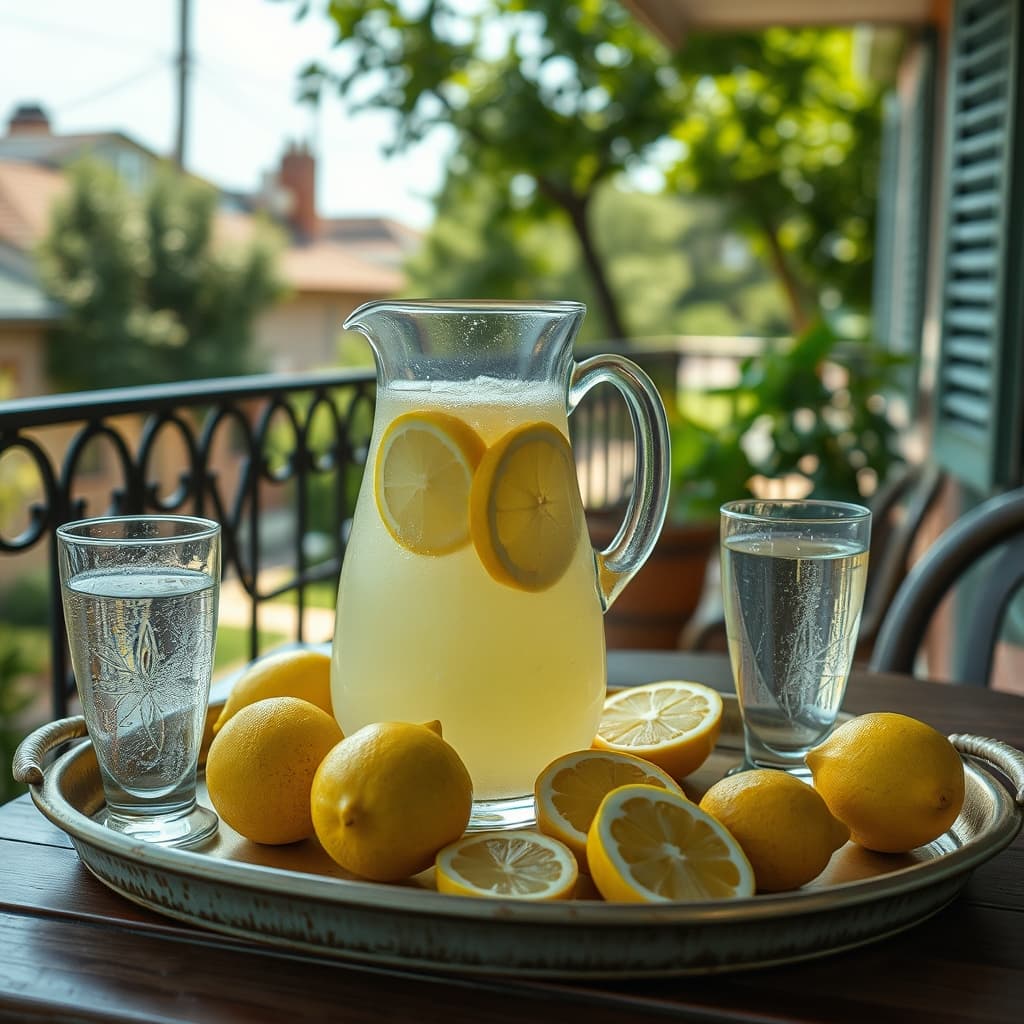
Some drinks do more than quench thirst. They represent the openness of a home and its willingness to share. A summer afternoon with lemonade is exactly such a scene. In the hours when the heat of summer had settled into the walls, the scent of grated lemon peel in the kitchen, thin slices floating in a glass pitcher, and the coolness that reached the drink slowly, often from a well or an old icehouse rather than from modern ice trays, turned the afternoon into something more than an ordinary time of day. Children returned from the street flushed with heat, a neighbor called out through the half-open door, and while one hand lined up the glasses, the other poured freshly prepared lemonade into the pitcher. This was one of the simplest yet strongest images of a culture of sharing. Lemonade was a cool form of courtesy through which what the house possessed could be offered outward.
Within taste memory, lemonade reveals the seasonal, laboring, and communal side of old kitchen culture. In times before ready-made drinks were common, preparing lemonade was itself a small domestic ritual. Lemons were squeezed with care, the bitterness of the peel carefully balanced, sugar stirred until fully dissolved, and the pitcher sometimes brightened with mint leaves or extra slices. This work was done not only to create flavor, but to take hospitality itself seriously. If there was lemonade in the house, a glass was surely offered to a guest, to a child returning from play, to a neighbor exhausted by the heat, or to a relative dropping in at dusk. Much of the drink's value lay in how naturally it could be shared.
The memory of a lemonade summer afternoon also shows how lively the connection once was between kitchen and street. This was a form of offering built not around delicate tea glasses, but around wider water tumblers lined up on a tray, sometimes accompanied by a few biscuits or savory crackers. Such an arrangement suggested that domestic life was not sealed off, but porous. Children continued playing outside while hearing their mother call for them to serve their friends as well. A neighboring woman might ask for the recipe, praising the drink, while an older relative remarked that in earlier times lemonade had been made with a little less sugar. Around a single glass, recipe, manners, generosity, and seasonal knowledge all circulated. Old kitchen culture lived precisely within that circulation.
Another reason lemonade carried a culture of sharing is that it could offer hospitality without grandeur. Not every household could lay out large tables, but a cool pitcher of lemonade was often enough. A thin cloth on the table, a shaded balcony corner, an enamel tray, a few scratched glasses, and a sincere offering could soften the fatigue of the entire summer day. That is why lemonade was not only the memory of a sweet and sour freshness on the tongue. It was also a measure of the house's generosity. Because it could reach many people with modest ingredients, it became the drink of sharing in the fullest sense. Perhaps that is why, when remembered, it brings back not only taste, but also the voices surrounding it.
Today, among packaged drinks, instant refreshment, and fast summer habits, it is easy to understand why old-style lemonade is still recalled with affection. It keeps alive an older kitchen culture while also preserving one of the most ordinary forms of sharing. Lemons squeezed in the kitchen, coolness waiting in the pitcher, and a glass extended toward the doorway still carry the sincere but careful etiquette of earlier home life. That is why a lemonade summer afternoon remains more than a flavor. It is a memory of cooling down together, sitting together, and opening the home outward.
Lemonade Summer Afternoon: How Does It Carry a Period's Culture of Sharing and Keep Old Kitchen Culture Alive?