Eski Pano
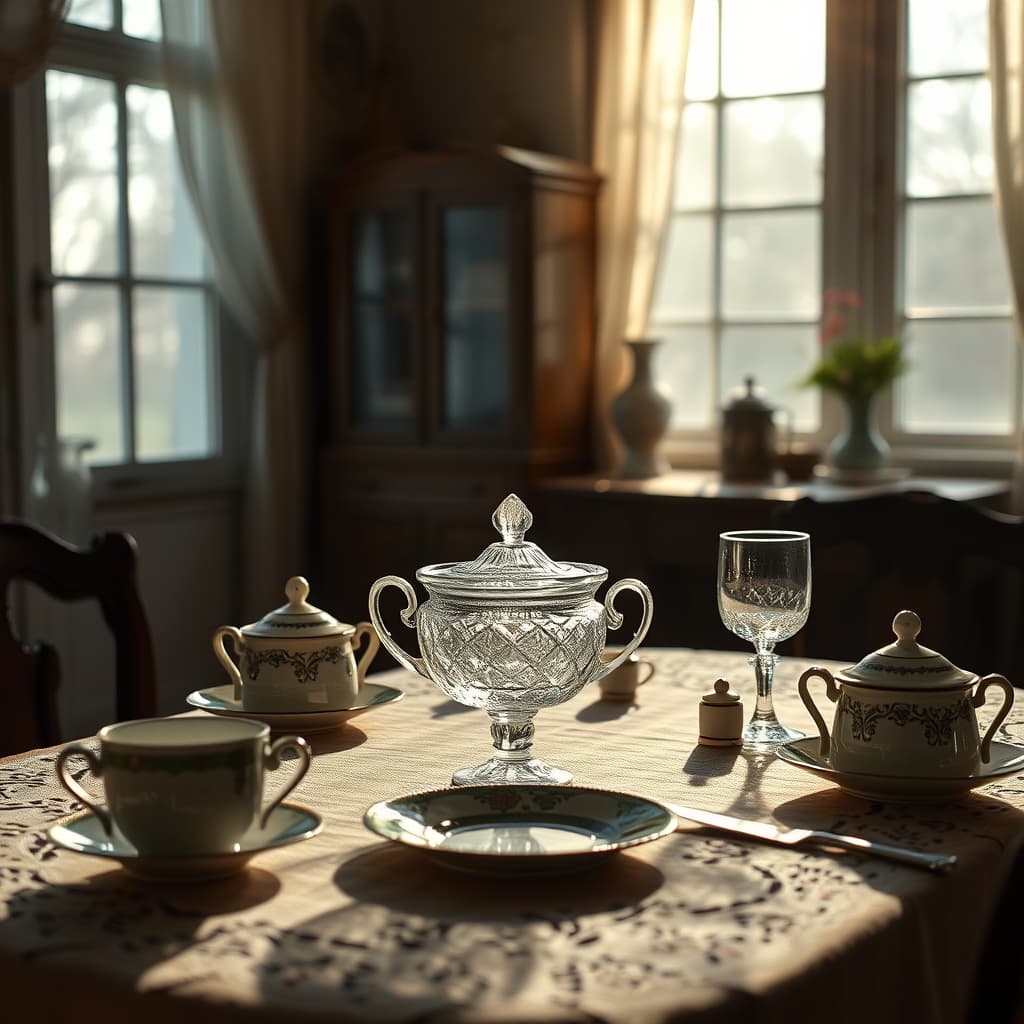
Some objects appear small on a table, yet occupy an unexpectedly large place in the memory of a household. The crystal sugar bowl is one of them. Brought carefully from the display cabinet when guests were expected, filled with sugar cubes or bright hard candy, and placed either beside lace or at the center of a silver tray, this elegant object did far more than accompany refreshments. It made visible the manners of the house, the seriousness of preparation, and the sense of refinement carried from one generation to another. When the crystal caught the afternoon light filtering through curtains, even the air of the room seemed more ordered and more ceremonial. That is why, as a family heirloom passed from hand to hand, the sugar bowl represented far more than an ordinary domestic item.
As an object story, the crystal sugar bowl is one of the most graceful unions of aesthetics and everyday use. Before tea was poured, the hostess placed the bowl on the table, left the sugar tongs beside it if there were any, warned the children not to touch it, and the elders usually knew exactly from whom the piece had been inherited. It might have emerged from a grandmother's chest, arrived with a marriage trousseau, or once been purchased for a special day many years earlier. However it came into the house, as it passed from hand to hand it carried not only the fragility of glass, but the codes of domestic behavior. How it should be offered to a guest, where it should stand on the table, and when children were allowed to approach it were all part of the invisible rules formed around the object.
What truly shaped household rituals was not the sugar inside the bowl, but the scene of behavior that gathered around it. As afternoon tea was prepared, plates sounded softly, napkins were set out, slender glasses arranged, and the crystal bowl took its place at the center. Even the hand reaching for sugar became more measured. A child might try to take one extra piece, and an older relative would gently smile and correct them. During holiday visits the bowl might hold hard candy, on ordinary afternoons sugar cubes, and sometimes Turkish delight or sugared almonds, each giving the same object a slightly different meaning. In that way it became more than a serving piece. It turned into a quiet center that set the tempo of hospitality itself. The feeling of elegance in the home was often built around such small centers.
Its status as a family heirloom transforms the crystal sugar bowl from an object left behind by the past into one that actively keeps the past alive. A small scratch in the glass, a slight dullness on the lid, or wear along the base are all silent witnesses of long use. The warmth that a newly purchased perfect object can never produce lies precisely in those signs of having been lived with. Objects passed through a family inherit not only their form, but also the sounds and habits that have settled upon them. Someone seeing the bowl may suddenly remember a grandmother's sitting room, evening light behind curtains, or the slight hurry of preparing tea for visitors. The emotional force of the object lies in its ability to continue summoning such scenes even after its practical importance fades.
Today sugar often comes in packets and serving has grown quicker and plainer. Yet none of that diminishes the place of the crystal sugar bowl in memory. It remains one of the small but persistent carriers of old domestic rituals. As it passed from one hand to another, it was preserved not only from breaking, but also as a keeper of manners, preparation, sharing, and grace. That is why, even when it stands quietly in the corner of a cabinet, it still recalls the order of older homes.
The Crystal Sugar Bowl and Its Life as a Family Heirloom Passed from Hand to Hand: How Did It Shape the Rituals of Domestic Life?