Eski Pano
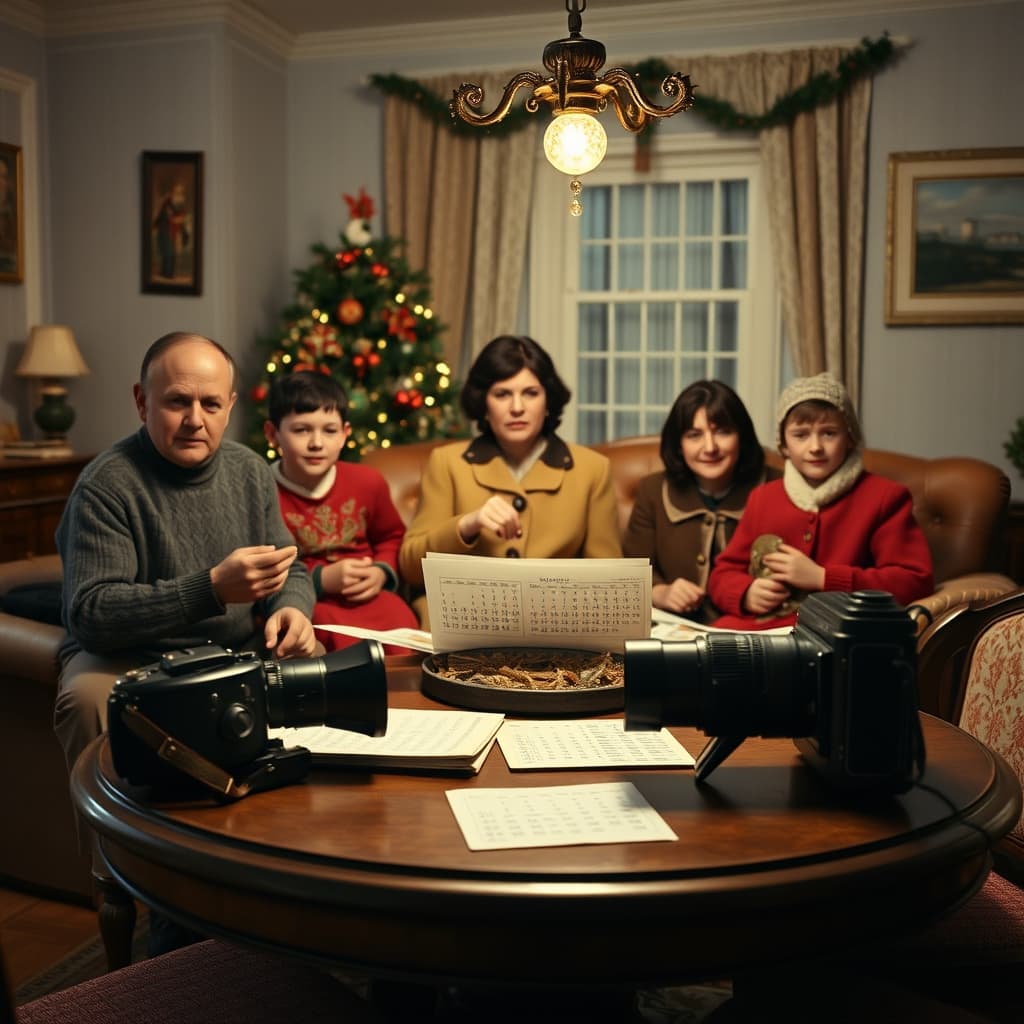
Some holiday preparations began not only in the kitchen or the guest room, but in the most careful corner of the living room. A film camera placed neatly on the table, a flash cube beside it, the small anxiety of counting remaining exposures, and calendar pages thinning in the background gave pre-holiday anticipation in the analog age a special depth. While trays of baklava were prepared, covers changed, and children's new outfits ironed for the visit days ahead, another conversation continued in the house: who would be photographed first, how many frames were left, and at what hour the light would be best. That is why the hours spent beside the film camera were never merely technical preparation. They were the moments when family memory was quietly staged.
As a legacy of technology, the film camera remains one of the most magical tools of the analog age precisely because it demanded patience. One had to think before pressing the shutter. Every frame was limited, every mistake had a cost, and every pause carried meaning. Old newspaper notes about busier studio photographers during religious holidays, family gatherings, and special occasions clearly reveal the social bond created through this technology. When a camera entered the home, it did more than produce images. It gathered people together, straightened their posture, made expressions more serious, and calmed children, if only briefly. The careful sound of loading film, the wiping of the lens, and the calculations made so the flash would not be wasted all carried a ceremonial quality very different from today's quick habits of endless shooting.
That is why the phrase about turning the old calendar pages within holiday preparations feels so vivid. As each page was torn away, the tempo of the house changed with it. One day the windows were cleaned, the next the sofa covers were spread, then the holiday clothes were taken from the wardrobe, and finally the right moment for the photograph was awaited. In this setting, the film camera was more than a device for catching an image. It became a small instrument for measuring time itself. Had the children grown taller since the previous holiday, had more lines appeared on grandmother's face, were the siblings once again sitting before the same cushion, all of this would later be read from the developed prints. The excitement of the analog era survives not because the image was captured, but because it had to be awaited. The unknown photographs, hidden until the film was processed, gave memory a larger room in advance.
The hours spent beside the film camera also revealed the domestic roles of the household. The father often acted like the one who understood the settings, the mother adjusted collars and sleeves, elders suggested another angle, and children tried to guess at what precise moment they were supposed to smile. In some homes the camera appeared only during holidays, wrapped in soft cloth inside a cupboard the rest of the year. The moment it was brought out, the house filled with both seriousness and cheerful unease. That small device had the power to turn passing minutes into memory. What tends to be forgotten in the ease of the digital era is how precious and how limited that transformation once felt.
Looking back now, the film camera stands not only as a technical inheritance, but as an emotional one. Holiday preparation, calendar pages, freshly ironed clothes, eyes searching for the best light, and family portraits taken under the warning not to move all reveal how a generation lived more carefully before time. The unforgettable thrill of those hours comes exactly from that condition. Because everything could not be endlessly repeated, everything mattered more. Every frame felt like a small gift wrested carefully from passing time.
Hours Spent Beside the Film Camera: Telling the Unforgotten Excitement of the Analog Age by Turning the Old Calendar Pages Within Holiday Preparations