 Eski Pano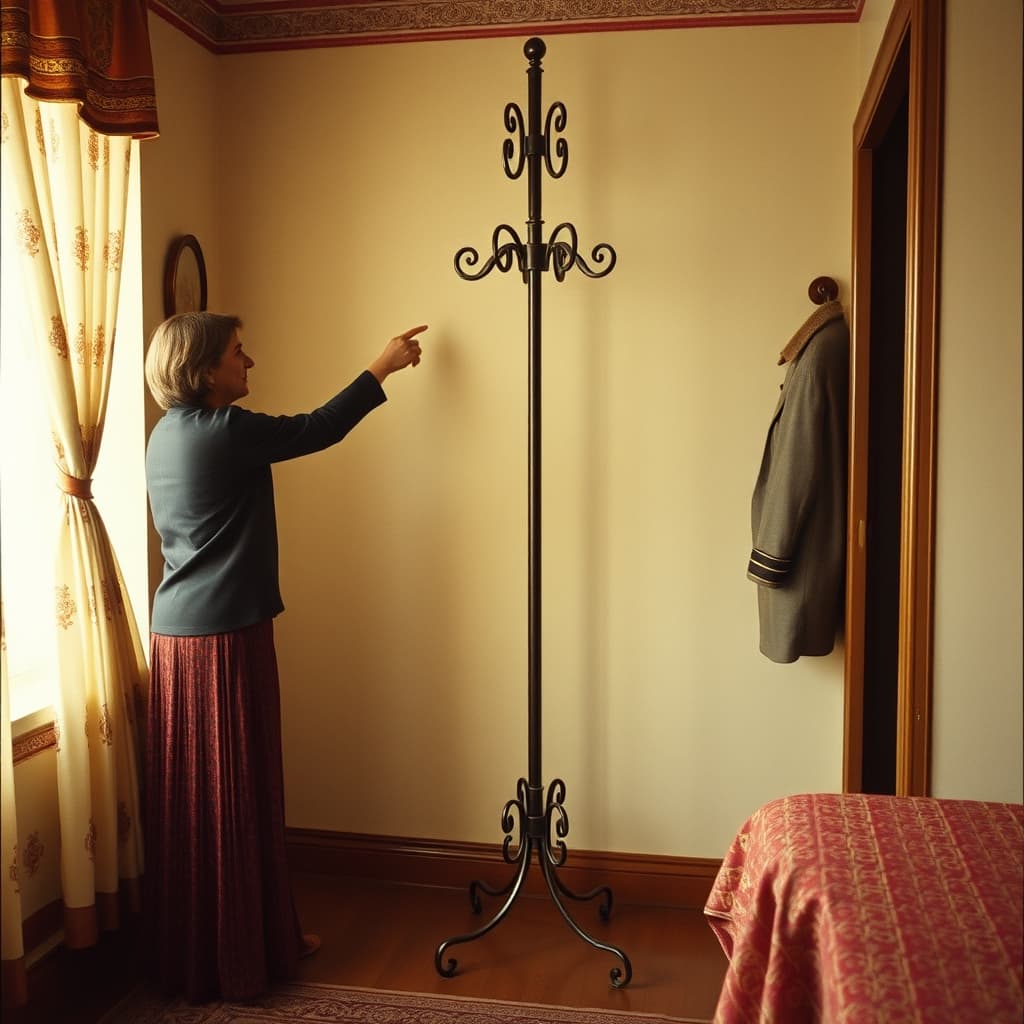
A wrought-iron coat stand can carry the patience of a dowry room into a modern hallway, but its height and decorative hooks also create leverage. Heavy coats placed on one side, an uneven floor, a loose joint, or a climbing child can overturn the object. Safe display begins with stability rather than assuming that iron is too heavy to fall.
Stands vary by forged or cast components, tubular steel, welded repairs, detachable hooks, umbrella rings, marble inserts, paint, feet, and later alterations. A floor-standing rack differs from a wall hanger. Maker marks, family photographs, joinery, tool evidence, old finishes, repair notes, and dimensions help identify construction.
The Base Must Resist the Tallest Load
Inspect whether all feet contact the floor and whether the base is cracked, bent, incomplete, or fitted with unsuitable pads. Thick rugs, sloping tiles, soft boards, and door thresholds can destabilise it. Do not improvise balance with folded paper or loose blocks. A competent professional should assess structural defects.
Test stability without loading and without standing in the potential fall path. Add garments evenly and conservatively, keeping heavier items lower when the design allows. Bags, umbrellas, and long coats can swing or snag. The original number of hooks does not prove that each can safely carry a modern winter coat at the same time.
Children Change the Risk Calculation
Decorative scrolls and lower rings can resemble climbing holds. A child pulling a coat, hanging from a hook, or circling the stand can create enough force to tip it. Placement should avoid play routes, beds, stairs, and door swings. Supervision is useful but should not replace a suitable restraint or safer location.
Sharp finials, protruding hooks, chipped paint, rust flakes, and pinching joints require attention. Covers that hide points may also detach and become choking hazards. Historic paint can contain hazardous substances, so sanding or stripping should not begin without material assessment and containment.
Wall Restraint Must Respect Object and Building
A discreet restraint may reduce tipping, but it must suit the stand, wall construction, fixings, load, fire route, and conservation needs. String around ornament is not an engineered solution. Drilling historic metal or masonry can cause irreversible loss. A conservator and qualified installer can design a reversible approach.
Move the stand unloaded, with detachable parts documented and packed separately. Do not drag it by hooks or lift it from a decorative crown. Measure doors and turns, protect floors, use enough people, and agree on hand positions. Corroded iron and old welds may fail under a lifting force they tolerate while standing.
Cleaning should preserve old finishes and evidence of workmanship. Water trapped in joints, harsh wire brushing, polish, and repainting can accelerate corrosion or erase tool marks. Control indoor humidity, keep the stand away from leaks and wet umbrellas, and record new changes with photographs.
A Digital Nostalgia Archive can connect the coat stand with maker, metal, base, hooks, finish, dowry history, owners, loads, repairs, corrosion, stability assessment, restraint, moving record, and current use. Craftsmanship remains visible when the object stands securely. Preserving it means recognising that weight, height, family life, and modern coats interact every day.