 Eski Pano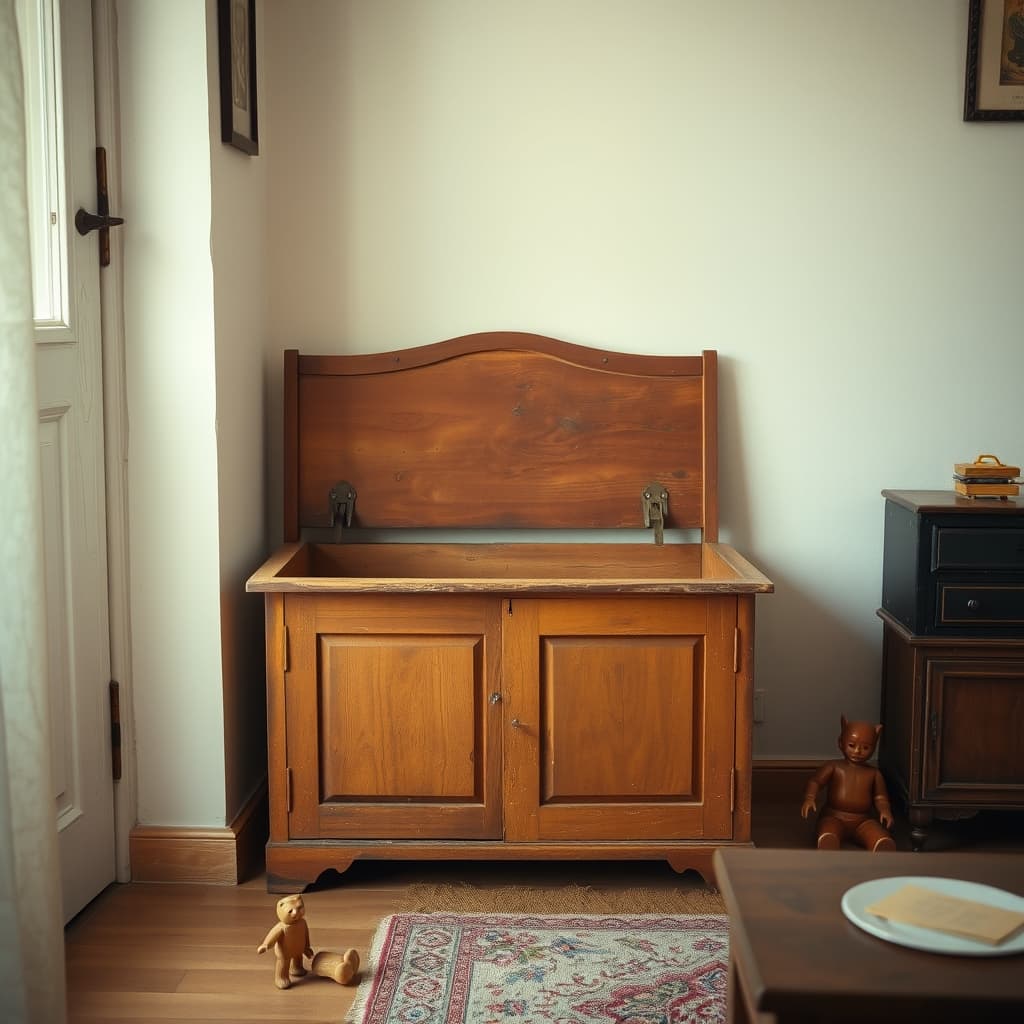
A wooden toy chest could begin as practical storage and later become one of the most visible objects in a living room. Its size gave it the presence of furniture, while painted panels, carved details or a polished lid reflected domestic taste. When children no longer used it daily, the chest might hold textiles, photographs or keepsakes and move from a bedroom corner to a place of display.
Construction determined both durability and risk. Boards, joints, hinges, handles and the lid carried repeated force. A heavy lid without safe support could injure small fingers, and a tight box required ventilation if a child might climb inside. Historical appreciation should not suspend present safety judgement. Display and reuse need to account for how the object will function now.
Wear Mapped The Movement Of Play
Scratches near the base could come from toys being dragged in and out; polish on the edge suggested repeated hands; chips in paint showed impact. These marks document use without identifying a particular game. Stickers, names or drawings may offer stronger context, but they still require reliable family testimony before being assigned to a person or date.
The interior often differed from the decorative exterior. Dust settled in corners, small pieces slipped beneath a tray and rough boards caught fabric. Cleaning should begin with documentation and gentle methods. Old paint or coatings may contain materials requiring caution, so sanding or stripping for a fashionable finish can destroy evidence and create a hazard.
Moving Into The Salon Changed The Chest's Meaning
Once displayed, the chest was judged as design as well as storage. A family might value its wood grain, craftsmanship or association with childhood. Placement beside a cabinet or under a window connected it to current furniture. The object no longer disappeared after tidying; it became a visible statement that a useful, worn thing deserved room among formal possessions.
Repair could support this new role. Loose hinges, split joints and damaged feet needed stabilisation, ideally with interventions that remained distinguishable and reversible where possible. Replacing every irregular part might erase the record of maintenance. A careful conservator asked whether the goal was safe use, storage, exhibition or all three.
The wooden toy chest belongs in a Digital Nostalgia Archive because it crosses categories normally kept apart: childhood, furniture, craft and inheritance. Its appeal to collectors should not rest on an invented owner or flawless restoration. The strongest story is material. Wood was shaped into storage, struck and opened through years of play, adapted when needs changed and finally placed where visitors could see it. The chest reflects a period's taste because usefulness and decoration remained joined on the same worn surface.
Provenance should travel with the chest. A dated photograph of it in an earlier room, a purchase receipt or a reliable written account can connect material evidence to family history. Keeping copies inside an archival envelope nearby is safer than gluing new labels onto old wood. This preserves both surface and context for the next keeper.