 Eski Pano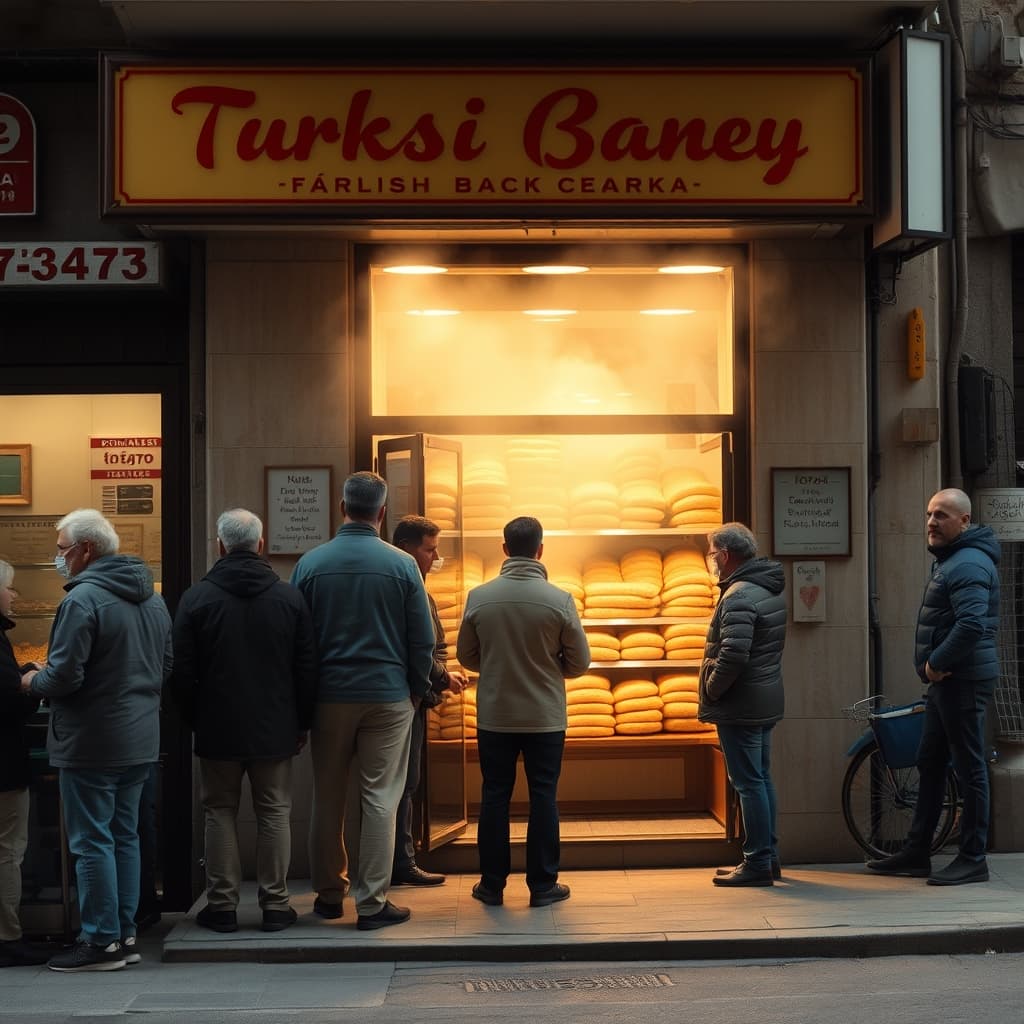
The queue outside a neighbourhood bakery formed around heat and timing. Customers did not simply want bread; many wanted the batch expected to emerge closest to breakfast, dinner or a household gathering. The smell reached the pavement before the trays appeared. People adjusted their place near the entrance, leaving room for deliveries and those exiting with paper-wrapped loaves.
Regular customers learned the bakery's rhythm. They knew when a particular bread was likely, which hours were busiest and whether an approaching holiday or weather change would lengthen the wait. This knowledge was never perfect. Oven schedules shifted, dough behaved differently and demand exceeded expectation. The queue made uncertainty public, turning a production delay into a shared calculation.
The Next Batch Gave The Queue Its Clock
Someone asked how many minutes remained; the answer travelled backward through the line. A customer might leave briefly for another errand and ask a neighbour to protect the place. Others counted trays or estimated the number of loaves ahead. Such practices required informal etiquette. Cutting in, reserving too many places or buying an unexpectedly large quantity could cause dispute.
The counter connected the visible queue to work behind it. Mixing, resting, shaping, loading, baking, cooling and handling payment had to converge. Heat and flour made the job physically demanding. Bakers and assistants managed speed without sacrificing safety. A remembered aroma should not conceal night work, early starts and the pressure of serving many households within a short window.
Waiting Turned Customers Into A Temporary Public
Conversation in line covered immediate concerns: a late bus, the price of an ingredient, a neighbour's delivery or whether school had closed. People who did not visit one another could still exchange information. Yet the queue was not always warm. Hunger, fatigue, scarcity and unequal treatment could sharpen tempers. Trust depended on transparent order and respectful service.
Bread moved quickly from public commerce into private meals. A child carried it carefully, an adult checked the number of loaves and steam softened the wrapping on the walk home. Some pieces were eaten before reaching the table. That temptation became part of memory because freshness was temporary; the queue had delivered access to a brief state of crust, heat and aroma.
Industrial distribution, supermarkets, pre-ordering and delivery have changed how bread reaches homes, while neighbourhood bakeries remain vital in many places. The bakery queue belongs in a Digital Nostalgia Archive because it reveals a daily intersection of production and community. Its place at the heart of city life came not from waiting alone, but from the repeated coordination of oven, worker, pavement and household need.
The queue also revealed how bread choices changed through the day. A household might prefer one shape for breakfast and another for dinner, while availability required substitution. The seller translated between what the oven had produced and what each customer hoped to carry home. Remembering names and usual quantities made this negotiation faster, provided familiarity did not become pressure to buy. That distinction protected both courtesy and choice.