 Eski Pano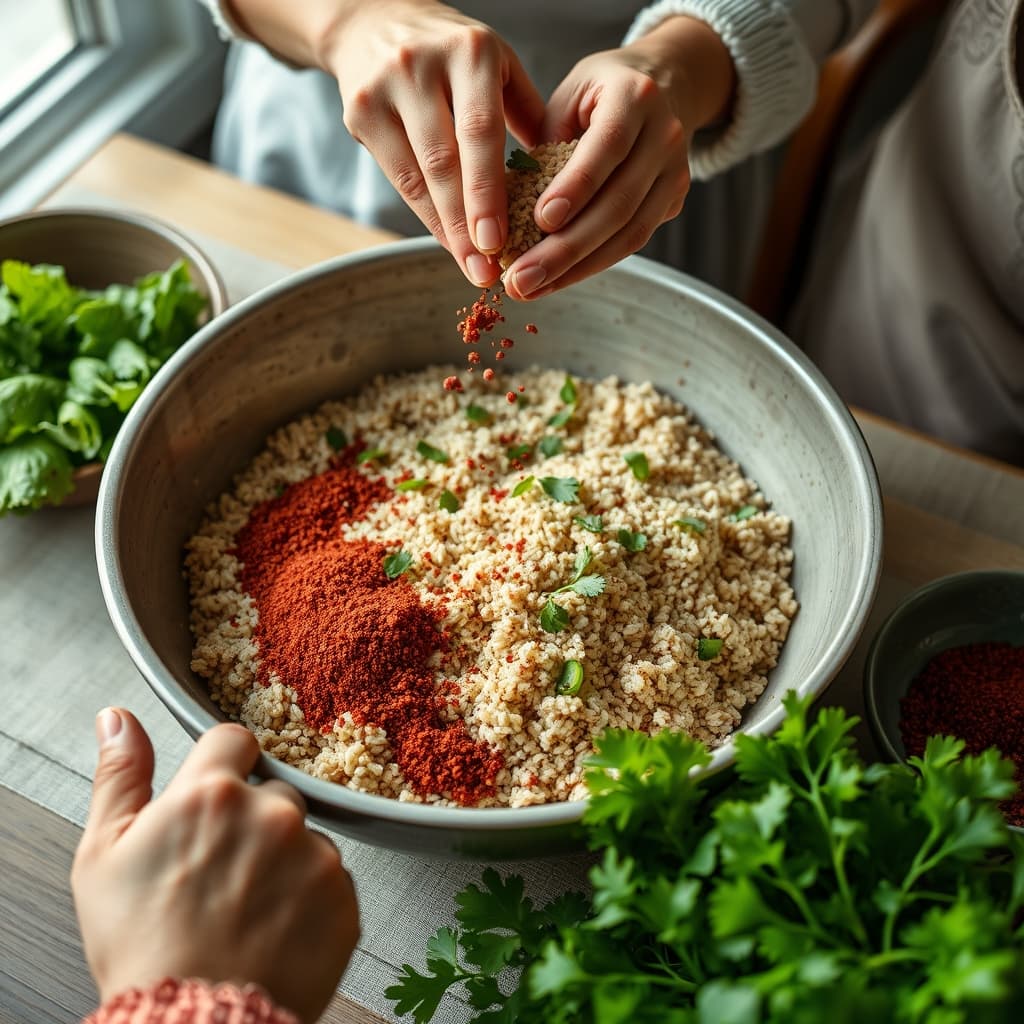
Sumac entered kısır as more than a final red dusting. Its tartness could shape the balance of bulgur, tomato or pepper pastes, oil, herbs and other seasonings from the moment the mixture was tasted. In some households it was added directly; elsewhere sumac liquid or a different sour element played a role. Family recipes grew through such decisions rather than one fixed formula.
Kısır varies significantly across regions and kitchens. The grain size, softening method, paste balance, amount of oil, choice of greens and degree of heat all change. A responsible article does not declare one bowl authentic and the others mistaken. It asks what texture and flavour the household sought, what ingredients were available and how the person mixing judged readiness.
The Bulgur Needed Time As Well As Liquid
Fine bulgur absorbed moisture gradually. Too much liquid could make the mixture heavy; too little left a hard centre. Covering and resting allowed the grain to soften before vigorous mixing. Hands or a spoon then distributed paste and seasoning. Colour alone could mislead, so texture and taste had to be checked together.
Sumac contributed acidity and aroma whose strength varied with freshness and source. Adding it in stages allowed adjustment. Greens were often introduced after the bulgur cooled enough to protect their texture and colour. Washing, drying and chopping them was substantial work, especially for a large gathering. The bright finished bowl rested on many quiet preparatory tasks.
A Family Recipe Lived In Corrections
Instructions such as “until it takes enough” or “as much as the bulgur needs” depended on learned judgement. One person tasted and requested more sourness; another adjusted salt or oil. Younger helpers learned by watching these corrections. The recipe moved between generations not as an unchanging document but as a pattern of decisions.
Serving also shaped memory. Kısır might be spooned onto lettuce leaves, placed in a shared dish or accompanied by tea and other foods. Portions, garnish and occasion differed. Food safety remained important: washed produce, clean utensils, suitable storage and limited time at warm temperatures matter, particularly when the dish is prepared in quantity.
Kısır remains widely made, so preserving it does not mean rescuing a vanished dish. Its place in a Digital Nostalgia Archive lies in documenting variation and household skill before they are flattened into a single online recipe. Sumac kısır carries family memory because every bowl invites comparison: more tart than last time, softer than an aunt's version, greener than the winter table. The first forkful recalls not only flavour but the conversation through which the recipe continues to change.
Writing a family version can preserve its decision points without pretending to freeze it. Notes should include bulgur type, approximate method, sensory signs and acceptable substitutions. Recording who supplied the information and when makes later changes visible rather than treating them as mistakes. A photograph of the finished texture can support the words without replacing the cook's judgement. Future home cooks can then carefully compare outcomes while retaining room to adjust.