 Eski Pano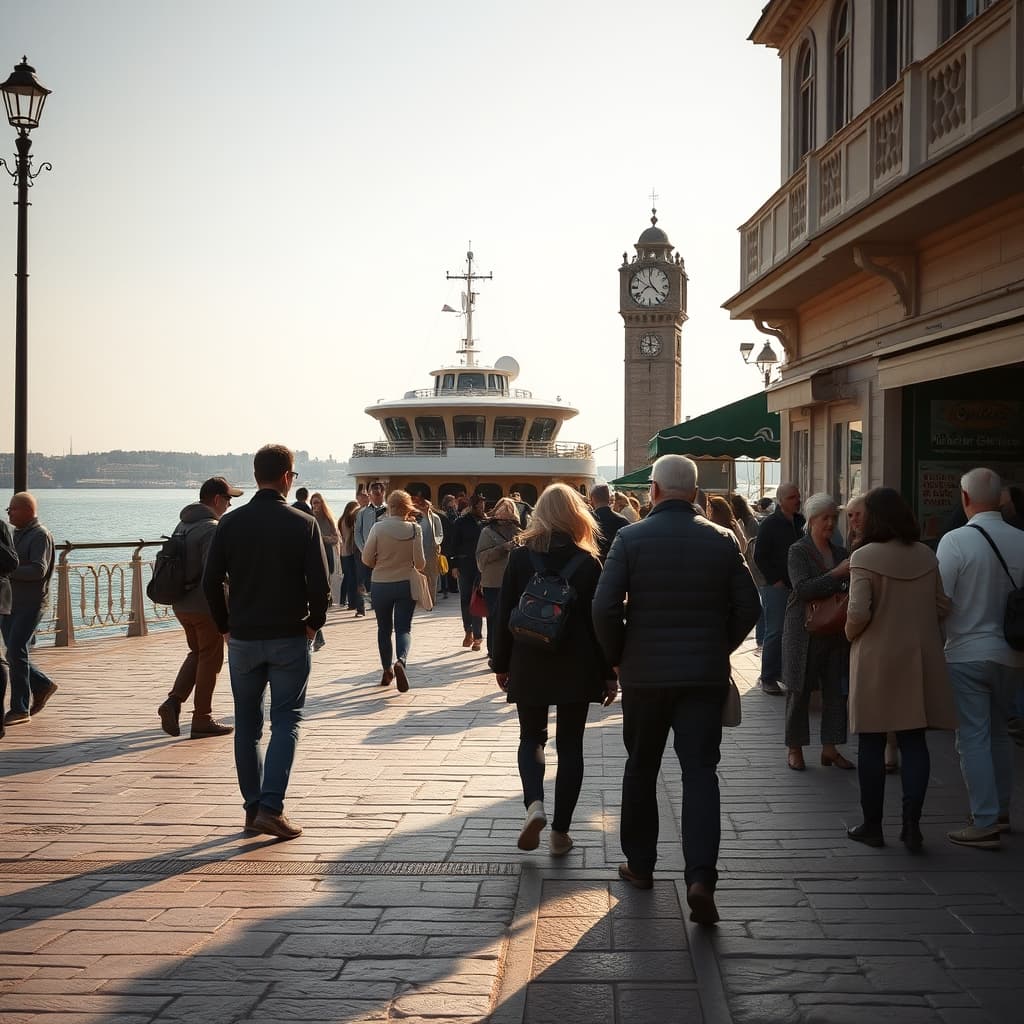
“Meet at the ferry square” could function as a complete plan when everyone understood the same landmark. The clock, ticket office, tea garden, tree, railing or entrance provided a more precise point without requiring a written address. People arrived from boats, buses, side streets and markets, converging in a space designed for movement. Waiting turned that flow into a temporary place of belonging.
The agreement depended on shared knowledge. A newcomer might need directions, while regular users knew where the crowd thinned and which corner stayed visible. Ferry timetables influenced punctuality but did not control it completely. Delays, weather, queues and missed connections introduced uncertainty. Meeting meant calculating not only distance but the rhythms of public transport and the habits of the person expected.
A Landmark Reduced The Need For Messages
Before mobile phones, changing a plan after departure was difficult. A clear landmark therefore carried responsibility. The person who arrived first stayed visible, scanned passengers and resisted wandering too far. If someone was late, the waiting person decided how many ferries or buses to allow before leaving. A kiosk attendant or familiar vendor might be asked whether another person had passed.
The square made reunion public. A wave across the crowd, a bag raised as a signal or a face turning repeatedly toward the pier communicated before words. Families gathered children, friends counted their group and visitors received the first directions for the next stage of the day. The meeting point organised movement outward as much as arrival inward.
Waiting Revealed The Square's Daily Layers
While standing still, people noticed work that movement usually concealed: cleaners clearing the pavement, porters handling goods, ticket staff answering repeated questions and sellers adjusting to each arrival. The square changed between commuter rush, midday pause and evening return. Its shops and benches served different publics according to the timetable.
Not every wait was warm. Crowding, poor weather, inaccessible design, harassment or a missed connection could make the square difficult. Public familiarity did not guarantee safety or equal comfort. A responsible memory includes the practical strategies people used—standing near light, choosing a busier corner or accompanying someone home.
Digital maps and instant messages now allow precise updates, while ferry squares remain major meeting points. Their earlier role belongs in a Digital Nostalgia Archive because it shows urban trust attached to shared geography. The agreement was wordless only after repeated collective learning. Stone pavement, timetable and a recognisable corner became a communication system. The ache in memory comes from how confidently people once placed themselves in public space and expected another person to find them there.
Personal plans also used the square differently. A worker might meet someone during a short connection, while a family allowed extra time for children and luggage. Recording these variations prevents the meeting point from becoming a single romantic scene. The same landmark supported hurried exchanges, long waits, farewells and first arrivals. Its meaning came from accommodating all of them without requiring the square itself to change. That flexibility was essential.