 Eski Pano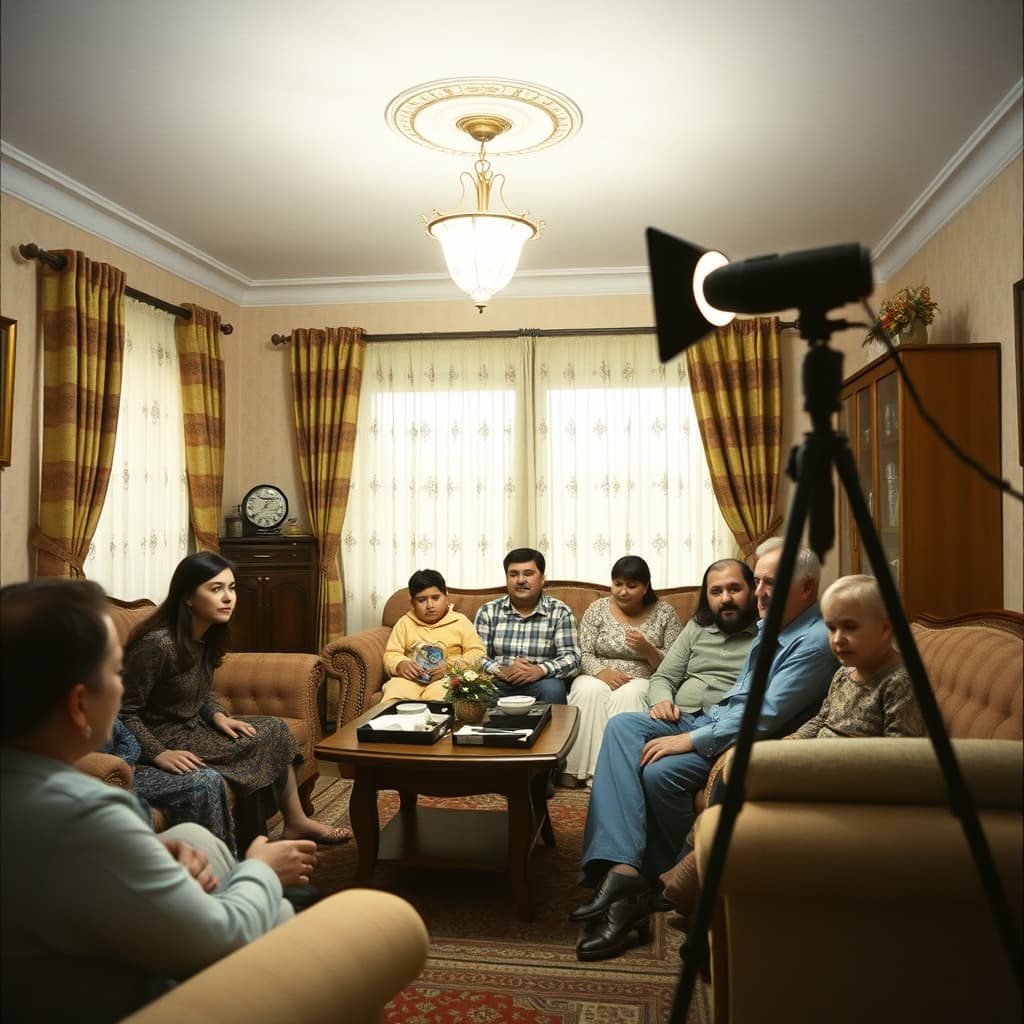
Indoor family photography changed when a flash could be angled toward a pale ceiling or wall rather than aimed directly at faces. The reflected light could soften shadows and spread illumination through the room, but the result depended on surface colour, height, distance and the flash unit's power. Using a bounce flash was therefore not a guaranteed trick. It was a small act of judgement performed while everyone waited.
The group had to be arranged before the moment passed. Chairs moved, taller relatives stood behind, reflective glass was noticed and children were persuaded to look toward the camera. The photographer checked the flash angle and camera settings according to the equipment. Technical systems varied widely, so no universal aperture, distance or charging time can be assigned to every device.
The Ceiling Became Part Of The Lighting Equipment
A white or neutral ceiling returned light differently from dark wood, coloured paint or a very high surface. Tilting the flash also changed the path and reduced the amount reaching the subject. Experienced users learned through test photographs, guide scales, manuals or advice from photographers. They watched for deep eye shadows, uneven illumination and bright reflections.
Between photographs, the flash might need time to recharge. An indicator signalled readiness on some models, and batteries weakened with use. Pressing too early could produce little or no flash. The pause became part of the ritual: people held their places, relaxed, then assembled their expressions again when the photographer announced that the unit was ready.
A Single Flash Asked The Room To Cooperate
Film made immediate checking impossible or limited. The photographer relied on preparation and could take an extra frame for safety, mindful that each exposure had cost. Family members supplied advice, sometimes creating confusion about where to look. The final image depended on technical control and the group's ability to remain still together.
Flash units contained electronics that required careful handling. Battery leakage, damaged contacts, cracked shoes or cables and high-voltage components belonged to repair work rather than casual experimentation. A technician could clean, test and replace suitable parts, but safety and compatibility came first. Proper storage removed batteries during long periods and protected the unit from impact and damp.
Phones now manage low-light photography automatically, while bounce flash remains a professional technique. Its place in a Digital Nostalgia Archive lies in the visible ceremony around one indoor picture. The room was rearranged, light borrowed from the ceiling and relatives waited for an unseen electrical charge. The quiet excitement came from uncertainty: nobody knew the result yet, but everyone understood that the brief burst was intended to hold the family together on a frame.
The finished print arrived later and became a second stage of the ritual. Family members compared it with their memory of the flash, noticed who blinked and decided whether the softened light had worked. Negatives and prints then needed labelled envelopes or albums. Without dates and names, the photograph could survive visually while its context faded. Archiving therefore begins after the shutter as much as before it.