 Eski Pano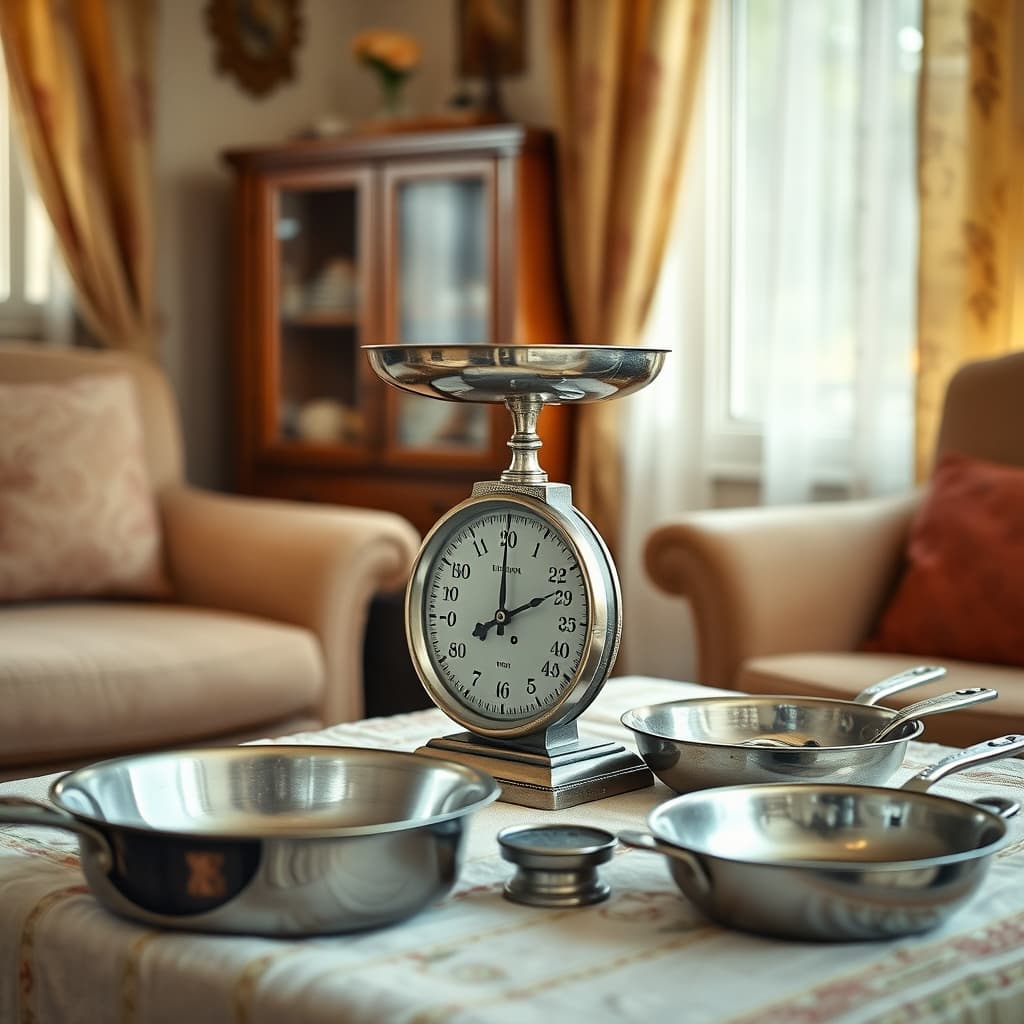
An old balance scale could reappear during holiday cleaning even after regular weighing had ended. Removed from a shelf or cabinet, it was dusted, its pans examined and the metal surface polished according to household practice. The renewed shine made the object visible again, but cleaning also carried risk. Abrasive methods could erase plating, tool marks, labels and patina that documented age and use.
The term “old scale” covers many designs and contexts. Equal-arm balances, spring mechanisms and kitchen or shop scales do not operate identically. A responsible object story identifies the mechanism before describing use. If standard weights survive, their markings and relationship to the scale should be recorded rather than mixed casually with unrelated pieces.
Balance Depended On More Than A Shining Surface
For an equal-arm scale, stable placement, free movement and matched pans mattered. Dirt at a pivot, bent arms or missing parts could affect balance. Decorative display did not prove accurate measurement. If the scale was to return to use, calibration required appropriate standards and expertise. For heritage display, movement should not be forced merely to demonstrate that it still worked.
Holiday cleaning placed the object within a wider domestic sequence. Cabinets were emptied, textiles aired and visible metal made presentable before visitors. The scale's turn connected maintenance with hospitality. Yet this work demanded time and was often assigned unevenly within the household. Remembering the shine should include the hands and planning that produced it.
Storage Preserved The Small Parts
Weights, pans, chains and pointers were easy to separate over time. A fitted box, labelled cloth or designated shelf kept the set together. Damp encouraged corrosion, while wrapping metal in unsuitable paper or plastic could trap damaging conditions. Photographing the complete arrangement before moving it helps future owners understand which pieces belonged together.
As packaged goods and digital scales changed domestic and commercial weighing, an older balance could move into a living-room display. There it represented craft, trade or family continuity, depending on documented history. Its polished face reflected current taste as much as the period of manufacture. Display transformed a measuring tool into a visual statement.
The balance scale belongs in a Digital Nostalgia Archive because it reveals the tension between use and appearance. It once turned comparison into a visible physical act: one side held material, the other a known weight, and equilibrium offered an answer. Later, cleaning and display gave it another role. Preserving both phases—without polishing away evidence or inventing provenance—shows how households adapt practical objects into carriers of memory.
Handling should follow the object's current condition. Supporting both the base and arm reduces strain when lifting, while carrying it by a delicate pointer or chain can create new damage. Loose weights should travel separately in labelled padding. These simple precautions respect the scale as a mechanical assembly rather than treating it as an indestructible ornament. A condition note made before cleaning can record corrosion, missing pieces and existing movement, allowing later changes to be identified accurately. This baseline makes responsible future care easier.