 Eski Pano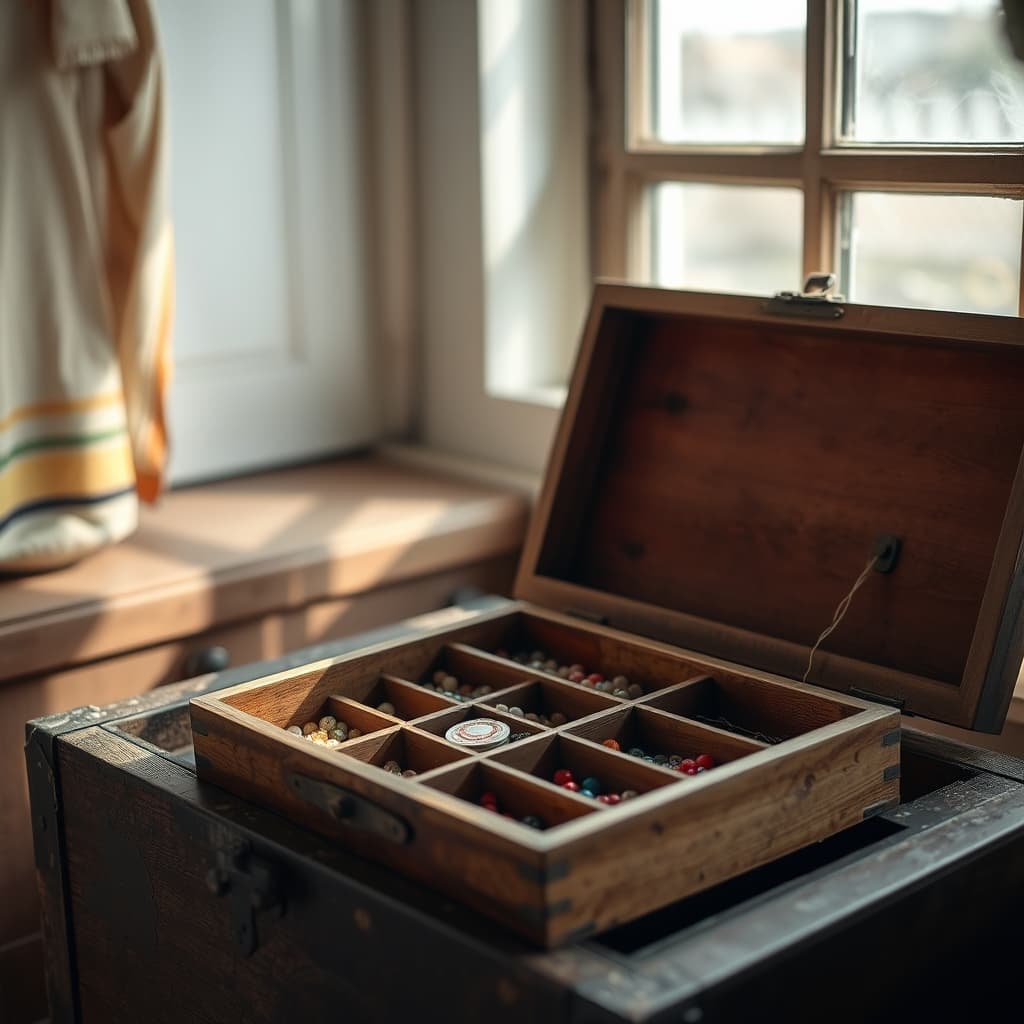
A wooden sewing box discovered at the bottom of a chest often looks like a story already assembled. Its lid may resist, compartments hold mixed thread and a few buttons wait beside pins or a thimble. Yet the objects do not identify their owner by themselves. They offer material evidence: what was stored together, which areas were handled and how a small tool kit remained ready for domestic repair.
The box's construction shaped its use. A hinged lid, removable tray, sliding section or divided interior kept sharp tools apart from thread and cloth. Wood protected contents while adding weight. Joints, handles and closures carried stress. A loose hinge or replacement screw might show maintenance, but dating the box requires more than judging colour or patina.
Compartments Preserved A Working Order
Needles needed a secure place, thread had to avoid tangling and useful scraps were too small to store loosely in a large chest. The box concentrated them near the hand. Its order might seem irregular to a later viewer while remaining perfectly legible to the person who used it. A particular corner could hold shirt buttons, another mending thread and a tray the tools needed most often.
Wear marks help reconstruct movement. Polish around a handle suggests repeated lifting; scratches inside a tray indicate metal tools; darkened edges show contact with fingers. Stains may come from oil, rust, dye or unknown sources and should not be confidently labelled without analysis. Responsible object history keeps observation separate from interpretation.
Repairing Clothes Also Repaired Household Budgets
The sewing box supported small interventions: replacing a button, closing a seam, shortening a hem or reinforcing worn fabric. Skill levels varied, and not every box belonged to an expert needleworker. Even basic repair extended clothing use and delayed replacement. This work consumed time, often performed between other household duties, and its economic value rarely appeared in formal accounts.
Storage inside a larger chest added another layer of protection but could also trap damp or invite insects. Textiles, paper patterns and metal pins affected one another over time. When inherited, the box should be documented before its contents are rearranged. The relationship between a spool, note, button card and compartment may carry more information than any item alone.
The wooden sewing box belongs in a Digital Nostalgia Archive because it joins object design with quiet maintenance. Collectors may admire grain, joinery and aged surfaces, but the strongest record lies in the working interior. Empty spaces, mismatched buttons and repaired hinges show a household choosing to keep useful materials close. The box shines in memory not because every scratch hides a dramatic secret, but because ordinary acts of mending left a durable map inside it.
Before cleaning, each item should be photographed in place. Loose needles require a safe temporary container, while unidentified powders, liquids or corroded metal need caution. Conservation begins by preventing injury and further loss, then choosing treatment according to material rather than making the box look artificially new. Original groups should remain together whenever their relationship is known.