 Eski Pano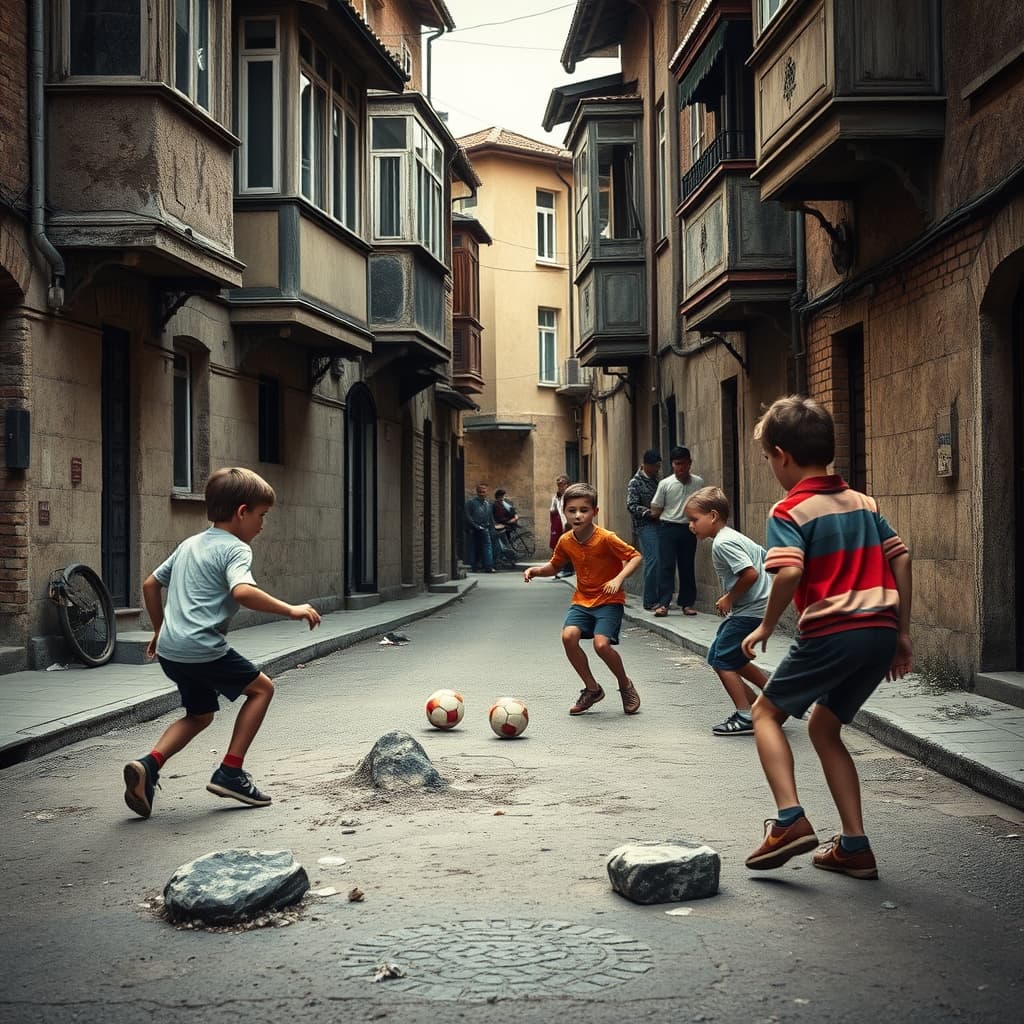
A neighbourhood football match could begin before a complete team had arrived. Two stones, schoolbags or marks on a wall defined the goals, while the available street, courtyard or empty ground determined the shape of the pitch. Players joined as they appeared. Numbers shifted, positions changed and the ball might be softer or more worn than anyone preferred. The match existed because the group agreed to make imperfect conditions playable.
Rules were adapted to the setting. A parked car could be out of bounds, a high ball might be forbidden near windows and play paused when a pedestrian crossed. Older or more skilled children often influenced these decisions, but their authority was never absolute. Younger players argued for a place, neighbours imposed limits and the owner of the ball held practical power because the game ended if the ball went home.
Without A Referee, A Goal Became A Negotiation
Improvised goalposts created the famous disputed score. Did the ball pass inside the stone, above an imagined crossbar or outside because it struck the bag? Players remembered the angle according to their team. Voices rose, witnesses were recruited and the previous decision was cited as precedent. The argument could consume more time than the goal, yet resolving it was part of the game.
Solutions varied. The goal stood, was cancelled, or the play was repeated. Sometimes the strongest voice won unfairly; sometimes a respected player restored balance. These moments taught negotiation but did not automatically produce justice. Exclusion, teasing and unequal skill could make neighbourhood sport painful for some children. Warm memories should leave room for those who waited longest to be chosen.
The Street Set The Match Clock
Play ended through outside signals rather than a stadium whistle. A parent called from a window, a shop needed its entrance, evening traffic increased or darkness hid the ball. Scorekeeping could become uncertain when players came and went. What mattered was often not a formally completed contest but the continuation of play until the shared space was reclaimed by another use.
The neighbourhood around the match participated indirectly. A shopkeeper returned a ball, an adult warned about a window and a younger child waited to join. Tolerance had limits, especially when noise, damage or blocked access affected others. The game survived through repeated compromise between children's desire for space and residents' right to use the same street.
Gated developments, heavier traffic, organised sport and screen-based leisure have changed where spontaneous matches occur. It is too simple to say that warmth disappeared only because architecture changed; time, safety, family routines and access all matter. The disputed neighbourhood goal belongs in a Digital Nostalgia Archive because it records children constructing a public institution from almost nothing. Stones became posts, argument became rule-making and the street became a pitch until another voice called it back.
The ball itself carried status. A new ball could attract players from nearby streets, while a patched or underinflated one changed passing and shooting. Taking responsibility for retrieving it from under a car or behind a wall was another unwritten duty that kept the match possible.