 Eski Pano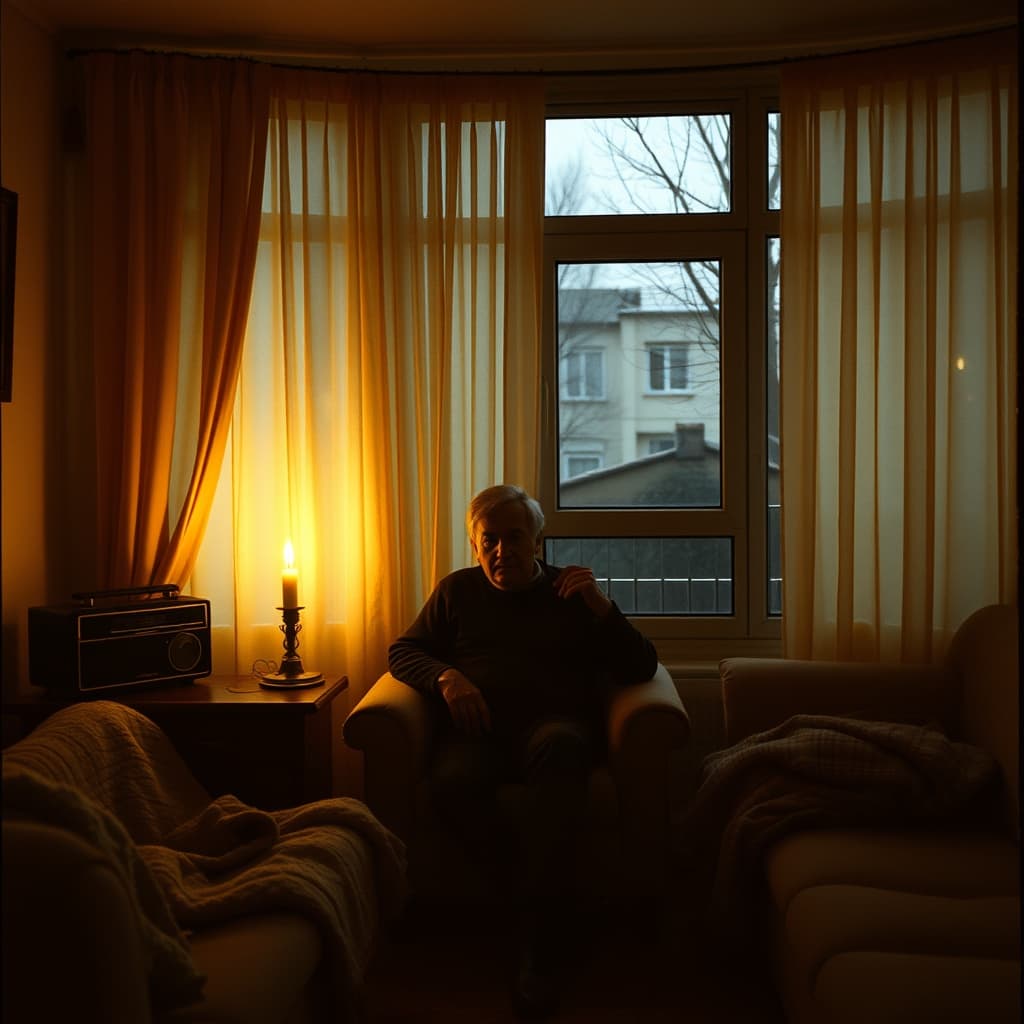
A winter power cut announced itself twice: first through the sudden silence of appliances, then through the small movements people made in response. Someone searched the kitchen drawer for matches, another checked whether the entire building had gone dark, and a child moved towards the window to compare neighbouring flats. The room did not simply lose light. It acquired a different scale, defined by the reach of a candle and the colder patch beside the glass.
In many Turkish towns and city districts, interruptions were common enough to shape household preparedness. Candles stood in saucers so that hot wax would not damage furniture. Torches were kept near spare batteries, although batteries themselves could be old or scarce. A paraffin lamp might remain from an earlier home. Families learned which cupboard held each object, and that practical knowledge passed between generations without needing to be written down.
Faded Curtains Recorded More Than Sunlight
Curtains were part of the household's environmental equipment. They softened bright summer sun, reduced winter draughts and guarded privacy in buildings where windows faced one another. Fabric exposed for years developed pale bands and uneven colour. During a blackout, the same curtains framed the weak glow of candles and the silhouettes of neighbours looking outside. Their fading was not a romantic effect but evidence of orientation, material quality, washing, smoke, heating and prolonged use.
When electric heating or circulation pumps stopped, warmth became an immediate calculation. Doors were closed to keep one room comfortable. Blankets moved from bedrooms to sofas. Tea prepared before the cut retained value because the kettle could no longer be switched on. Households with a gas cooker had different options from those dependent on electricity, while ventilation and fire safety remained serious concerns. Memory often preserves the conversation but forgets the uneven resources behind it.
Conversation Filled the Space Left by Television
Television normally organised the evening by schedule, furniture placement and shared attention. Once its screen went black, voices returned to the foreground. Adults told stories, children proposed games, and familiar jokes gained another performance. A battery radio could restore news or music, yet it did not dominate the room in quite the same visual way. Its dial was adjusted carefully to save power and find a stable signal.
Neighbourly contact also changed. People called from balconies or met on landings to ask whether the fault covered one building or the whole street. Someone with a working stove might offer hot water; someone else lent candles. These exchanges were not proof that hardship automatically created harmony. Noise, cold, fear of lifts, inaccessible stairs and uncertainty about restoration could be exhausting, especially for older residents, disabled people and anyone caring for a baby or medical equipment.
Reading a Blackout as Social History
To document these evenings responsibly, an archive needs more than affectionate recollection. Electricity bills, outage notices, repair reports, torch packaging, candleholders, battery radios and photographs of interiors can establish the material setting. Oral histories should ask who fetched supplies, who reassured children, how food in refrigerators was protected and which residents faced the greatest risk. Such questions turn a general memory into a record of domestic labour and infrastructure.
The blackout evening remains vivid because it exposed the systems usually hidden behind a switch. Grid maintenance, building design, heating choices, household budgets and neighbourly trust all became visible when current stopped flowing. The silence could make room for conversation, but it also revealed dependence and vulnerability. Preserving both sides gives the scene its honest texture: candlelight on a sun-faded curtain, a radio speaking softly, and a household waiting together for the ordinary hum of electricity to return.