 Eski Pano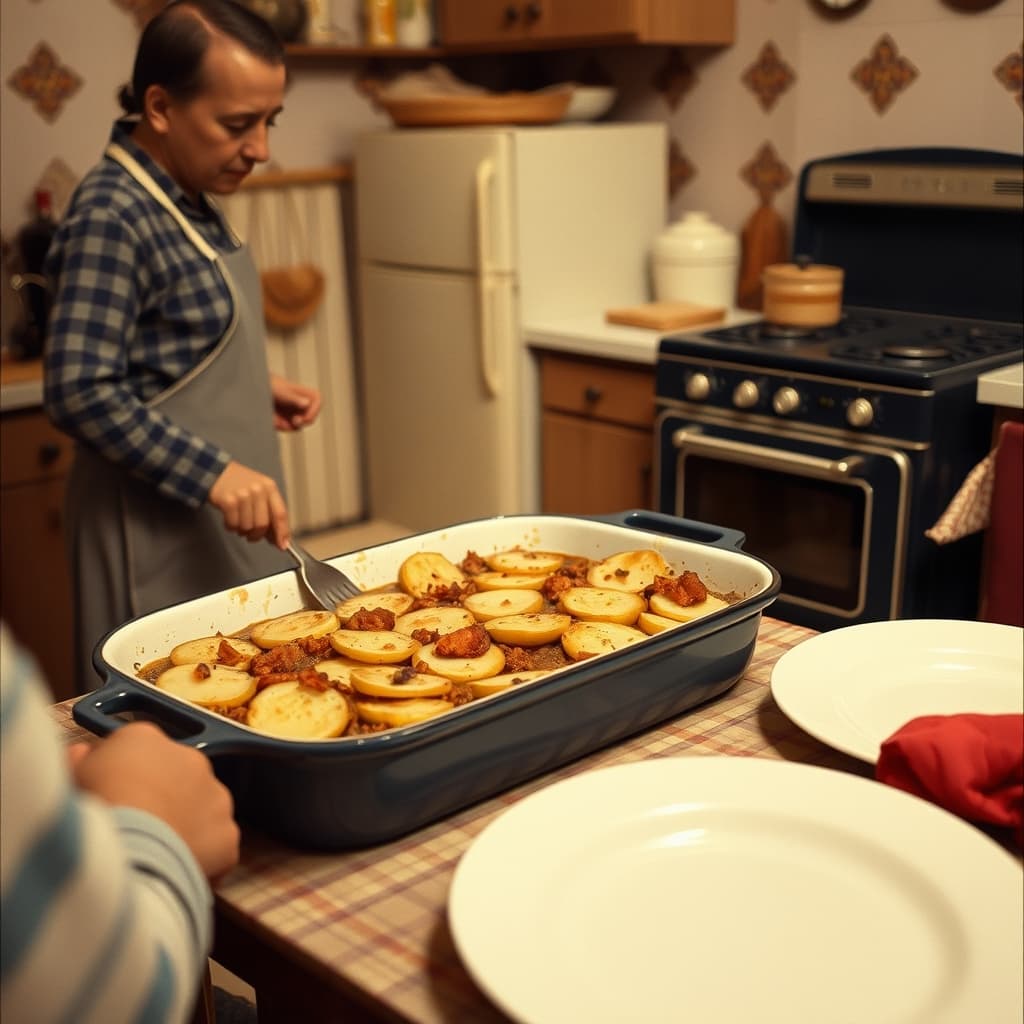
Potato oturtma belongs to a family of layered dishes whose exact form changes across kitchens. Sliced potatoes may be fried, roasted, or partly cooked before meeting a seasoned filling and sauce. Meat, vegetables, herbs, tomato, and spices vary by household, budget, region, and season. Its identity lies less in one fixed formula than in the practical logic of arranging ingredients so they finish together.
The dish suited an oven shared by several tasks. Once assembled, it could cook while salad, bread, or another course was prepared. A broad tray offered portions for a crowded table and allowed surface browning. The aroma that filled the house came from this coordination of fat, starch, seasoning, and heat—not from nostalgia alone.
Layering Controlled Texture
Potato thickness affects timing. Uneven slices can leave some pieces dry and others firm. Pre-cooking changes how much liquid the potatoes absorb and how much time the filling spends in the oven. A watery sauce may prevent browning; too little moisture can make the dish heavy. Experienced cooks learned to judge the tray before baking and adjust.
Layering also distributes expensive ingredients. A modest amount of filling can flavour many potatoes when spread evenly. This is kitchen economy without implying deprivation. The method turns proportion and placement into flavour.
The Oven Needed a Plan
Older ovens and stoves did not always hold a stable, numbered temperature. Cooks watched flame, tray position, surface colour, bubbling, and elapsed time. Rotating a tray could compensate for uneven heat. Opening the door too often slowed cooking. The vessel itself—metal, enamel, glass, or ceramic—changed heat transfer.
Modern cooks should use a tested recipe and verify doneness, especially when raw meat is included. Colour alone is not a reliable safety test. Cross-contamination must be avoided through clean hands, boards, knives, and separation of raw ingredients from ready-to-eat food.
Resting and Leftovers Were Part of the Method
A short rest after baking allows bubbling to settle and portions to hold together. Serving immediately may release steam and liquid, while waiting too long at room temperature creates food-safety risk. The practical cook balances texture with safe timing.
Leftovers can make the dish valuable for another meal, but they should be cooled promptly, covered, refrigerated, and reheated thoroughly according to current guidance. Repeated warming and long periods beside a stove are not harmless traditions. When storage is uncertain, the safer choice is to discard.
Potato oturtma recalls forgotten kitchen habits because it exposes planning. Ingredients were selected for the household, arranged to share flavour, fitted into the oven's other work, rested, divided, and stored. A melody near the stove may colour personal memory, but the durable cultural record lies in measurements, tray size, heat source, substitutions, and the names of the people who actually cooked. Documenting those details preserves a living dish rather than freezing it into one idealised family story. If a household changed potato thickness, filling, or vessel over time, recording the reason can reveal changing prices, equipment, dietary needs, and family size. Variation is evidence of adaptation, not a failure to preserve tradition.