 Eski Pano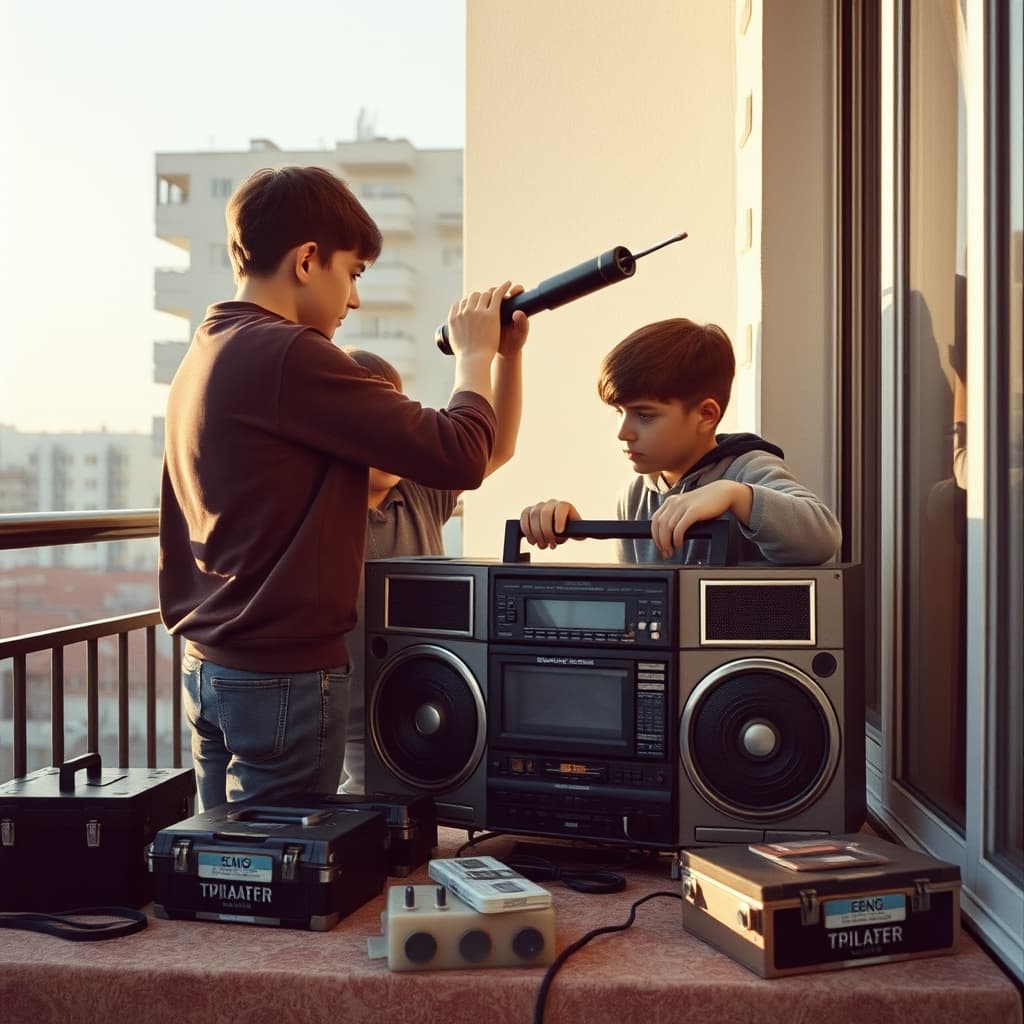
Using a boombox was rarely as simple as pressing play. The machine had to be placed where reception was strongest, often close to a window, balcony door or high shelf. Its telescopic aerial was raised, turned and lowered in tiny increments while someone listened for a voice to emerge from the hiss. When the station became clear, the person holding the aerial might be told not to move, as if the entire programme depended on one careful wrist.
The portable stereo joined radio, cassette recorder and loudspeaker in a single body, but portability had limits. Large batteries were expensive and heavy. Mains cables restricted the machine to the nearest socket. Carrying it into a courtyard, picnic area or workshop therefore involved planning: fresh cells, a suitable cassette, protection from dust, and agreement about who controlled the volume. Technology arrived with etiquette attached.
The Aerial Made Reception Visible
Analogue broadcasting translated distance, buildings, weather and interference into sound. Aerial adjustment offered users a direct way to negotiate those conditions. Rotating the set could matter as much as extending the metal rod. In dense streets, a signal might sharpen at one corner of the room and dissolve a few centimetres away. Listeners learned the geography of reception through repeated experiments rather than technical diagrams.
This knowledge was local and temporary. A setting that worked in the morning could fail later when another appliance introduced interference or atmospheric conditions changed. Loose aerial joints and damaged tuning mechanisms added further uncertainty. Repairers cleaned contacts, replaced belts and resoldered connections, prolonging the life of equipment whose plastic exterior might already show scratches and sun bleaching.
Recording Required Attention and Restraint
The cassette deck changed listening from reception into collection. A favourite song could be captured from radio if the record button was pressed at the right moment. Announcers, station identifications or a family voice might intrude at the beginning or end. The result was imperfect but personal. Handwritten track lists, crossed-out titles and reused labels reveal how listeners organised music before searchable digital libraries.
Blank tape was finite, so recording meant choosing. Older material could be erased, a song might be shortened, and silence between tracks was managed by pause controls. Some machines offered two decks for copying, though repeated duplication reduced clarity. Batteries also weakened recording speed, leaving voices and music altered when the cassette was played on a steadier machine.
A Portable Stereo Created a Listening Public
In the long afternoon, a boombox could turn a doorstep or workplace into a small broadcasting space. Music brought people together, but it also crossed walls. Volume became a negotiation between enthusiasm and the right of others to rest, study or converse. Accounts that celebrate shared listening should include the neighbour who asked for quiet and the worker who depended on radio companionship during repetitive tasks.
Preserving boombox culture calls for attention to the whole operating system: batteries, power adaptors, aerial hinges, tuning scales, cassette tabs, cleaning kits, repair receipts and the social rules surrounding playback. A machine displayed without these traces becomes only a design object. With them, it records a period when finding a clear station required physical skill, keeping a song required timing, and sharing music meant deciding exactly how far the sound should travel.