 Eski Pano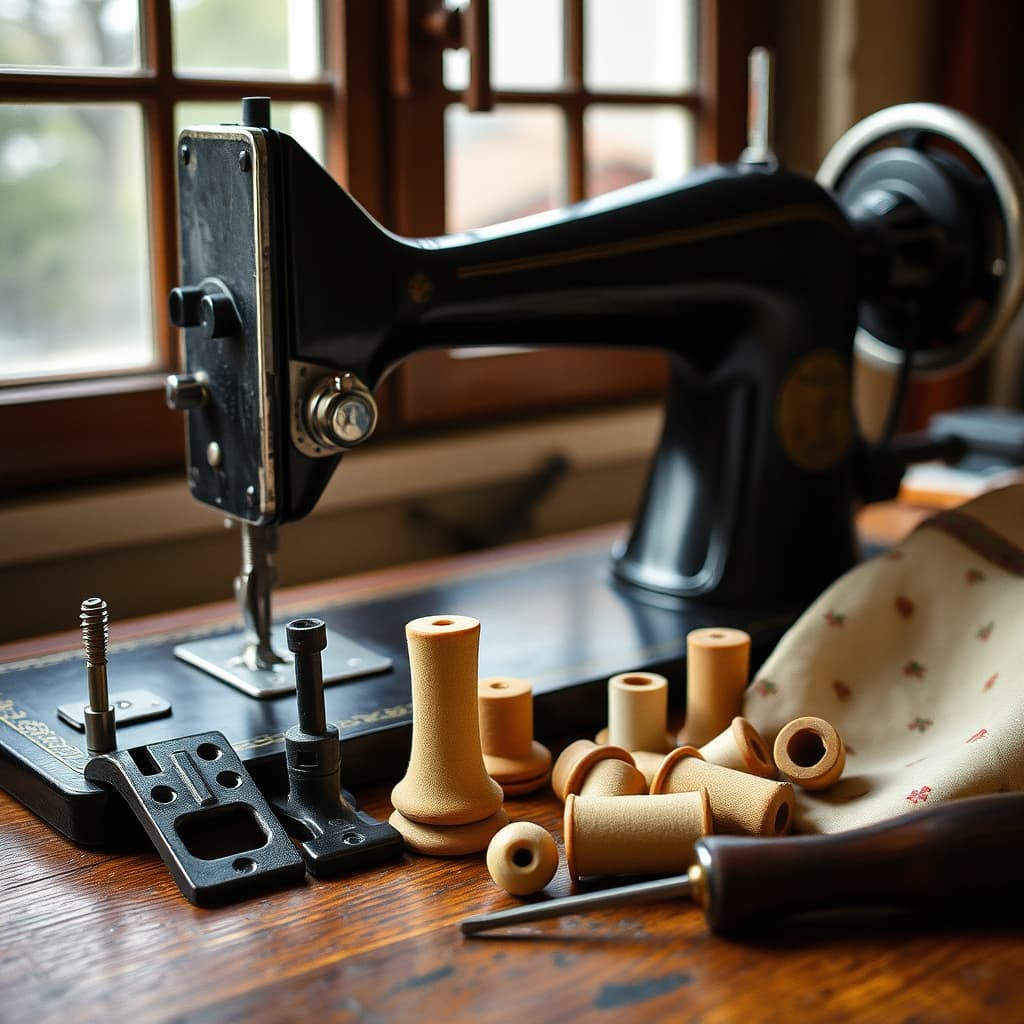
A sewing machine presser foot can fit inside a palm, yet its form records a precise relationship between cloth, needle and human judgement. The foot holds fabric against the feed dogs while allowing it to advance in controlled steps. Change its shape and the machine can guide a narrow hem, stitch close to a zip, attach binding or manage another specialised task. What looks like a minor accessory is therefore a compact piece of industrial design.
In household sewing boxes, presser feet rarely lived alone. They shared tins and drawers with bobbins, screwdrivers, oil bottles, chalk, hooks and packets of needles. Some remained attached to the machine for years; others were wrapped in paper because their purpose was remembered by only one person. A missing screw or mismatched shank could make a perfectly sound attachment unusable.
Specialised Feet Turned Technique into Hardware
Before selecting an attachment, a dressmaker had to understand fabric weight, seam allowance, tension and the intended finish. A rolled-hem foot curled the edge as it stitched, but it still required an accurately trimmed strip and a steady start. A zipper foot allowed the needle to work close to raised teeth. Gathering, cording and buttonhole attachments translated other operations into metal geometry without removing the need for trained hands.
These devices also reflected the fashions and household needs of their period. Fine hems suited curtains, slips and light dresses; robust guides assisted everyday garments and repairs. Decorative stitching could express changing taste, but much domestic sewing answered practical budgets. Clothes were altered between siblings, work garments were reinforced, and furnishings were adapted rather than replaced.
Compatibility Tells a History of Machines and Markets
Collectors quickly discover that an old presser foot cannot be identified by appearance alone. Low-shank, high-shank, slant and proprietary mounting systems differ. Manufacturers produced numbered accessories, boxed sets and instruction charts, while local repairers sometimes adapted parts to keep older machines useful. Country of manufacture, plating, casting marks and screw dimensions can narrow an attribution.
Provenance is even more valuable than shine. A worn foot kept with its manual, machine and owner's notes can explain actual use. A polished loose example may be attractive but historically mute. Rust, bent metal and old oil should be assessed carefully; aggressive cleaning can remove finishes or tool marks that help establish age and manufacture.
Collecting Should Preserve the Sewing Context
A responsible catalogue records measurements, mounting type, markings, associated model, condition and source. Photographs should include the underside and attachment point, not just the elegant profile. If the original owner can be interviewed, questions about garments, lessons, paid work and repairs connect the object to economic and family history.
Safe storage requires a dry environment, stable wrapping and separation from loose moisture-trapping materials. Moving mechanisms should not be forced. Advice from a sewing-machine conservator or experienced technician is wiser than applying an unknown oil. The objective is not to make every surface look new, but to keep the attachment legible and functional where appropriate.
The presser foot deserves attention because it sits exactly where design meets practice. It shows how manufacturers encoded a task in metal and how users completed that promise through touch, sound and experience. Preserved with bobbins, manuals, fabric samples and testimony, this modest part becomes evidence of household ingenuity, professional dressmaking and a culture that expected both machines and clothes to remain useful for a long time.