 Eski Pano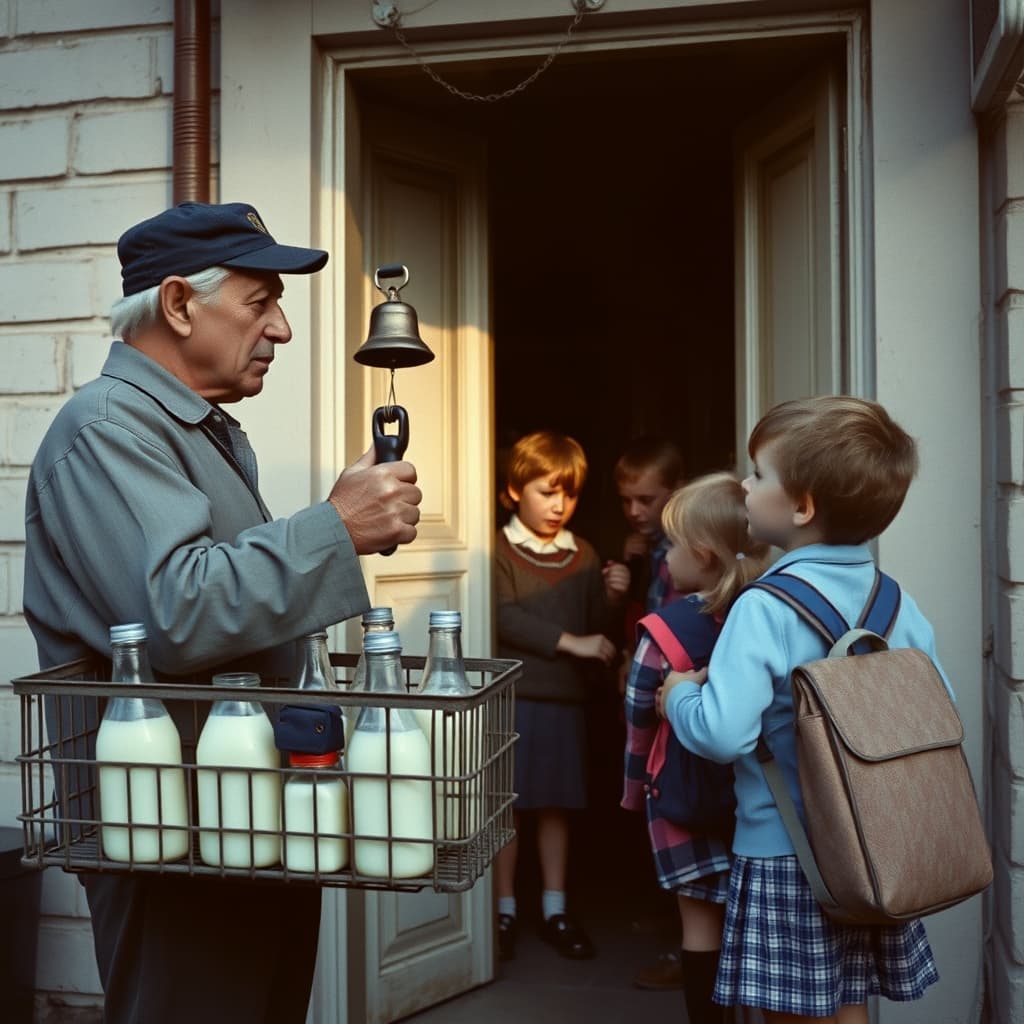
On a school morning, the milkman's bell entered a street already moving against the clock. Uniforms were being buttoned, bread was sliced, bags checked and shoes searched for. The bell did not stop this activity; it cut through it with a recognisable signal. A parent went to the door with a container or money while a child tried to finish breakfast before the walk to school.
Such delivery depended on a route rather than a shop counter. The vendor had to judge how much milk to carry, which households expected him and how quickly the load could be distributed. A bicycle, cart or small vehicle changed the scale of the round, but every method was shaped by distance, hills, weather and the need to keep a perishable food protected.
The Bell Was a Practical Form of Address
Before mobile telephones and delivery notifications, a repeated sound announced presence to many homes at once. Its pattern had to be distinct from a school bell, bicycle warning or another street seller's call. Residents learned the tone and approximate time. If it arrived earlier than usual, someone might miss it; if it came late, the kitchen schedule could change.
Sound also defined the vendor's public identity. Familiarity encouraged trust, yet it did not replace standards. Customers assessed smell, colour and freshness, while regulations, pasteurisation and sealed packaging developed to reduce health risks. Romantic memories of milk ladled from a churn should be balanced with the history of contamination control, animal health, clean vessels and reliable cooling.
Bottles Travelled in Both Directions
Glass bottles and household containers made delivery a circular exchange. Empties were rinsed, stored and returned; deposits helped bring standard bottles back into circulation. Chips around the rim, damaged caps and poor cleaning made inspection necessary. Crates protected bottles and revealed the physical labour behind an apparently simple doorstep service.
Inside the home, milk entered another chain of care. It might be boiled, cooled and stored before becoming breakfast, yoghurt, pudding or a drink after school. Responsibility often fell to women and older family members, whose work is easily omitted when the memory is reduced to the charm of a bell. The delivery saved a trip but still required planning, fuel, utensils and time.
The School Calendar Changed the Street
Term time intensified the morning rhythm. Children appeared at similar hours, neighbourhood shops opened for early purchases and public transport filled in predictable waves. The milkman worked inside this timetable, sometimes exchanging news with a caretaker or leaving an agreed quantity for a household whose adults were busy. These were practical arrangements built through repetition rather than nostalgia alone.
As packaged milk, refrigeration, supermarkets and motorised distribution expanded, the audible route lost some of its purpose. The change offered longer shelf life, labelling and more consistent control, while also reducing daily face-to-face contact and the circulation of returnable containers in some places. One system did not vanish everywhere at the same moment.
A Digital Nostalgia Archive can preserve this street scene by linking sound recordings, route maps, bottle types, deposit receipts, food regulations, family photographs and oral testimony. The bell matters not because every old delivery was better, but because it reveals how food, trust, labour and school time once intersected at the front door. For a few seconds each morning, one small sound connected the dairy, the vendor, the kitchen and the child preparing to step into the day.