 Eski Pano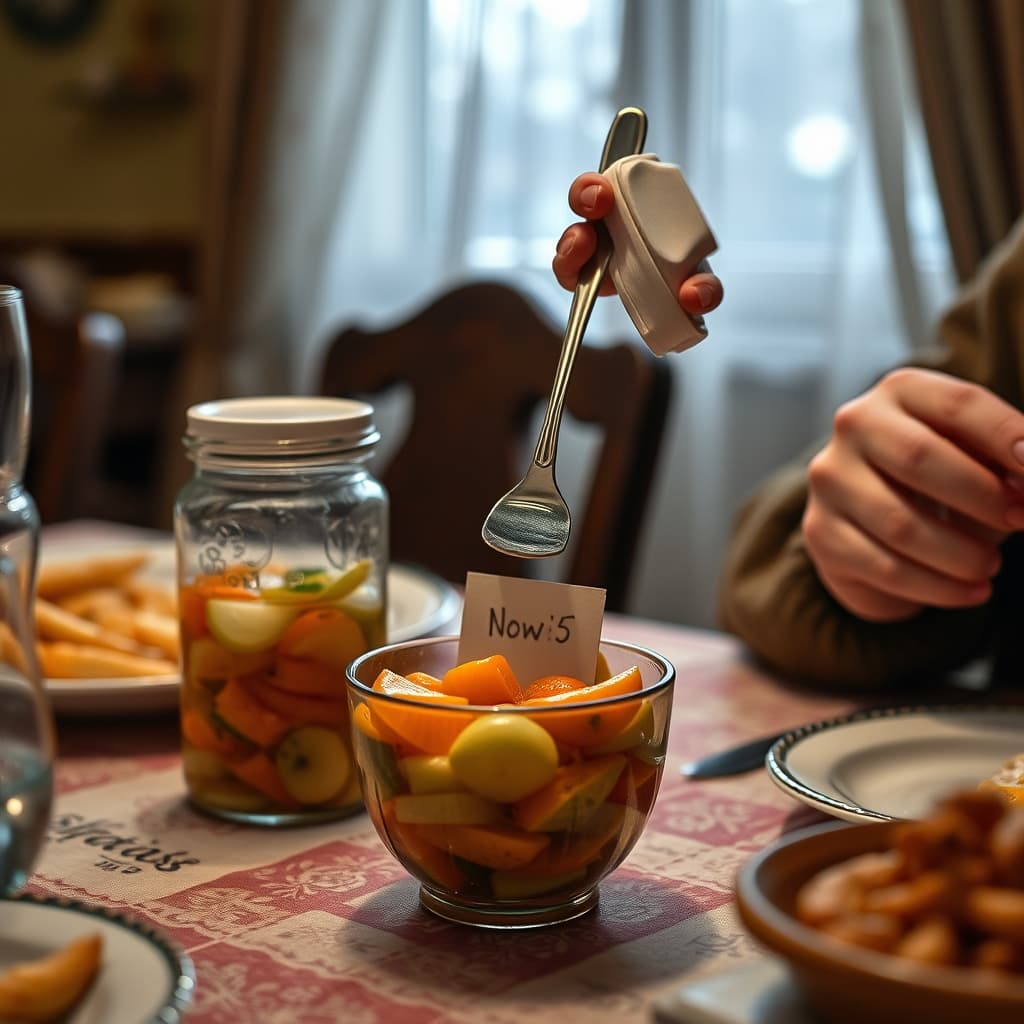
The smell of winter pickles could reach the room before the serving bowl. Opening the jar released acid, spices and vegetables into the kitchen air, making one household preparation suddenly present across the home. That sensory memory is strongest when joined to practical knowledge: how the jar was checked, which utensil entered the brine and what happened to the remainder after the table was cleared.
Pickling practices vary by vegetable, region and household, and safe fermentation or preservation cannot be reduced to one inherited ratio. Current tested guidance should govern preparation. At serving time, the history of the jar still matters: how it was processed, whether its seal remained sound, when it was opened and how it has been stored.
Inspect Before the Lid Comes Off
A bulging lid, leaking jar, broken seal, spurting liquid, unusual foam, unexpected discolouration, mould or offensive odour are reasons to discard the contents without tasting. Do not attempt to rescue a suspicious jar by removing the surface or recooking it. When the method or storage history is unknown, caution is more reliable than appearance.
The outside and lid should be clean before opening so dirt does not fall inward. Cracked or chipped glass can injure and contaminate food. A jar under pressure needs careful handling away from faces. Official local food-safety advice should guide disposal when serious spoilage is suspected.
The Serving Fork Should Not Return Dirty
Use a clean utensil to remove the portion needed. Fingers, a tasted fork or a spoon used in another dish can introduce contamination. Keep the utensil from damaging glass and avoid leaving metal immersed unless the method and material are suitable. Transfer the table portion to a clean bowl instead of passing the storage jar repeatedly among diners.
Vegetables should remain managed according to the tested method and storage instructions. Removing brine for another use, adding tap water or topping the jar with fresh vegetables changes the system and can undermine safety. A family may remember conserving every drop, but present reuse decisions require reliable guidance.
The Aroma Changed as the Jar Warmed
A serving bowl at room temperature releases aroma differently from a cold jar. That does not mean it should remain out indefinitely. Serve a manageable portion and return the storage container promptly to the required conditions. Use a separate bowl for refills and do not pour leftovers from diners back into the jar.
Pickles can be high in salt and their ingredients may present dietary or allergy concerns. Guests benefit from knowing what the jar contains, including spices or additions that are not visible. Strong smell is part of the experience, but it does not prove safety or spoilage on its own; the expected aroma should be judged alongside process, condition and storage.
Label the jar with contents, preparation or opening date and any relevant storage instruction. Keep it away from heat and cross-contamination. If family batches are shared, provide the same information to the receiving household rather than relying on an unlabelled familiar jar.
An archive of winter pickles should document vessel, vegetables, family vocabulary, serving bowl and the person who prepared the batch, with consent. It should distinguish remembered practice from current safety advice. The house-filling aroma then becomes more than a sentimental signal: it belongs to a sequence of opening, checking, serving cleanly and returning the jar in a condition that protects the next meal.