 Eski Pano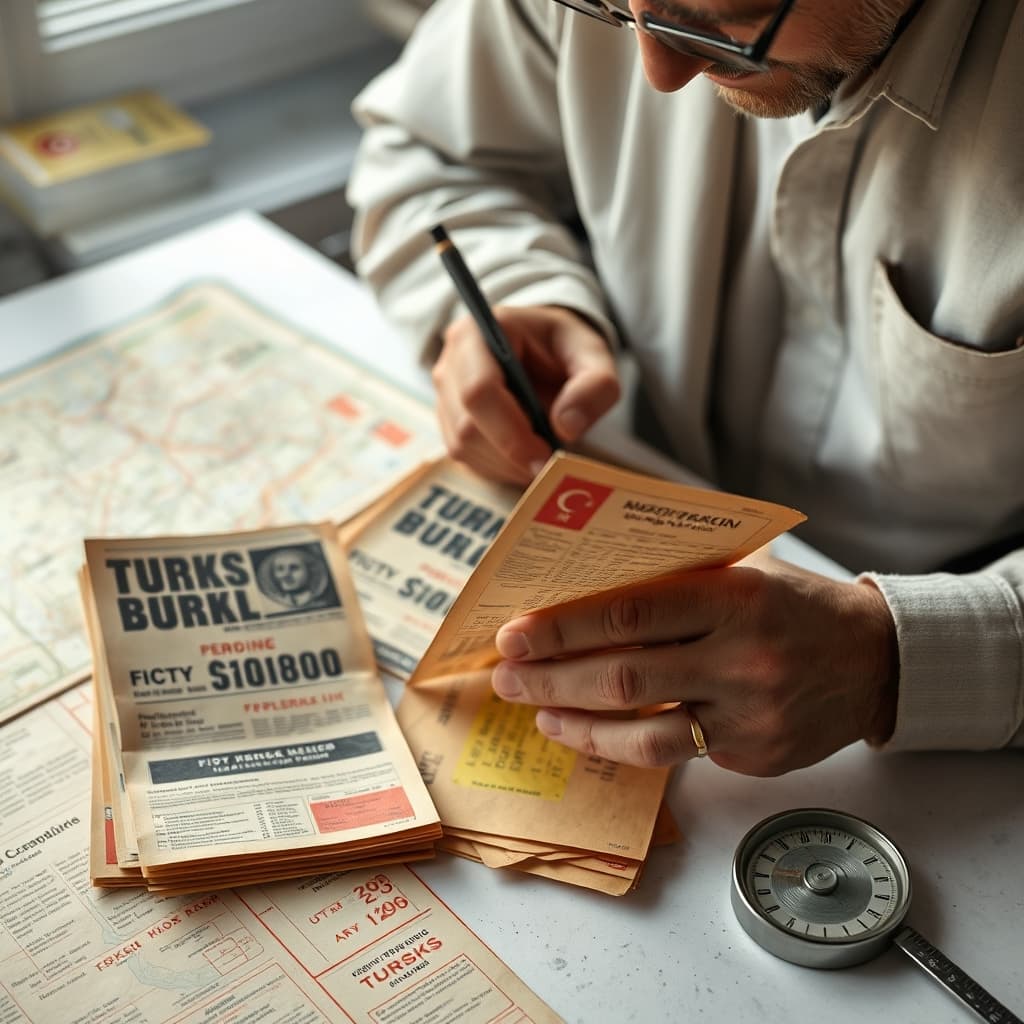
A handbill can make an old city look unusually bright because only the surviving sheet remains, while the rain, litter, repetition and competing announcements have disappeared. Its colour is real evidence, but it is not the whole street. Reading a handbill historically means treating it as a small working document: made for a purpose, distributed along a route, read for a limited time and preserved by chance or choice.
Before interpreting the announcement, record the object. Note dimensions, paper thickness, colour on both sides, printing method if it can be identified, folds, pinholes, tears, stains and handwriting. Photograph front, back and edges with a scale and colour reference. Do not flatten, erase, tape or trim the sheet merely to produce a neat scan; those marks may explain how it travelled and where it was displayed.
The Address Places the Message on a Route
An address, telephone number, venue or printer’s line can connect the handbill to a part of the city. That clue still needs checking against directories, maps, newspapers or other dated records. Street names and numbering can change. A business may have printed material before opening or reused old stock after moving. One line of type suggests a route for research rather than proving the full history by itself.
Distribution also shaped readership. A sheet handed out near a market reached people differently from one left at a shop counter or posted on a wall. Creases may indicate pocket storage; holes or adhesive residue may suggest display. These signs are useful when described cautiously. They rarely identify the exact corner without a photograph, testimony or documented collection history.
Colour Had a Budget and a Purpose
Several colours could separate information, attract attention or signal a particular event, but the effect depended on printing and cost. Faded ink can distort the original relationship between colours. Digital correction should preserve an unedited reference file and state what was adjusted. Restoring every faded area to imagined brilliance risks replacing the surviving object with a modern design guess.
The language of a handbill reveals intended action: attend, buy, listen, visit, apply or remember. It may also contain exaggeration, incomplete claims or outdated information. An archive should quote sparingly, transcribe accurately and distinguish the announcement’s promise from verified fact. A promotional sentence is evidence of what an organiser said, not automatic evidence that the event occurred exactly as advertised.
The Blank Back Can Carry Another History
A reverse side may show calculations, a shopping note, a child’s drawing or traces of reuse. These additions can be more personal than the printed face and may involve privacy. Record them before publication and consider redaction where names, addresses, financial details or sensitive information appear. Reuse also explains why some handbills survived when their original message had expired.
Copyright, trademark and personal-data questions do not vanish because paper is old. Public display of a complete high-resolution scan may require a rights assessment. Descriptive metadata, a limited preview or controlled access can preserve research value while permissions are clarified. The archive should name the physical owner separately from the creator or rights holder.
To map a handbill, connect verified elements: printing address, advertised venue, collection location and testimony about distribution. Mark uncertainty rather than drawing a confident route through missing evidence. Several sheets from the same period can reveal clusters and gaps without proving that every resident saw them.
The handbill’s brightness becomes more meaningful when its limits remain visible. It was one coloured voice in a crowded street, designed to be noticed and then replaced. Preserving paper, distribution clues, claims and blank-side additions together allows a Digital Nostalgia Archive to recover not an idealised city, but the practical movement of news from a printer’s sheet into everyday urban attention.