 Eski Pano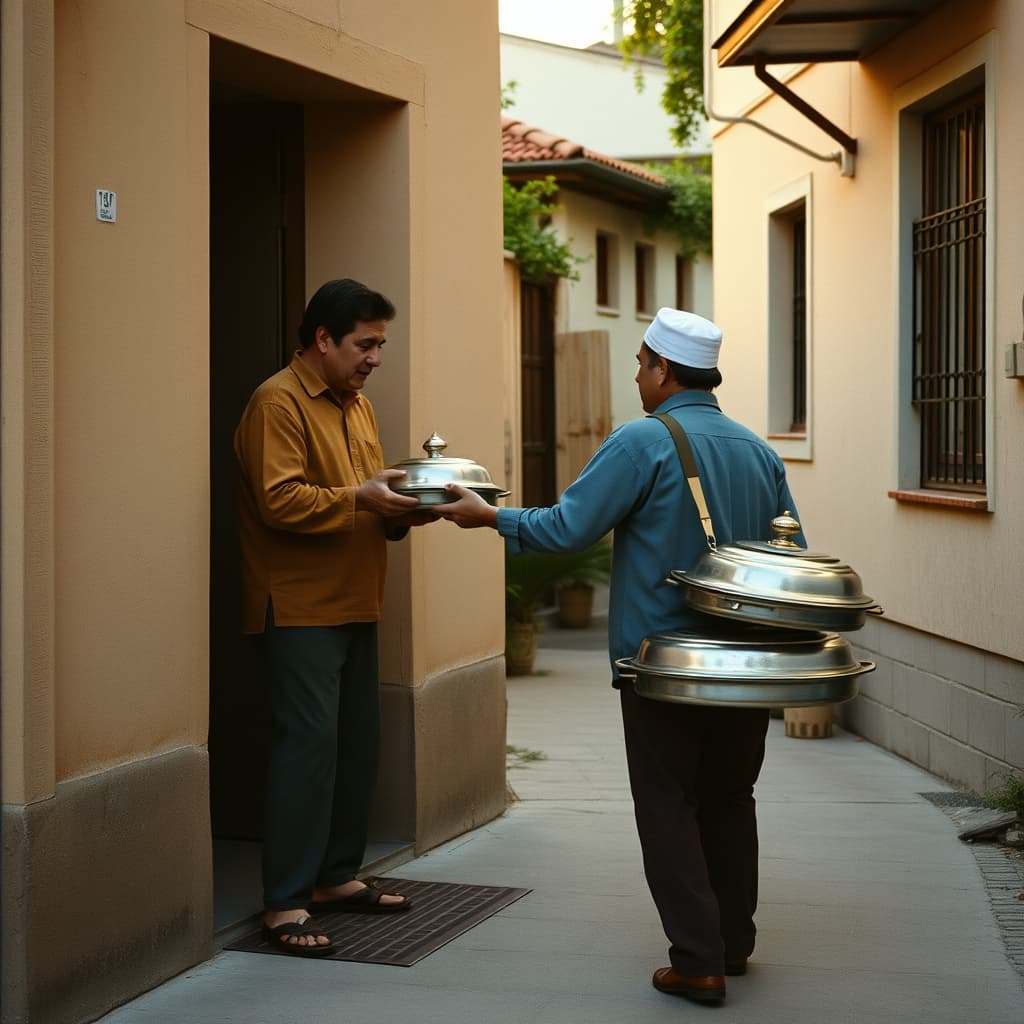
In the hour before iftar, a covered plate moving along the street carried more than food. It carried timing. The receiving household needed to know what had arrived, whether it should stay hot or cold, and when it would join the table. Streets appeared to stir because many private meals briefly crossed public space, in the hands of adults, older children or neighbours returning a dish.
The scene varied with place, season, household and period. Not every family exchanged food, and not every person could participate equally. Rather than treat bustle as universal harmony, follow the practical journey of one dish. Its route reveals how generosity depended on containers, information, safe handling and somebody’s time during the busiest part of preparation.
A Cover Protected More Than Appearance
A lid, plate cover or suitable container protected food from hands, dust, insects and spills. Decorative cloth alone might hide the contents without sealing them. Hot liquid required a stable vessel and careful carrying; chilled food needed reliable cold control. The right method depends on the dish and current food-safety guidance, not simply on how earlier generations carried it.
The shortest route was often best. Food should not wait in a warm car, sunny doorway or crowded hallway. If safe temperature could not be maintained, the exchange needed another plan. Children should carry only age-appropriate loads on safe routes, never unstable hot dishes. The gesture loses nothing when an adult takes responsibility for risk.
The Doorstep Needed a Short Message
The giver could name the dish, ingredients, allergens, preparation time and storage expectation. A familiar-looking filling might contain dairy, nuts, sesame, egg or meat. Silence leaves the receiving household to guess. Clear information allows them to place the dish correctly and protect a person with an allergy or dietary need.
The exchange itself could be brief because both kitchens were busy. A plate was accepted, thanks offered and conversation postponed. That brevity was not coldness; it respected the countdown in both homes. It also meant labels or a written note could be helpful when several dishes arrived and memory was divided among many tasks.
Returning the Dish Completed the Route
A borrowed plate or tray created a later obligation. It needed washing appropriate to the material, drying and return without confusion. Some households sent it back with another food; others returned it empty. Neither practice should be declared a fixed rule. Ask what happened in the specific relationship and whether the owner had particular care instructions.
Street warmth had boundaries. People fasting, working, caring for others or living with limited means experienced the hour differently. Noise, traffic and hurried errands could create danger. Generosity should not become competition over quantity or presentation, and a household should be able to decline food discreetly.
To archive this custom, document the container, route, giver, receiver, dish name and information passed at the door. Obtain consent before associating hardship, health or religious practice with identifiable people. The vivid street scene gains meaning when its logistics are visible: a covered plate, a short walk, a clear sentence about ingredients and a timely handover that allowed two tables to reach iftar safely.