 Eski Pano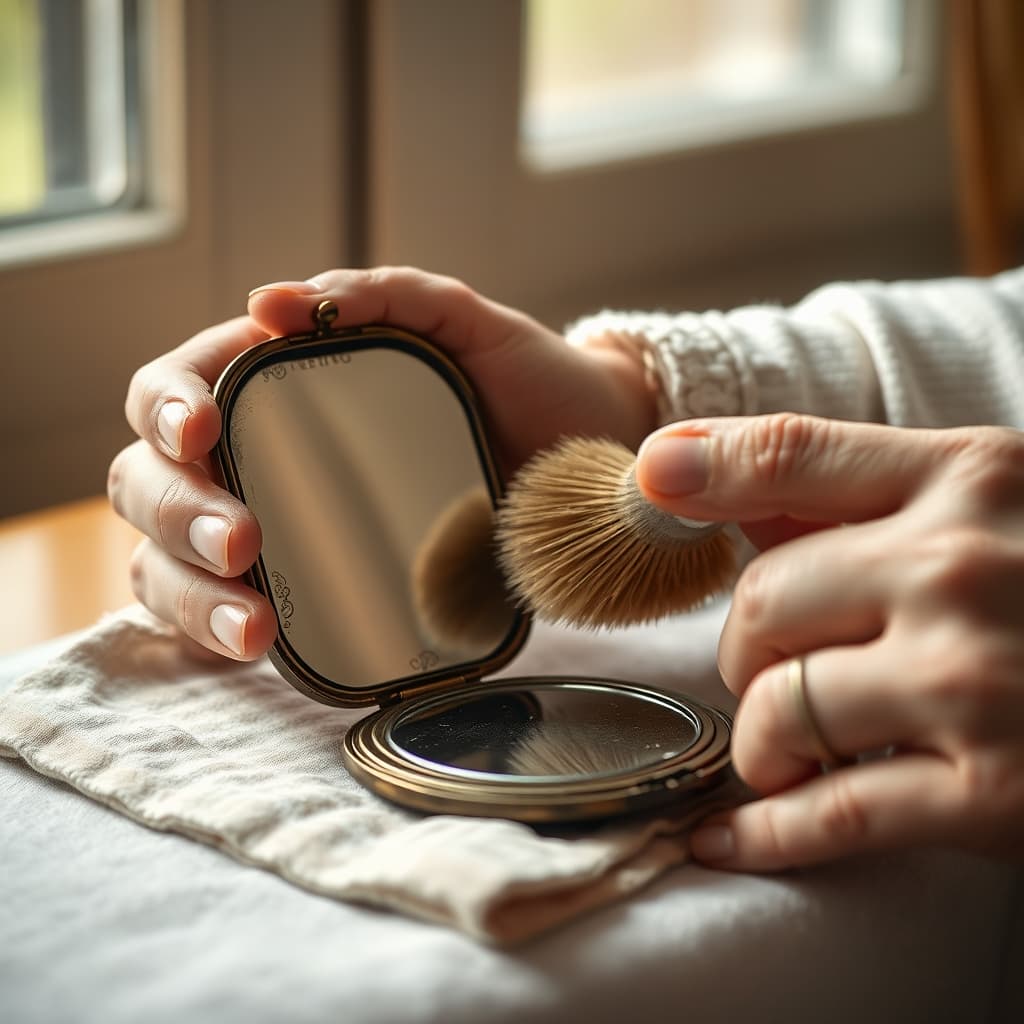
A pocket mirror may seem to shine again during a thorough holiday cleaning while a dark crescent remains around its edge. That mark is not always surface dirt. It can belong to the reflective backing behind the glass, where age, moisture or damage has interrupted the image. Recognising the difference prevents an inherited object from being scrubbed in pursuit of a brightness it can no longer safely provide.
Pocket mirrors vary in material and construction. Glass may sit in metal, plastic, leather, textile or another case, with a hinge, catch or folding support. The reflective layer may be inaccessible behind the glass. Before cleaning, photograph front, back, edge, fastenings and any marks. Record what relatives know without inventing an owner, maker or date.
A Dark Edge May Sit Behind the Glass
If a mark does not move with gentle surface cleaning, more pressure may only scratch the glass or drive liquid into the case. Flaking, cloudy patches and blackened edges can signal deterioration behind the visible surface. Home remedies involving abrasives, acids, toothpaste or metal polish risk damaging glass, coating, decoration and backing. A conservator can advise when the object is valuable, unstable or unusually made.
Cleaning should begin dry and cautiously. A soft brush can remove loose dust from a sound case, while a clean cloth suitable for glass may address fingerprints without flooding the perimeter. Never spray liquid directly onto the mirror. Moisture entering a seam can worsen corrosion or reflective loss. Test every method on a small, inconspicuous area and stop if colour transfers.
The Hinge Carries the Weight of Repetition
A folding mirror records use in its hinge and catch. Looseness, misalignment or a stiff joint can make the glass vulnerable when opened. Forcing it may split a case or twist the frame. Support both halves, open only as far as the construction permits and avoid household oil, which can migrate into textile, paper or the mirror backing.
The case deserves equal attention. Powdering leather, cracked plastic, frayed cloth or green corrosion on metal calls for material-specific care. One product cannot safely clean every component. Detached fragments should be kept in a labelled enclosure rather than glued immediately. The repair history, including modern replacements, belongs in the object record.
Reflection Was Only One of Its Uses
A pocket mirror helped with grooming, but it also occupied a handbag, drawer, dressing table or holiday visiting routine. Its place can explain wear: scratches from nearby objects, pressure from a clasp or fading from display. Ask where it was kept and when it was carried. The answer gives the dark edge a domestic context without turning damage into sentimental proof.
For storage, close the mirror only if the hinge and surfaces permit it without pressure. Wrap or box it with conservation-suitable materials, keep it dry and stable, and prevent movement against hard objects. Broken or cracked glass requires extra protection and professional advice because edges can injure handlers. Do not keep using an unstable mirror merely to preserve tradition.
Digitisation should show reflection and material condition without hiding loss. Photograph at an angle that avoids identifying the photographer or revealing private surroundings, and include separate views of the case and hinge. A Digital Nostalgia Archive can preserve the family name for the object, documented ownership and remembered use while clearly distinguishing those stories from material observation. The imperfect reflection is not a failure to erase; it is evidence that guides responsible care.