 Eski Pano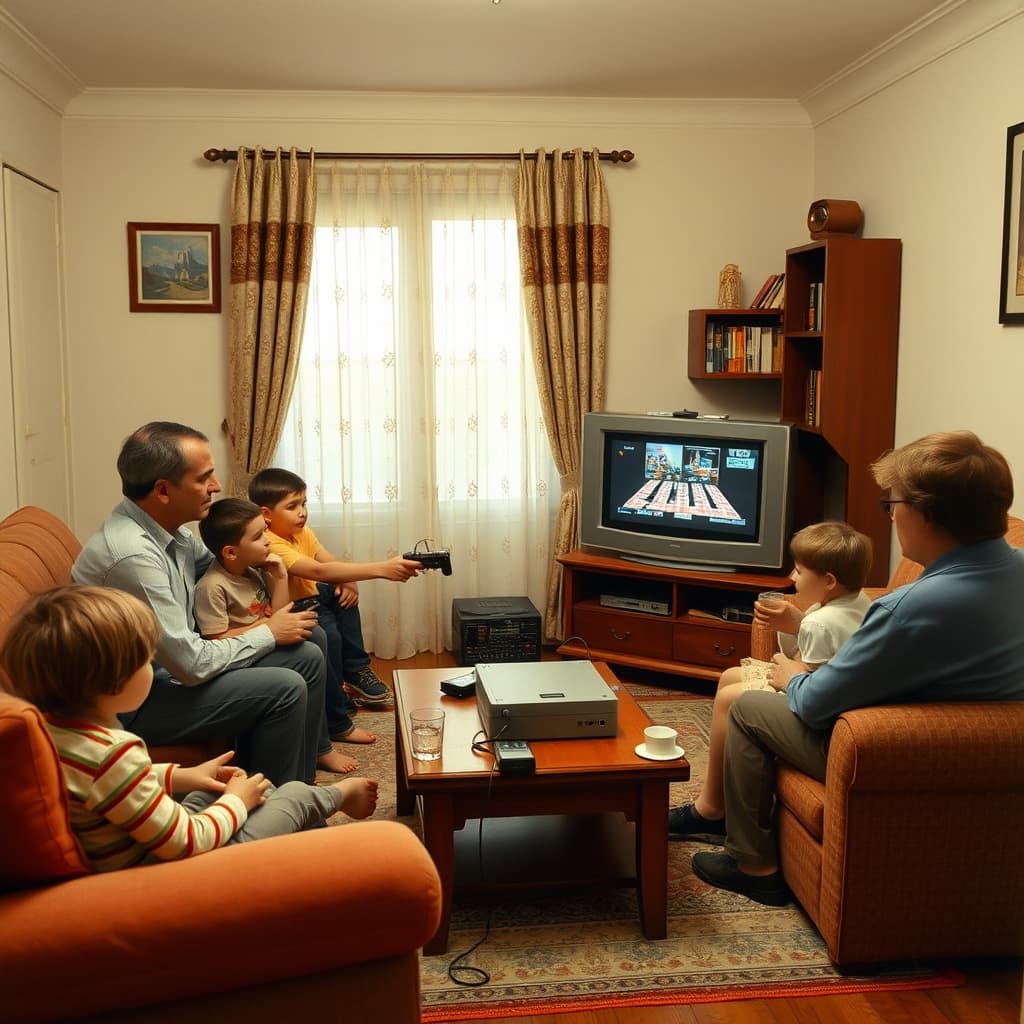
The family game console was often switched on only after the living room had been rearranged around it. A television normally used for broadcasts became the centre of a game, seats moved closer and a controller passed from hand to hand. The ceremony remembered by many families was not a formal ritual built into the device. It was the set of practical rules that answered one difficult question: whose turn was next?
Devices, connections and household habits differed, so no single setup describes every home. Some systems used cartridges or built-in games; some connected through an adaptor or television input that required patient adjustment. The safe source for technical details is the model manual. Family memory is better used to recover where the machine was kept, who knew how to connect it and how everyone shared limited access.
Connecting the Console Created the First Role
The person who understood the cables often became temporary operator. They checked that power was off before connections changed, placed the console where air could circulate and kept leads away from feet and hot surfaces. A flickering picture might tempt repeated twisting or improvised repairs, but damaged plugs, exposed wire, unusual heat or smell required disconnection and qualified attention.
Knowing the setup could bring authority. The operator chose when the game was ready and sometimes explained the controls. That knowledge might belong to a child rather than the oldest adult, briefly changing the living room’s usual hierarchy. The scene is more interesting when the technical contribution is named instead of treating the device as if it activated itself.
A Turn Needed a Visible Ending
Shared play depended on an agreed boundary: a lost round, a completed stage, a fixed attempt or a time limit. Without one, the strongest player could hold the controller indefinitely. Families improvised different systems, and none was perfectly fair. A younger child might need a practice turn; a visitor might be invited first; an experienced player could finish quickly and return to the queue.
The controller carried evidence of this circulation. Cables twisted, buttons wore and hands differed in force. Pulling by the lead or yanking the console during an excited movement could damage equipment and cause a fall. Passing the controller directly, leaving drinks away from electronics and creating enough floor space were quiet forms of care, even if nobody described them as safety rules.
Watching Was Another Way of Playing
Not everyone with eyes on the screen held a controller. Spectators suggested moves, counted attempts, disputed rules or waited silently. Advice could help a beginner and could also become pressure. The atmosphere depended on whether mistakes were allowed and whether the person playing could hear the game. Remembering only the winner misses the social work of teaching, waiting and accepting a loss.
Access was also shaped by cost, household permission, disability and the television schedule. A console in one home did not mean every neighbour could enter freely or play equally. Some children watched more often than they played. An honest archive can preserve delight while asking who owned the machine, who maintained it and who was expected to give up a turn.
Store a surviving console dry, clean and supported, with cables loosely coiled rather than tightly wrapped. Do not power unknown equipment before inspection, and keep original adaptors, manuals and repair notes associated with it. Game software, packaging and screen images may carry rights that still apply when a family collection is digitised.
The memorable part of the family console was not only the picture on the television. It was the handover: one person releasing the controller, another settling into position, several voices adjusting to the new player. Recording the rules of that exchange preserves how a household converted a scarce piece of technology into shared time—and where sharing sometimes failed.