 Eski Pano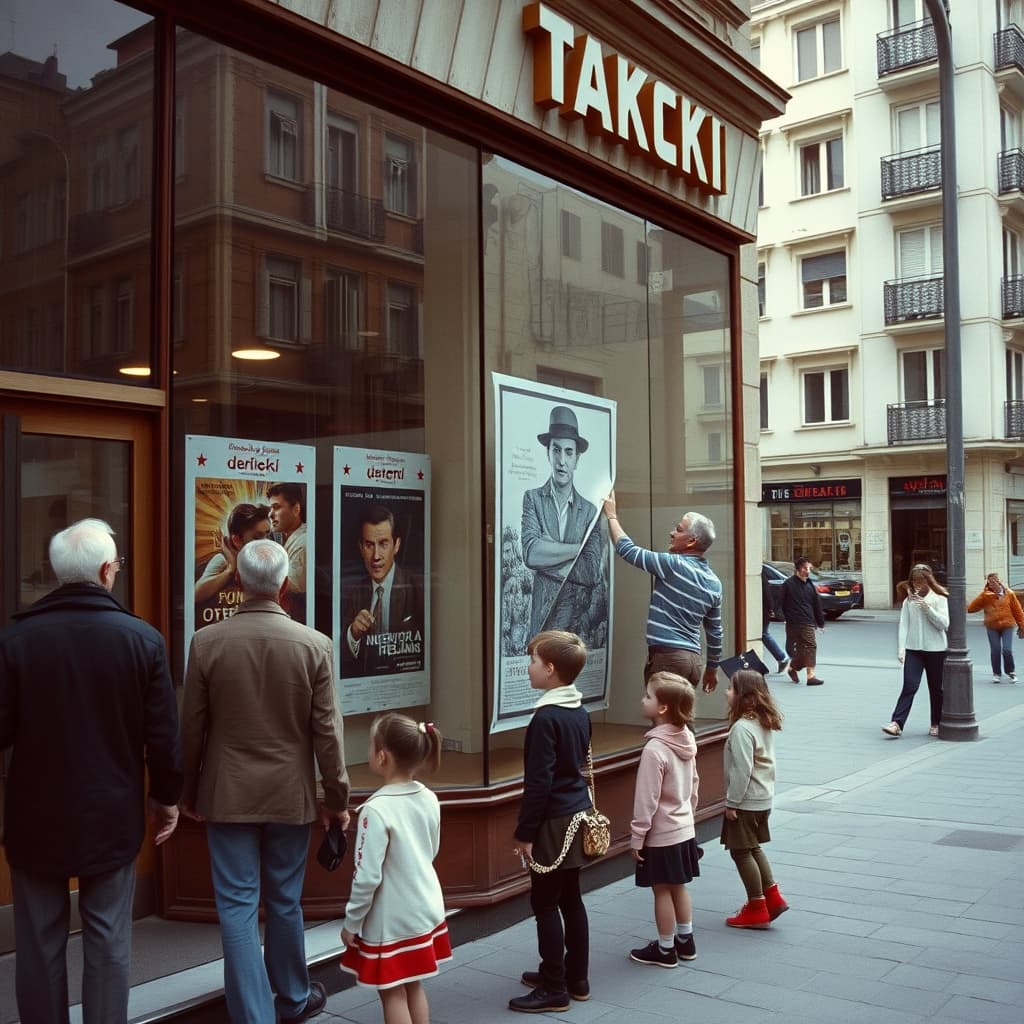
A cinema poster did not need a viewer to stop directly in front of it. Its first task was to work from across the street, between pedestrians, shop windows and the movement of children coming home from school. A large face, a strong patch of colour or the arrangement of several names could catch the eye before the film title was read. The poster called the pavement by controlling distance as much as by promising a story.
Mansion cinemas and their displays varied across cities, buildings and decades. Some posters sat in framed cases; others appeared near an entrance or ticket window. Surviving photographs should guide any exact description. Still, the display itself can be studied as street craft: selecting a visible position, protecting paper, arranging information and replacing one programme without leaving the frontage empty.
A Poster Had More Than One Viewing Distance
From far away, composition mattered more than small print. Closer to the case, a passer-by could inspect actors, scenes and details about the screening. The designer and printer created those layers, while cinema staff decided how the sheet would meet the building. A poster partly hidden by reflection, another notice or a damaged frame could lose the hierarchy that made it readable.
Schoolchildren offered a particular kind of attention. They might have only the time allowed by the walk home, and the poster could become a subject of conversation before anyone knew whether a ticket was possible. The image gave the group something public to interpret: who recognised a performer, who imagined the story, who had heard an adult mention the film. Interest did not automatically equal attendance.
Glass Protected Paper and Changed Its Colours
A glazed case sheltered a poster from handling and some weather, but it introduced reflection, condensation and heat. Dust gathered at edges; sunlight could fade ink; moisture could stain paper. Staff changing the display needed to open the case, release old fastenings and support a large sheet without tearing it. That temporary backstage labour happened in full view of the street.
The removed poster had several possible futures. It might be stored, reused, given away or discarded, depending on local practice. A surviving sheet should not be assigned to a cinema merely because the film once played there. Stamps, labels, photographs, schedules and documented ownership can support provenance. Pinholes, folds and edge wear may reveal display, but they do not identify the exact wall by themselves.
Changing the Programme Reset the Pavement
A new arrangement altered the route without moving the building. Regular passers-by noticed that yesterday’s faces had gone. The replacement could trigger another pause, another exchange of rumours and another calculation about time and money. In that sense, the display worked like a public page that was rewritten, although access to the film itself remained shaped by price, age, household permission and social expectations.
Preserving a cinema poster requires attention to paper, printing, adhesives and previous repairs. It should not be flattened, taped or exposed to strong light simply to recreate a nostalgic window. Digitisation can record front, back, edges, dimensions and colour reference, while rights and reproduction permissions still need review. A digital image preserves access; it does not transfer copyright or prove provenance.
An archive can reconnect the poster with the scale at which it once worked. Photographing only a cropped illustration loses the frame, pavement and viewing distance. Oral history can ask where a child first saw it, whether the glass reflected the opposite buildings and how often the display changed. The vivid memory may come from the film, but it may also come from a repeated after-school glance at a street frontage that always seemed about to announce another world.