 Eski Pano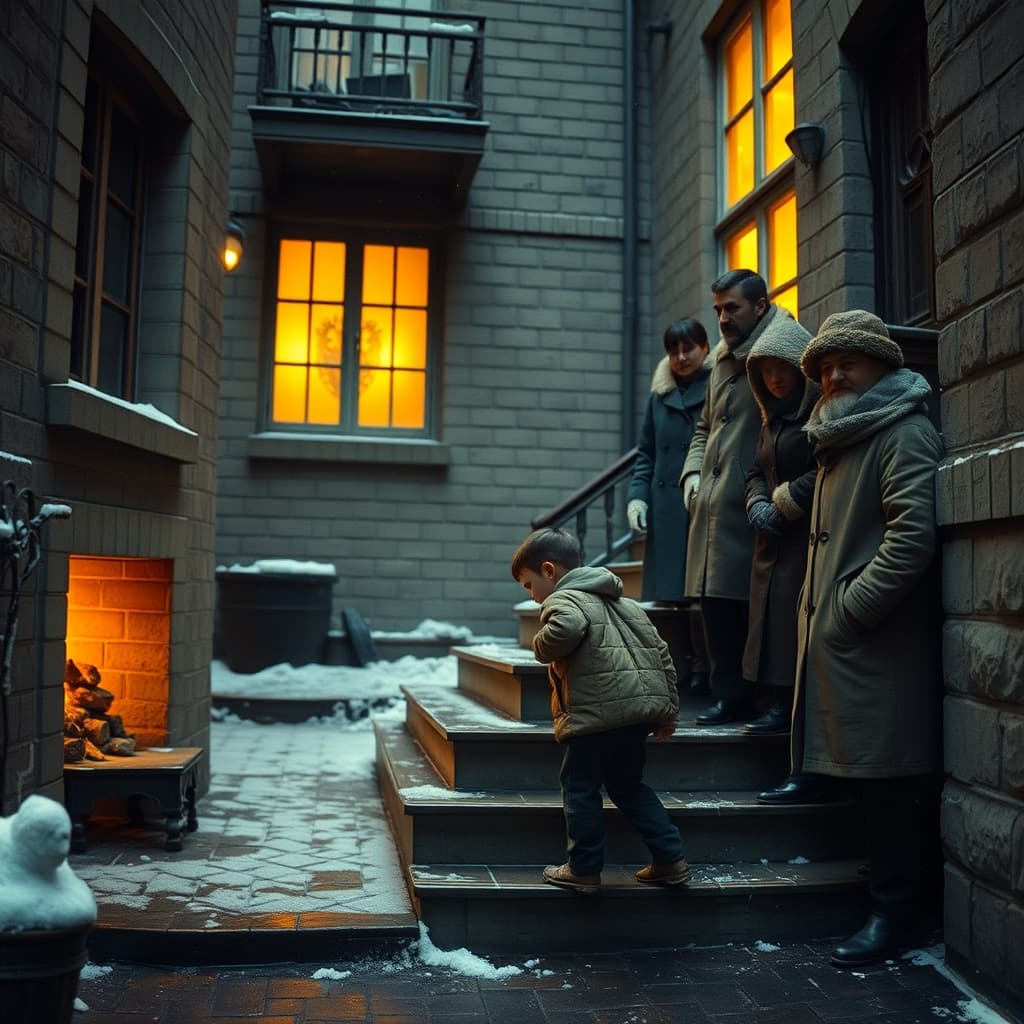
Children carrying stove coal through a winter neighbourhood occupied the point where household warmth met physical labour. Coal delivered to a cellar, shed, courtyard, or building entrance still had to reach the stove. A bucket or scuttle was filled, lifted, and carried across wet paving or up apartment stairs. The task could be ordinary enough to repeat daily, yet heavy enough to leave dust on clothes, strain in arms, and a clear memory of cold air followed by an overheated room.
The arrangement varied by building, fuel, household means, and division of work. Some families stored coal close to the living space; others used basement compartments reached by dark corridors. Adults often carried the greatest loads, but children might fetch smaller quantities, hold doors, sweep spilled pieces, or help prepare kindling. It would be wrong to describe this labour as a universal childhood adventure. For some, it was expected work linked to poverty, illness, absence, or unequal household roles.
The Route from Coal Cellar to Stove Was Part of Heating
Warmth did not begin when the fire caught. It began with purchasing, delivery, storage, carrying, ash removal, and cleaning. The route mattered: narrow stairs, poor lighting, icy ground, and doors that closed too quickly increased difficulty. Containers had limits, and overfilling made spillage and injury more likely. Neighbours sometimes held a door, shared a shovel, or helped an older resident, turning fuel handling into a visible part of building life.
Coal dust travelled. It marked walls, settled near storage areas, and entered the home on hands and clothing. Families developed routines for keeping it away from food and bedding, though conditions were not always adequate. Historical memory should also acknowledge health and safety. Coal combustion can create dangerous gases and particles; stoves, chimneys, ventilation, and fuel require proper professional maintenance. Childhood recollections are not instructions for contemporary heating.
Children Learned Responsibility, but Also Carried Burden
A child trusted with a small bucket might experience usefulness and pride. Learning where fuel was stored, how much the stove needed, and how to avoid scattering pieces formed practical knowledge. Yet pride should not conceal burden. Loads could be excessive, schoolwork delayed, and expectations divided by age or gender. The same scene can hold cooperation in one family and unfair responsibility in another.
Neighbourhood observation influenced the task. A shopkeeper saw children pass, a caretaker managed cellar access, and residents knew which household needed help. This familiarity could provide support, but it could also expose private hardship to public judgement. Mutual aid worked best when it reduced danger and effort rather than romanticising a child’s capacity to endure them.
The Warm Room Concealed a Chain of Work
Once the stove burned, attention shifted to tea, meals, drying clothes, or gathering close to heat. The bucket might disappear beside the stove until it needed filling again. That contrast helps explain why the memory remains strong: black dust and cold stairs stood directly beside the comfort they produced. Remembering the chain restores visibility to delivery workers, household members, chimney cleaners, caretakers, and children whose effort sustained the room.
For a Digital Nostalgia Archive, the coal-carrying child should not become a sentimental emblem of a supposedly tougher generation. The scene is valuable because it documents energy, housing, labour, and neighbourly relations at human scale. A bucket moving from cellar to apartment shows how urban infrastructure ended at the household door and physical work took over. Preserving that truth means recognising both the help people offered and the unequal conditions that made children part of winter heating.