 Eski Pano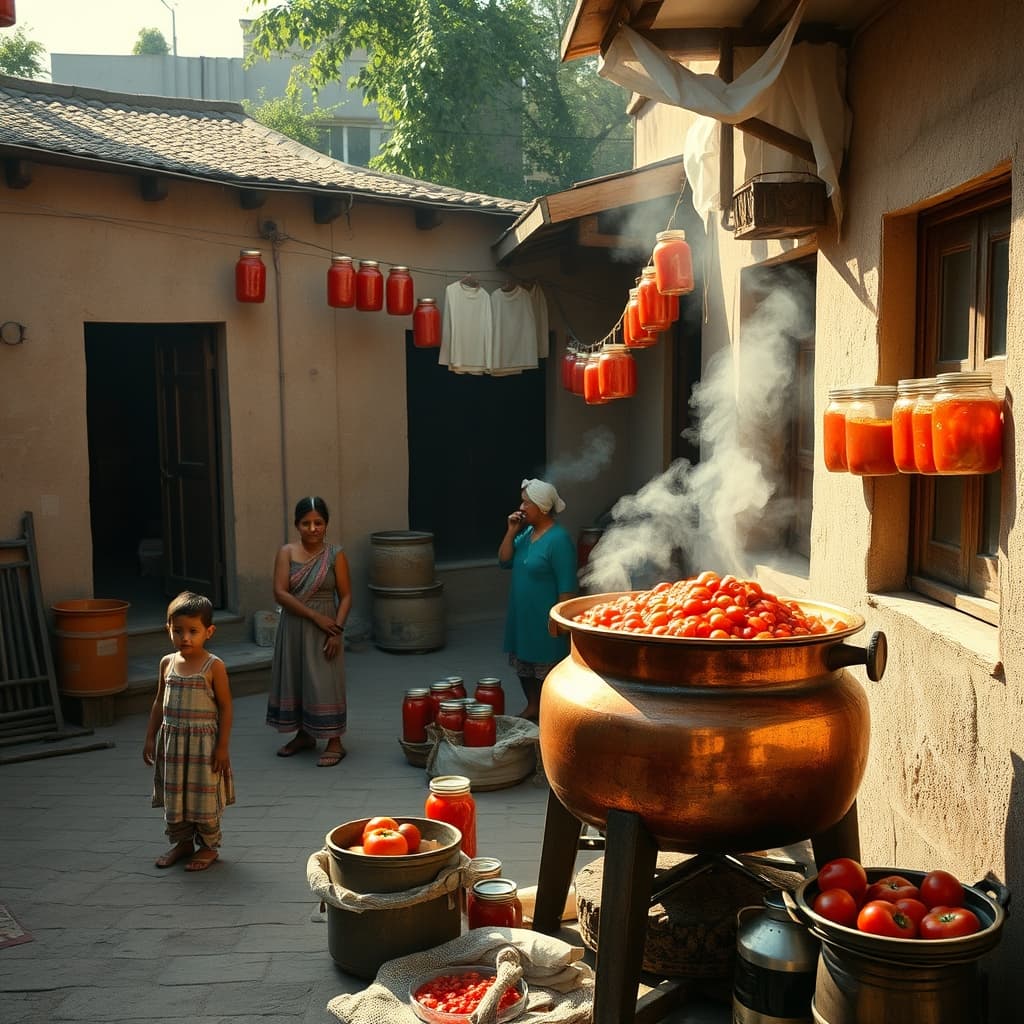
Tomato paste days announced a seasonal transition through colour, smell, and work. Crates of ripe tomatoes arrived when summer produce was abundant, but the purpose of the preparation lay ahead: preserving concentrated flavour for colder months. Washing, cutting, crushing, salting, reducing, drying, and filling containers turned a perishable harvest into a kitchen staple. The memory remains strong because the task joined immediate heat and effort to a long view of the household year.
Methods varied substantially between regions and families. Tomatoes might be cooked before straining, processed raw, left to drain, reduced over heat, or spread in shallow trays for further concentration. Pepper paste could be prepared alongside it, and salt levels, texture, seeds, skins, and drying time differed. No single account should claim to represent every authentic method. The useful archive records why a household preferred its approach and how it responded to climate, space, equipment, and available produce.
The Weather Became Part of the Kitchen
Where paste was concentrated outdoors, sun, humidity, wind, dust, insects, and unexpected rain affected the work. Trays had to be placed, covered appropriately, stirred, brought in, or moved as conditions changed. Balconies, courtyards, terraces, and roofs temporarily became extensions of the kitchen. A cloud could alter the day’s plan. This watchfulness made the season tangible: preserving food required cooperation with weather rather than simple control over it.
Large quantities also required organised labour. One person sorted tomatoes, another washed them, and others handled knives, sieves, pots, trays, jars, and cleanup. Red splashes marked aprons, hands, walls, and cloths. Children might carry light items or observe, but sharp tools, heavy vessels, hot mixtures, and food hygiene required adult responsibility. Remembering participation should not turn unsafe tasks or unequal workloads into charming folklore.
Concentration Required Safety as Well as Patience
Traditional familiarity does not guarantee that every inherited method is safe. Clean produce, utensils, surfaces, containers, and hands are essential. Mould, unusual odour, swelling, leakage, or uncertain preservation conditions are warning signs, not details to be scraped away casually. Salt, acidity, heat processing, storage temperature, and container treatment affect safety. Contemporary preparation should follow current, reliable food-preservation guidance suited to the exact method.
The paste itself documented judgement. Its colour deepened, water reduced, and the spoon met increasing resistance. Knowing when to stop depended on intended use and storage. Too much moisture shortened keeping quality; excessive heat could flatten fresh flavour or scorch the base. Repeated stirring and tasting were not decorative rituals but forms of control. The finished jar carried hours of observation condensed with the tomatoes.
A Winter Ingredient Began with a Summer Gathering
Once stored, tomato paste re-entered daily cooking in small amounts. A spoonful coloured soup, rice, bulgur, beans, stews, sauces, or fillings. Each use connected an ordinary winter meal to the concentrated work of harvest time. Differences between batches became family knowledge: one was saltier, another darker, another particularly fragrant because of the tomatoes or the drying conditions.
For a Digital Nostalgia Archive, tomato paste days matter because they reveal seasonal planning at household scale. Their meaning should not rest on claiming that every past kitchen was self-sufficient or every gathering joyful. The record is richer when it includes heat, repetition, unequal labour, weather risk, food safety, and regional difference alongside companionship. The lasting trace comes from transformation: a brief abundance became a measured reserve, and the changing season could later be tasted one spoonful at a time.