 Eski Pano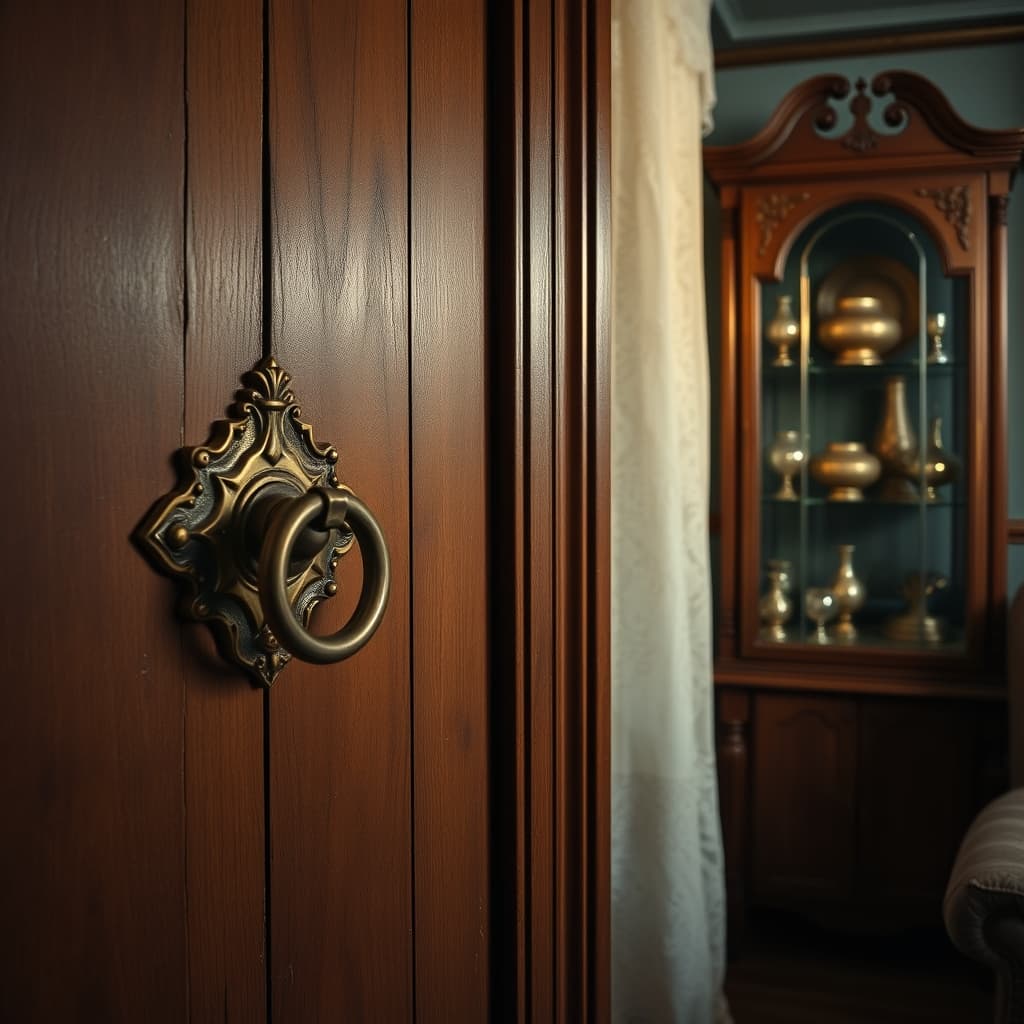
A brass door knocker was designed to be heard and handled, not viewed behind glass. Mounted at hand height, it converted a visitor’s movement into a sound recognised inside the home. Weight, hinge balance, the shape of the striking plate, and the door itself affected the result. When the fitting later entered a living-room display cabinet, it changed from part of an entrance into an object examined for material, workmanship, and memory.
Brass knockers vary in casting method, form, finish, age, and origin. Some were produced in quantity; others show hand finishing or later alteration. A lion, hand, ring, geometric plate, or simpler handle cannot be dated reliably by appearance alone. Screw holes, back plates, file marks, casting seams, wear, and documented context provide stronger evidence than a nostalgic style label.
The Back of the Knocker Can Tell More Than the Front
The face attracts attention because polishing catches light, but the reverse often retains installation history. Compressed wood fibres, paint residue, uneven screws, corrosion around holes, or a handmade spacer can show how the piece met a particular door. Removing or cleaning these traces may erase useful information. Before restoration, the front, back, fasteners, dimensions, and moving parts should be photographed and recorded.
Patina also requires judgement. Darkened recesses and polished high points result from air, touch, cleaning, and time. Aggressive metal polish can make brass shine quickly while removing surface evidence, lacquer, or original finish. Dry dusting and material-specific conservation advice are safer first steps. Corrosion, cracks, and unstable hinges need professional assessment, particularly if the object is valuable or historically significant.
Moving Indoors Changed the Object’s Social Role
On a door, the knocker mediated between visitor and household. In a cabinet, it joined ceramics, photographs, clocks, or souvenirs and became available for comparison. Its prominent position could reflect beauty, family association, or a collecting interest. Yet display alone does not prove that it belonged to the family’s former home. Provenance should be supported by photographs, documents, reliable recollections, or evidence attached to the object.
Collectors are drawn to brass because weight and surface give an immediate sense of age, but the market can encourage overconfident attribution and removal from buildings. Ethical collecting asks whether a fitting was legally obtained, whether its architectural context was documented, and whether replicas or composite pieces are clearly described. Preserving an object should not depend on stripping another historic door of meaningful fabric.
Its Shine Comes from Use as Much as Polish
A knocker’s most revealing contrast may lie between the areas touched repeatedly and the recesses left dark. That pattern records a gesture performed by many hands without naming them. Digital photographs can preserve detail, but scale, weight, movement, and sound also deserve documentation. A short recording of the strike on an appropriate test surface may be useful only when it can be done without risking damage.
For a Digital Nostalgia Archive, the brass knocker matters because it carries a threshold into the domestic interior. Behind display glass, it should not be reduced to decorative nostalgia. Mounting scars, hinge movement, worn edges, and restrained patina show that it once organised a practical exchange: someone arrived, lifted the metal, and waited to be admitted. Its appeal comes from that union of design and social action, provided the story remains grounded in evidence rather than invented grandeur.