 Eski Pano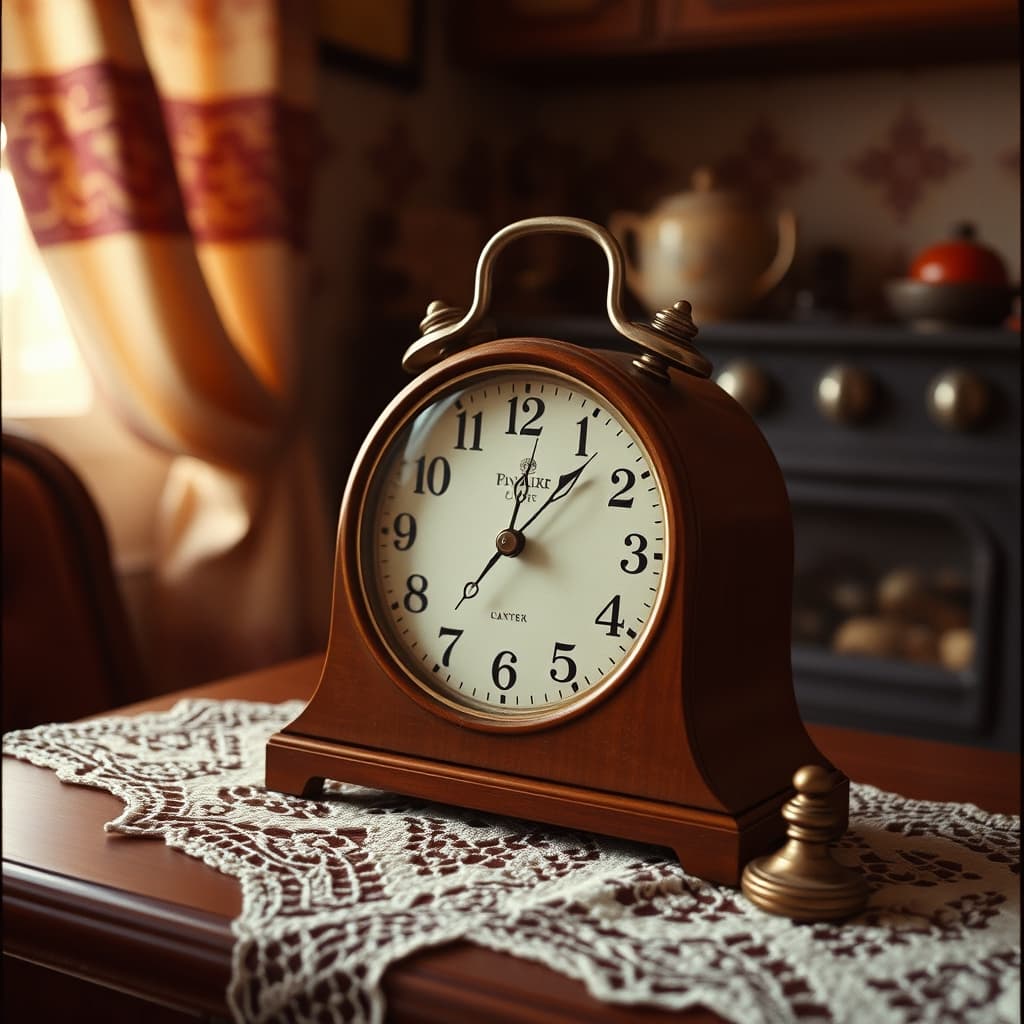
A winding clock in a grandmother's house could become part of the room's architecture. Its tick remained while conversations paused, meals arrived, visitors removed coats, and the stove settled. Someone wound it on a familiar day and adjusted the hands after a stoppage. The corner appeared unchanged, although the clock required repeated attention to create that impression of permanence.
Household clocks differ widely: wall, mantel, bracket, alarm, regulator, and carriage forms use varied movements, cases, pendulums, balances, striking trains, and winding intervals. A family name for a clock may not identify its type or origin. Maker marks, movement photographs, repair inscriptions, catalogues, receipts, and professional examination provide firmer evidence than style alone.
Winding Turned Time into a Task
A key transferred energy into a mainspring or raised a weight, depending on the mechanism. Separate winding points might power timekeeping and striking. Overwinding is often blamed when a clock stops, but hardened lubricant, wear, dirt, a broken spring, poor level, or an obstructed train may be responsible. Forcing the key can injure the user and damage gears or the spring barrel.
The household ritual mattered because it assigned responsibility. A weekly winding could accompany dusting, opening shutters, preparing tea, or checking a calendar. If the usual person travelled or became ill, silence exposed how much maintenance had been taken for granted. The clock organised routines while relying on human memory to keep organising them.
The Chime Divided Domestic Time
Hour and half-hour strikes marked sleep, school departure, cooking, medication, radio programmes, and expected visitors. They could reassure one resident and disturb another. Infants, night workers, ill family members, and light sleepers experienced the same chime differently. Some households stopped the striking train or muffled sound, but improvised interference can damage a mechanism and should be assessed carefully.
Mechanical time was not perfectly uniform. Temperature, position, pendulum length, wear, and power state affected rate. Owners compared the clock with radio signals, a wristwatch, mosque or church clocks, workplace sirens, or public time. A small daily error might be accepted as part of domestic life; precision needs should not be projected backwards without evidence.
Repair Preserved More than Accuracy
A clockmaker listens, checks level and beat, inspects pivots and bushings, evaluates springs and teeth, cleans appropriately, and lubricates specified points sparingly. Spraying household oil into a movement attracts dirt and may stain the case. Mainsprings store dangerous energy, so dismantling belongs to trained hands with suitable tools and eye protection.
Cases also carry history. Sun fading, key scratches, smoke deposits, a replaced glass, or a handwritten service date can connect the clock to a particular wall and period. Aggressive refinishing may erase labels, original coating, and evidence. Stable conservation, documented repair, and retention of replaced parts often tell a more honest story than a flawless shine.
Moving a clock requires securing or removing the pendulum and weights according to its design, protecting the hands and glass, keeping keys labelled, and avoiding pressure on decorative elements. A clock should not be lifted by a weak top ornament. After relocation, professional setup may be needed. Simply hanging it at the same visual angle does not ensure a correct beat.
A Digital Nostalgia Archive can connect the clock with keys, service notes, room photographs, furniture plans, radio schedules, diaries, recordings, and family accounts of who wound it. The unchanging corner shaped ritual because mechanical time and domestic care continually met there. Preserving the object means recording its sound and inaccuracies, while naming the maintenance that allowed generations to remember it as always running.