 Eski Pano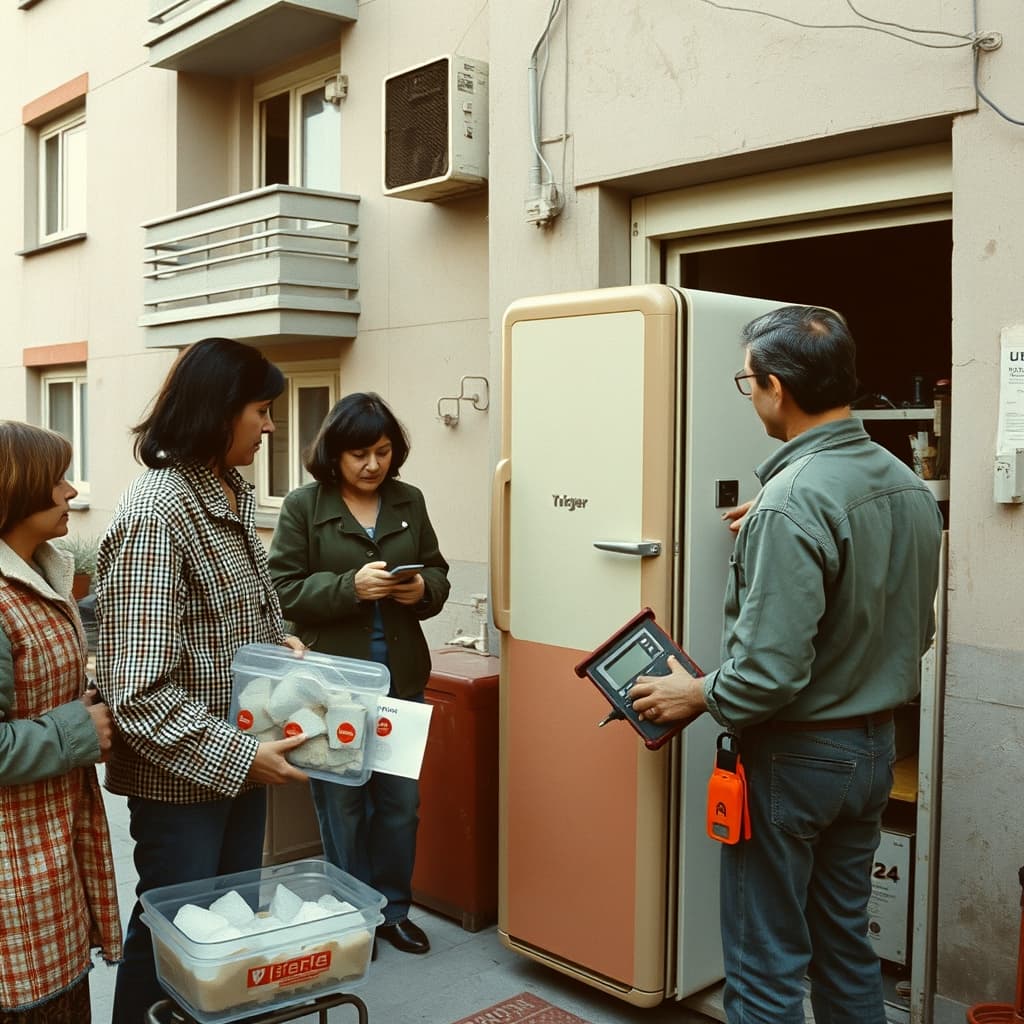
A failed refrigerator turned a private appliance into an apartment-wide concern. A motor fell silent, ice softened, water appeared under the door, and food acquired a deadline. Someone telephoned a repairer, often using a shared line or a neighbour's number, while containers moved temporarily to another household's shelf. The wait exposed how deeply refrigeration had entered urban routines.
Refrigerators varied by decade, manufacturer, insulation, controls, compressor, refrigerant, and whether they used an icebox, manual defrost, or later automatic systems. The same symptom could have different causes. A warm cabinet might result from power loss, a thermostat, door seal, blocked airflow, relay, compressor, refrigerant leak, or user setting. Accurate history and repair both require model-specific evidence.
Food Safety Set the Clock
Residents first needed to protect people, not the appliance. Keeping the door closed slows warming, but perishable food cannot remain indefinitely at unsafe temperatures. Current public-health guidance should determine when meat, dairy, cooked dishes, and other vulnerable foods must be discarded. Smell and appearance alone cannot establish safety, and tasting doubtful food is not a valid test.
Neighbourly freezer space, insulated containers, and purchased ice could reduce loss if used hygienically without cross-contamination. Labels prevented confusion over ownership and allergens. Yet not every neighbour had spare capacity, and accepting help could feel uncomfortable. The incident revealed unequal appliance access, household budgets, caregiving demands, and the emotional cost of throwing away food.
Diagnosis Built or Broke Trust
A repairer asked when the fault began, listened to the compressor, checked supply voltage, controls, seals, frost pattern, airflow, and temperatures, then explained options. Replacing a visible part without testing could waste money. A clear estimate distinguished visit, labour, component, refrigerant work, transport, and warranty. Consent before additional work protected both technician and household.
Apartment residents judged reputation through previous visits, the building caretaker, local appliance shops, and word of mouth. Familiarity made access easier, but a worker entering a home still required identity checks, respectful boundaries, safe workspace, and transparent payment. Children and pets needed separation from tools, exposed wiring, sharp panels, and chemicals.
Cold Systems Carried Hidden Hazards
Electrical isolation is essential before internal work. Capacitors can retain charge, compressors become hot, and heavy appliances can tip or injure backs. Refrigerant circuits must be handled by qualified technicians using appropriate recovery, leak detection, ventilation, and legal procedures. Venting refrigerant is unsafe and environmentally harmful; modern and legacy refrigerants have different risks.
Not every old refrigerator should return to service. Damaged insulation, unavailable safety parts, high energy use, corrosion, repeated leakage, or an uneconomical compressor may justify replacement. Responsible disposal requires refrigerant recovery and authorised recycling rather than abandonment on a pavement. Repair culture includes knowing when continued operation is unsafe.
The apartment setting shaped the visit. Narrow stairs, no lift, shared entrances, caretaker schedules, parking, and neighbours' working hours affected access. A service call could become a corridor event, with advice and stories exchanged between doors. That sociability is memorable, but it should not erase the technician's time, travel, physical effort, or right to safe conditions and fair payment.
A Digital Nostalgia Archive can connect refrigerators with manuals, warranty cards, service receipts, parts, advertisements, apartment plans, energy bills, municipal disposal records, and interviews with residents and technicians. The waiting repairer belongs to city memory because a breakdown made household dependence visible. Preserving the scene means recording neighbourly improvisation alongside food loss, skilled diagnosis, electrical danger, refrigerant responsibility, and the changing economics of repair.