 Eski Pano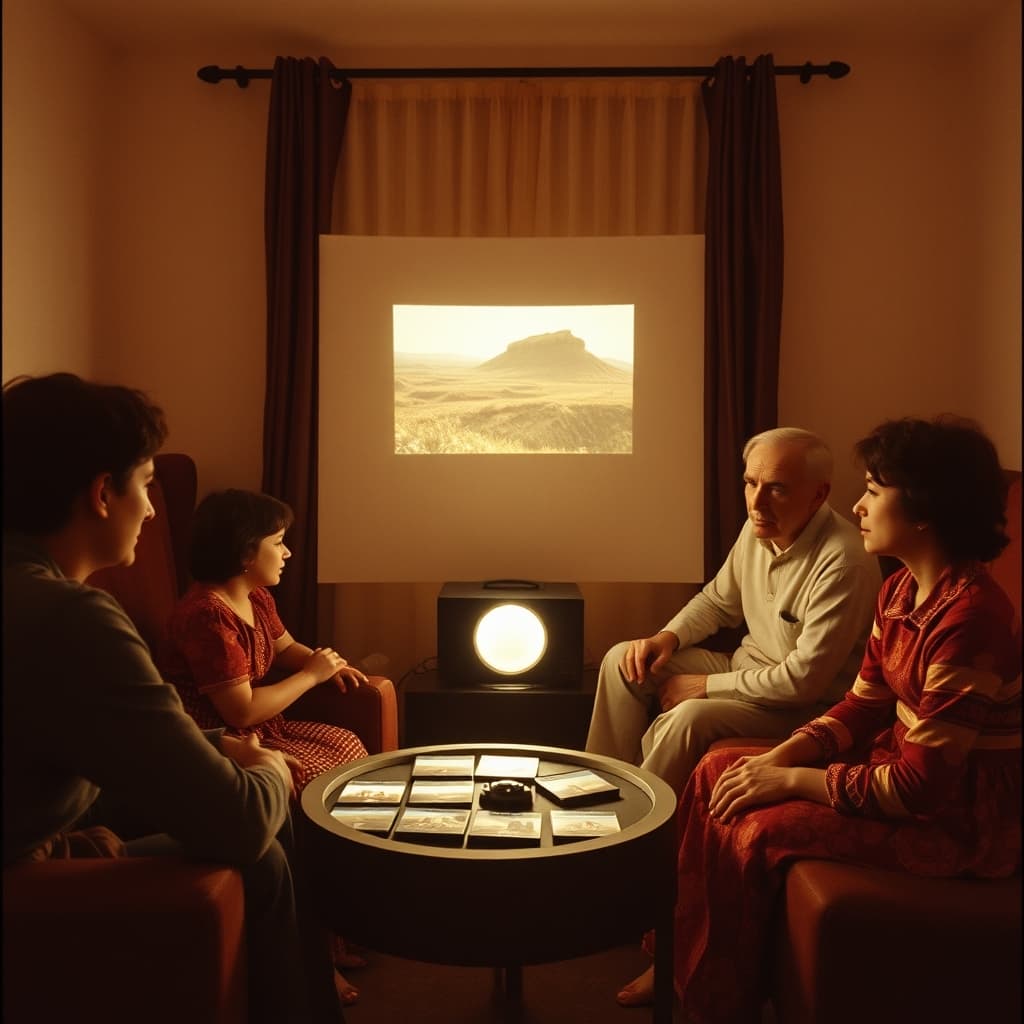
A slide projector could turn a sitting-room wall into a distant coastline, wedding, school trip, or street visited years earlier. Curtains closed, chairs shifted, and family members waited while the machine warmed. Each click replaced one luminous rectangle with another. The show was more than a group of photographs: sequence, interruption, commentary, and recognition made it a domestic performance.
Equipment and formats varied. Thirty-five-millimetre colour transparencies were common, but larger and smaller formats, straight magazines, circular trays, manual viewers, and different projection systems also existed. Mounts could be cardboard, plastic, glass, or metal. Film stock, processing laboratory, date, and storage history influence colour and stability, so identification should begin with edge markings and original boxes.
Order Created a Family Story
Someone selected the slides and placed them into a magazine. Holidays might follow chronologically, while a celebration could mix portraits, scenery, and comic mistakes. Reversed or upside-down slides caused laughter and quick correction. Numbers pencilled on mounts, tray lists, and spoken introductions preserved an editorial structure that can disappear when images are scanned as unrelated files.
The narrator supplied names, places, missing events, and family opinions. One person remembered the hotel; another corrected the year. Contradiction is useful evidence rather than a problem to hide. Archivists should record who identified each scene, when the identification occurred, and whether it is certain. A confident voice in a dark room is not automatically accurate.
Bright Projection Came with Heat
Projector lamps produced significant heat, and fans, vents, gates, and timing protected both machine and film. A jammed slide left too long could buckle or scorch. Old electrical cables, plugs, capacitors, and improvised adapters need professional assessment before use. Ventilation openings must remain clear, and a projector should stand securely away from curtains, drinks, children, and crowded walking paths.
Focus, screen distance, room darkness, lens condition, and mount flatness shaped image quality. Dust appeared enormous on the wall. Cleaning requires an air blower and film-appropriate methods rather than household glass cleaner or rough cloth. Glass mounts may trap moisture or crack; opening them without conservation knowledge risks scratches and fingerprints.
Colour Carries a Storage History
Some transparency films retain colour well, while others shift toward red, magenta, blue, or yellow depending on chemistry and storage. Projection itself adds light and heat exposure. Cool, dry, dark, stable storage slows deterioration, but recommendations differ by material. Original mounts and annotations should remain linked even if damaged enclosures are replaced after documentation.
Digitisation can reduce handling and make family access easier. A good workflow captures sufficient detail, manages colour consistently, keeps unedited master files, records mount information, and creates access copies. Automated correction should not overwrite the original colour evidence. File names need slide number, sequence, collection, and side orientation, supported by multiple verified backups.
Privacy deserves deliberate review. Slides may show children, private interiors, medical situations, military service, ceremonies, or people who never expected public circulation. Family ownership of a physical slide does not settle every consent or copyright question. Access levels, takedown procedures, culturally sensitive description, and consultation with depicted people can prevent a warm family show from becoming unwanted exposure.
A Digital Nostalgia Archive can connect transparencies with cameras, projectors, tray lists, processing envelopes, travel documents, diaries, maps, and recorded family narration. The slide machine captured analogue excitement because images appeared collectively and then vanished with a click. Preserving the experience means keeping image, order, voice, equipment, uncertainty, and privacy together rather than treating the illuminated frame as a solitary picture.