 Eski Pano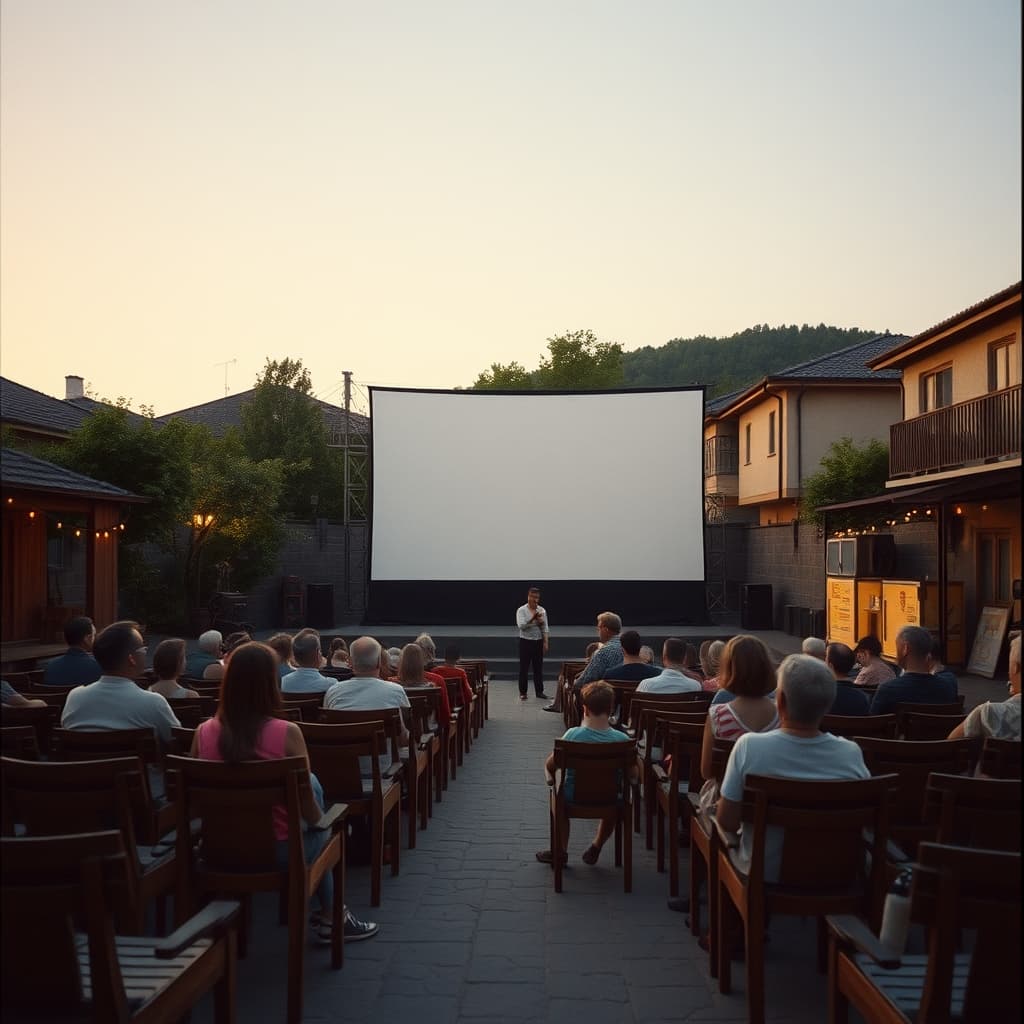
A summer cinema could change an ordinary courtyard after sunset. Chairs formed rows on packed earth or paving, a white screen rose above a wall, and the projection beam crossed warm air carrying dust and insects. People arrived with neighbours, children, snacks, and expectations shaped by posters or word of mouth. The film mattered, but so did the temporary public room assembled beneath the sky.
Open-air cinemas differed by town, decade, ownership, and scale. Some occupied purpose-built gardens; others used schoolyards, terraces, vacant plots, or touring equipment. Admission, seating, programming, and gender conventions varied. Memories of one beloved venue should not be treated as a national template. Licences, advertisements, ticket stubs, maps, distributor records, and oral histories help identify how a particular cinema worked.
The Night Began before the Projector
Staff cleaned the ground, arranged chairs, checked exits, repaired the screen, tested speakers, and prepared the booth. Reels had to arrive from a distributor, sometimes already scratched or incomplete after repeated circulation. A projectionist inspected joins, threaded the machine, focused the image, changed reels, and watched for faults. Ticket sellers, ushers, cleaners, vendors, and nearby trades all contributed to the evening.
Projection involved heat, electricity, moving mechanisms, and historically flammable film stocks in some periods. Proper booth construction, ventilation, rewinding practice, fire precautions, and trained operation were essential. Modern demonstrations of old equipment should follow current conservation and safety guidance. The romance of a beam in the dark should not obscure the technical discipline that kept audiences safe.
The Neighbourhood Entered the Soundtrack
Unlike an enclosed auditorium, the summer cinema mixed film sound with traffic, vendors, dogs, calls from balconies, wind, and an occasional aeroplane. Residents outside the walls could hear dialogue or music without seeing the picture. That permeability created shared atmosphere and also conflict. Late screenings, loud amplification, and crowds affected sleep, work, and people who had not chosen to attend.
Weather governed the programme. Wind could trouble the screen, rain cancel a show, and cool nights alter attendance. Light from streets or neighbouring buildings weakened the image. Managers balanced seasonal demand with uncertain costs, while workers faced irregular hours. A crowded Saturday did not guarantee a stable livelihood across the year.
A Public Night Was Not Equally Open
Ticket price, distance, curfews, family permission, disability access, language, and social expectations determined who could participate. Steps, narrow aisles, rough ground, and distant toilets excluded some viewers. Children might attend with adults or watch from rooftops and cracks in walls, a charming memory that could also involve unsafe climbing and unequal access.
Programming connected local audiences to national and international film industries. Censorship, distribution monopolies, delayed prints, and commercial assumptions shaped what reached the screen. Posters and recollections may preserve star names more readily than technicians, cleaners, or local organisers. A fuller history names both the glamour and the infrastructure.
Many summer cinemas closed as land values, television, indoor venues, changing leisure, traffic, and redevelopment altered the city. Their disappearance could leave a supermarket, apartment block, car park, or an empty parcel whose former use is no longer visible. Locating the exact footprint through cadastral maps and photographs prevents a vague neighbourhood memory from drifting to the wrong corner.
A Digital Nostalgia Archive can connect programmes, tickets, posters, film cans, projection logs, permits, weather reports, site plans, photographs, and voices from audiences and workers. Summer cinemas still ache in memory because a repeatable commercial event felt singular each night. Preserving them means keeping the stars and warm stones, but also the labour, machinery, access limits, noise, risk, and urban change that made the screen possible.