 Eski Pano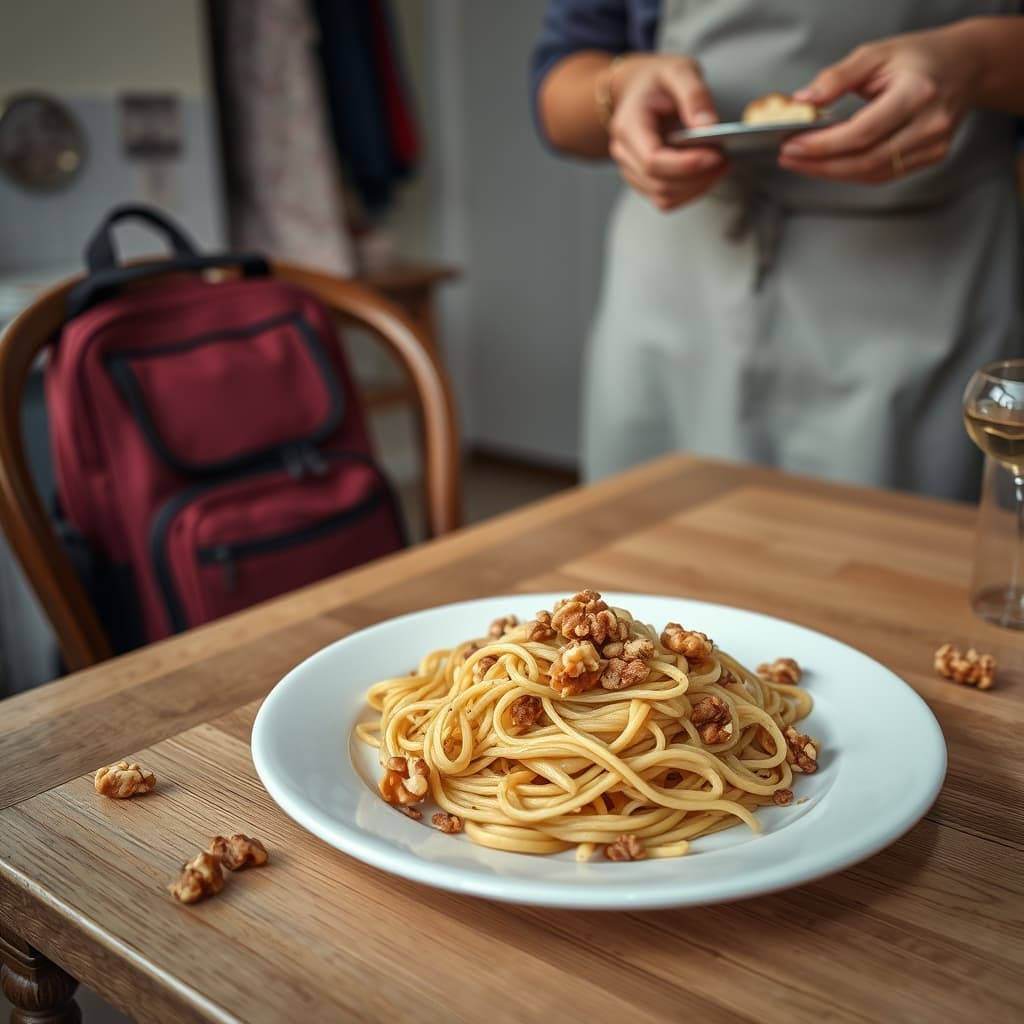
The first spoon after school met a dish prepared long before that afternoon. In walnut erişte, the noodles might come from an earlier session of rolling, cutting and drying, while the nuts had their own journey through purchase, gathering or storage. A warm plate joined these separate preparations. Its seasonal meaning came not simply from autumn sentiment, but from the household’s ability to turn stored ingredients into an immediate meal.
Erişte refers to noodles, with ingredients, thickness and cooking methods varying between households and regions. A dish described as erişte pilaf need not contain rice; its name can reflect a style of preparation. Walnut additions likewise differ. This account follows the relationship between pantry and plate rather than offering a full recipe or claiming one original version.
The Noodle Had a History Before Cooking
Hand-cut noodles could reveal slight differences in width and length. That variation affected how they softened and how the plate felt to eat. Where a family made noodles together, the work might be divided among mixing, rolling, cutting, laying out and storing. Such participation should be attributed to actual testimony rather than assumed of every home.
Bought noodles also belong to food memory. They could accommodate time, space, ability or preference, and should not be treated as less worthy of family affection. A useful record notes the source and form without ranking households by the amount of labour performed. The plate could be familiar even when the preparation changed.
Walnuts Added More Than a Garnish
The size of the broken nut pieces influenced texture. Fine fragments distributed flavour, while larger pieces interrupted the softness of the noodles with a distinct bite. Toasting, adding nuts during cooking or scattering them at serving produced different effects, but none belongs automatically to every remembered version. Ask when the walnuts entered the dish and who prepared them.
Nut freshness and storage mattered too. An unpleasant or rancid taste could spoil the expected comfort. Modern preparation should follow current food-safety guidance, and nuts require attention to allergies. Historical recollection is not a substitute for safe storage or serving decisions. The cultural account can acknowledge those needs without turning into a prescriptive kitchen manual.
Warmth Came With Timing
The cook had to judge when the noodles were ready and when the child would arrive. Fat, liquid and resting affected whether the dish was separate, soft or more closely gathered. Butter, oil, cheese or other accompaniments appear in some homes, not all. The precise combination explains memory better than a list assembled from several regional dishes.
A late arrival could change the plate. Reheating or waiting altered temperature and texture, while the person serving might reserve a portion or call everyone at once. The first spoon therefore remembered a schedule as well as a flavour. School, work and kitchen routines met at the table; they did not always align easily.
The Pantry Bridged Different Moments of Work
During seasonal change, stored foods can make earlier preparation visible in later meals. That relationship does not prove that every batch was made at a fixed harvest date. Families bought or prepared ingredients at different times. Record actual dates when known and use cautious seasonal language when the source remembers only a general period.
Photographs of noodles, containers, nut shells and the finished plate can preserve the sequence with consent. Label a present-day reconstruction clearly. An oral-history record might ask about cutting tools, storage places, portion size and the serving dish. Conflicting recollections of butter or walnut quantity can remain attributed versions instead of being forced into one family formula.
The after-school plate was the visible end of a longer chain: noodles made or chosen, nuts kept and broken, a pot watched and a portion timed. Walnut erişte carries the passage between seasons through those material decisions. To preserve its memory, keep the pantry and the cook in the frame, not only the spoon that reached the table first.