 Eski Pano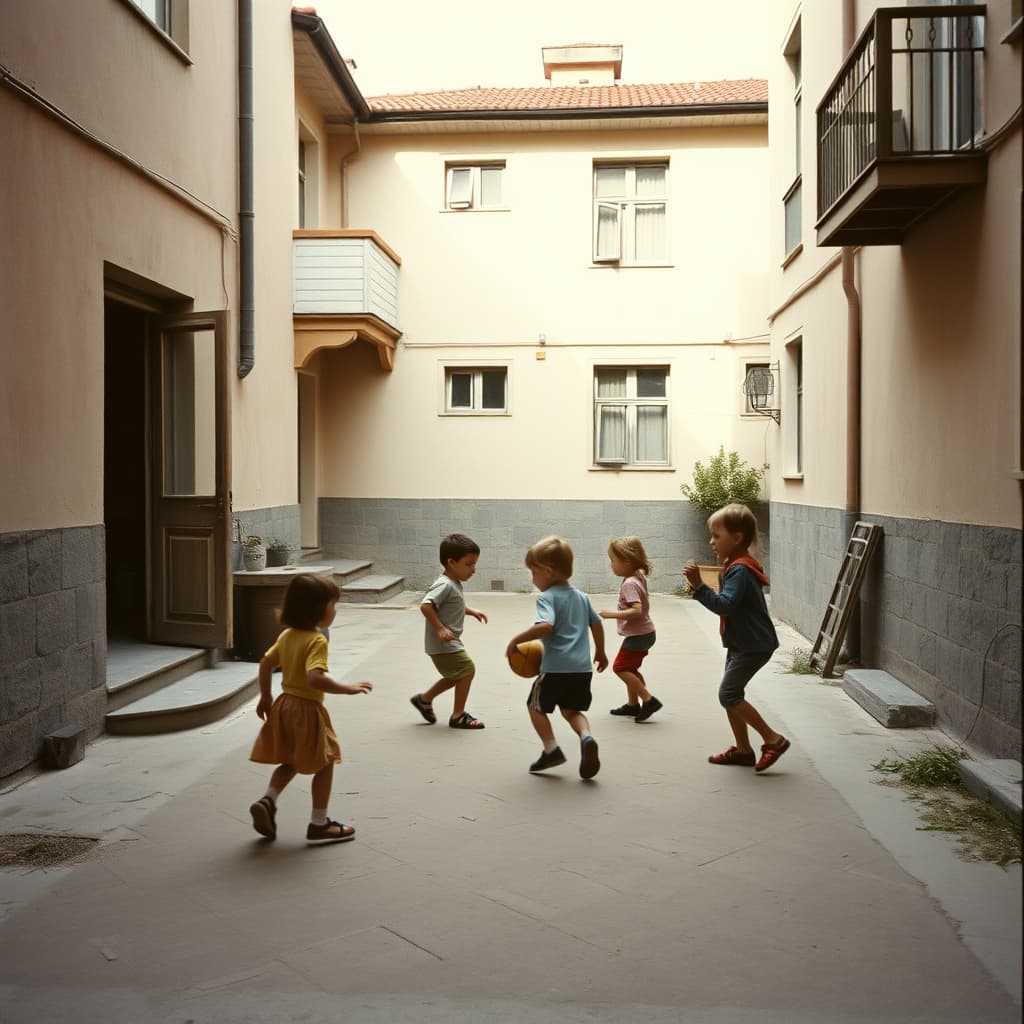
A ball rolling between two doorways could bring children together before anyone called it an organised activity. One child arrived from school, another heard the game and joined, and the group changed as doors opened. What made the scene feel like neighbourhood life was not the ball alone. It was the repeated chance to meet the same people, recognise their households and resume an unfinished game without arranging every encounter in advance.
Comparisons with present-day housing compounds often begin by declaring that this warmth has disappeared. That conclusion is too broad. Some compounds offer active friendships and shared play; some older streets excluded children or exposed them to serious danger. The more useful comparison asks how physical access, schedules, traffic and adult relationships shape the possibility of recurring informal play.
A Game Needed Permission, Even When It Looked Spontaneous
Children used available stretches of pavement, small courtyards or quieter sections of road. Those spaces also served pedestrians, deliveries and residents entering their homes. Play therefore depended on negotiation: moving aside, retrieving a ball, pausing for a vehicle or accepting a complaint. A street was never empty simply because a photograph shows children in it.
Permission could be informal and unequal. Older children might control the best space, younger ones wait, and girls or newcomers encounter different expectations. A warm memory of belonging may not describe everyone’s experience. Asking who joined, who watched and who was told to leave reveals the actual boundaries of the group.
Recognition Made Supervision Possible, Not Automatic
Adults at windows, doorways or nearby shops could recognise the players and contact a household when needed. Repeated acquaintance helped, but recognition did not guarantee attentive supervision or safe conditions. Traffic, damaged surfaces, weather and conflict remained hazards. Older neighbourhood play should not be promoted as a safety model merely because it was memorable.
The relationship also went both ways. Children learned when a doorway had to remain clear, which neighbour disliked noise and where a lost ball could be requested politely. These exchanges could produce trust or tension. Documenting the ordinary interruptions explains neighbourhood culture more clearly than a claim that all adults cared for every child equally.
Why a Purpose-Built Play Area Can Still Feel Empty
A designated court supplies equipment and boundaries, but not necessarily overlapping free time. School transport, family routines, age distribution and rules about visitors can affect who arrives together. A technically good facility may be quiet because encounters are rare, while a modest shared space becomes lively through repetition. This is a possible explanation, not a diagnosis of every housing development.
Conversely, planned spaces can offer advantages that a traffic-filled street lacked: separation from vehicles, clearer access and places for adults to stay nearby. Their social life can grow through welcoming routines and flexible participation. The question is not whether the past should be copied, but which conditions let children meet repeatedly without sacrificing inclusion or safety.
Ask About the Route Home, Not Only the Match
An oral history of ball play can map where children came from, who supplied the ball, when the game stopped and how parents knew where they were. Record interruptions and exclusions alongside memorable goals. A photograph identifies a moment; it cannot establish that play happened every afternoon or that every neighbour approved.
Contemporary observation needs consent and protection of children’s identities. Avoid publishing precise routines, addresses or names that create risk. Comparisons should also separate personal testimony from claims about a whole city. A single lively street and a single quiet compound cannot prove a historical decline in community.
The warmth remembered around a ball was built through return: the same route after school, familiar faces and permission renegotiated in small exchanges. It could survive in a courtyard, compound or public park when those conditions exist. Preserving that memory means identifying its working relationships, not using childhood affection to dismiss every place where children play today.