 Eski Pano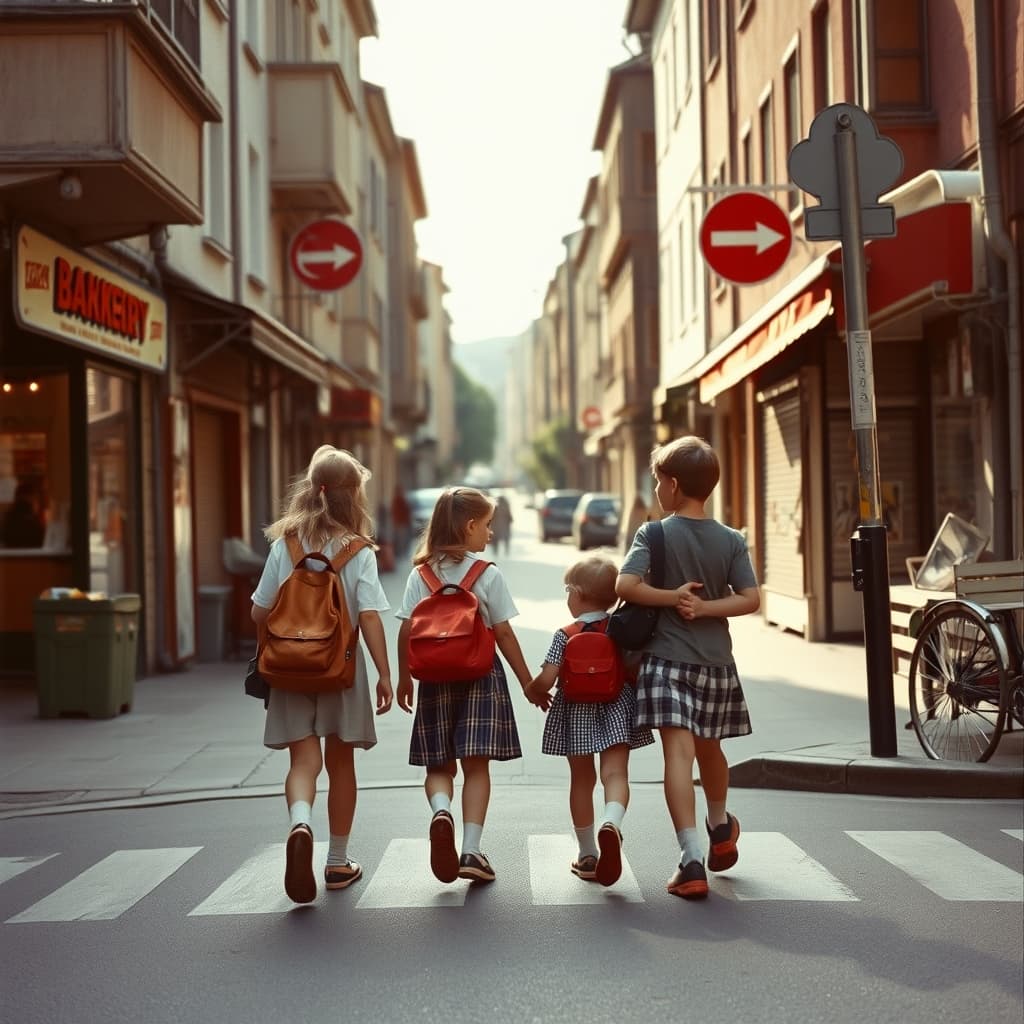
Before school transport became common in many areas, groups of children turned the morning pavement into a route learned by repetition. They met at a corner, adjusted satchels and walked past the same bakery, grocer and repair shop. The journey offered companionship and local knowledge, but it also required judgement about traffic, strangers, weather and time.
Distance and experience varied widely. Some pupils crossed only a few quiet streets; others travelled long routes, steep hills or busy roads. Girls, younger children, disabled pupils and those carrying heavy bags could face different risks. A fond memory of independence should not be used as a universal plan for children today.
The Group Created Its Own Timetable
One child called at another's door, late arrivals were urged to hurry and shortcuts were debated. Older pupils sometimes guided younger ones. The route taught where pavements narrowed, which crossing offered visibility and how long the final hill took. This practical geography accumulated outside formal lessons.
Weather changed the system. Rain made stones slippery, winter darkness reduced visibility and summer heat increased thirst. Shoes, coats and bags mattered. A child without suitable clothing experienced the same route differently, revealing how mobility and household resources intersected.
Shopkeepers Became Familiar Reference Points
The baker opening early, grocer arranging crates or newspaper seller at the corner made the street feel observed. Children greeted them, bought a small item or asked the time. In an emergency, a known shop could offer a telephone or adult assistance. Repeated contact strengthened connection between household and local commerce.
Familiarity, however, is not a safeguarding system by itself. Adults can misunderstand danger, and known people are not automatically safe. Clear family rules, reliable crossings, school supervision, age-appropriate independence and trusted emergency procedures are more important than romantic confidence that “everyone knew everyone.”
The Walk Linked Education to Local Economy
Pocket money entered bakeries and stationers. Shopkeepers stocked pencils, notebooks and quick breakfasts around school demand. Children learned prices and small transactions. This relationship could support local businesses, although marketing and unhealthy purchases near schools also raised concerns.
Motor traffic, school consolidation, urban growth and parental work patterns changed walking routes. School buses and private cars solved some distance problems while adding congestion at gates. Safe walking initiatives now require pavement maintenance, speed control, accessible design and consultation with children.
Arrival at school completed the route but created another transition. Wet coats needed hanging, late pupils had to explain delays and groups separated into classrooms. Bicycle racks, cloakrooms and gate supervision are therefore part of walking history, showing how the institution received children who reached it under their own power.
A Digital Nostalgia Archive can map routes using school photographs, shop directories, crossing records and oral histories from pupils, parents and traders. Exact years matter because one demolished building can alter a remembered path. The old walk remains meaningful not because it proves the past was safer, but because it shows how education began before the classroom. Children learned timing, negotiation and the shape of their neighbourhood while adults and businesses formed an imperfect network around their daily passage.