 Eski Pano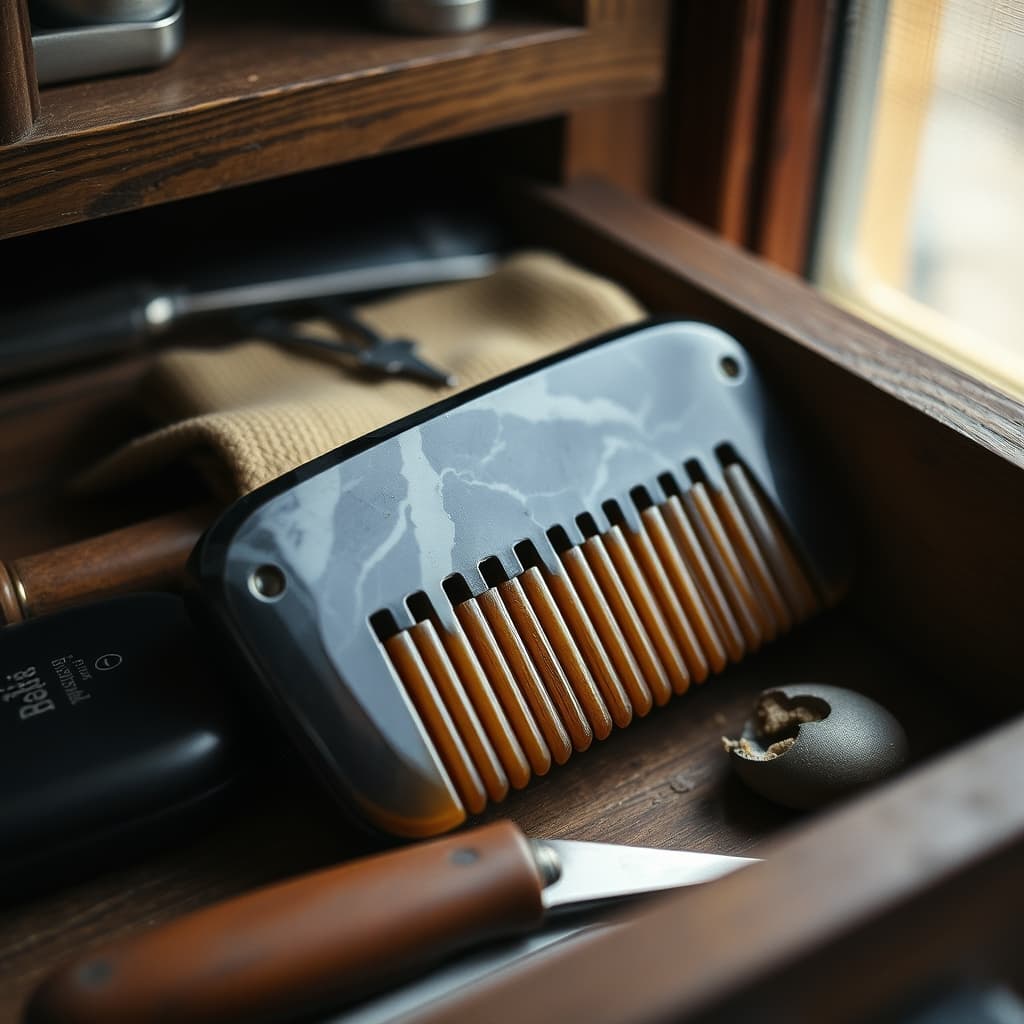
A comb can pass through daily life so quietly that its history becomes visible only after use stops. Teeth grow polished, edges soften and one narrow point may break. Kept in a barber's drawer, handbag or washstand, the object records repeated contact more clearly than a decorative piece used only on special occasions.
Many old dark combs are casually called Bakelite, but identification is not always simple. Phenolic resin, celluloid, hard rubber and later plastics can resemble one another after decades of wear. Colour and weight alone are insufficient. Destructive tests, heated needles and chemical rubbing can damage an object or release unsafe fumes and should not be used as casual collector tricks.
Moulding Turned Material into Pattern
Early plastics allowed manufacturers to create consistent teeth, curved handles and marbled colours without carving every example by hand. Fine-toothed and wide-toothed sections served different grooming tasks. Decorative ridges improved grip and expressed period taste. Mould seams, tool marks, patent numbers and maker names help distinguish production methods.
Design balanced flexibility and stiffness. Teeth needed to pass through hair without bending permanently, yet brittle material could snap when dropped or forced through a knot. A broken tooth is evidence of stress and may create a sharp edge. Historic combs with damage are better treated as collection objects than returned to personal grooming.
Hygiene Was Part of Professional Use
In a barber shop, combs moved between client, basin and drawer. Cleaning practices changed over time as knowledge and regulation developed. An old photograph may show a jar on the counter, but it cannot prove that a tool was disinfected effectively. Shared grooming tools require modern infection-control standards, not nostalgic imitation.
Hair, oils and product residue collect between teeth. For a museum object, dry or minimally invasive cleaning under appropriate guidance is safer than soaking unknown plastic. Some early materials react badly to water, alcohol, heat or sunlight. A strong odour, sticky surface or visible deformation may indicate deterioration requiring isolation.
Wear Can Reveal Ownership and Taste
A personalised case, barber mark or family photograph connects a comb to a specific life. Without provenance, claims about a famous owner or exact date remain speculation. Retail boxes, advertisements and catalogues can establish style ranges and prices, showing how an inexpensive grooming tool participated in modern consumer culture.
Storage should keep teeth supported and prevent pressure from heavier objects. Stable, cool, dark conditions slow many forms of plastic degradation. The comb should be separated from vulnerable paper and textile if it is emitting residues. Condition changes need dated photographs.
Comb cases deserve equal attention. A simple sleeve prevented teeth catching on other objects and kept residue away from a handbag. Stitching, snaps and lining can establish whether a case was sold with the comb or improvised later by its owner.
A Digital Nostalgia Archive can record dimensions, translucency, colour, marks, damaged teeth and associated stories without overclaiming material. The Bakelite comb reflects its era through more than fashionable colour. It represents the arrival of moulded goods in intimate routine, the practical discipline of grooming and the invisible accumulation of touch. Preserving it well means respecting those traces while accepting that an object once designed for constant use may now be too fragile to use again.