 Eski Pano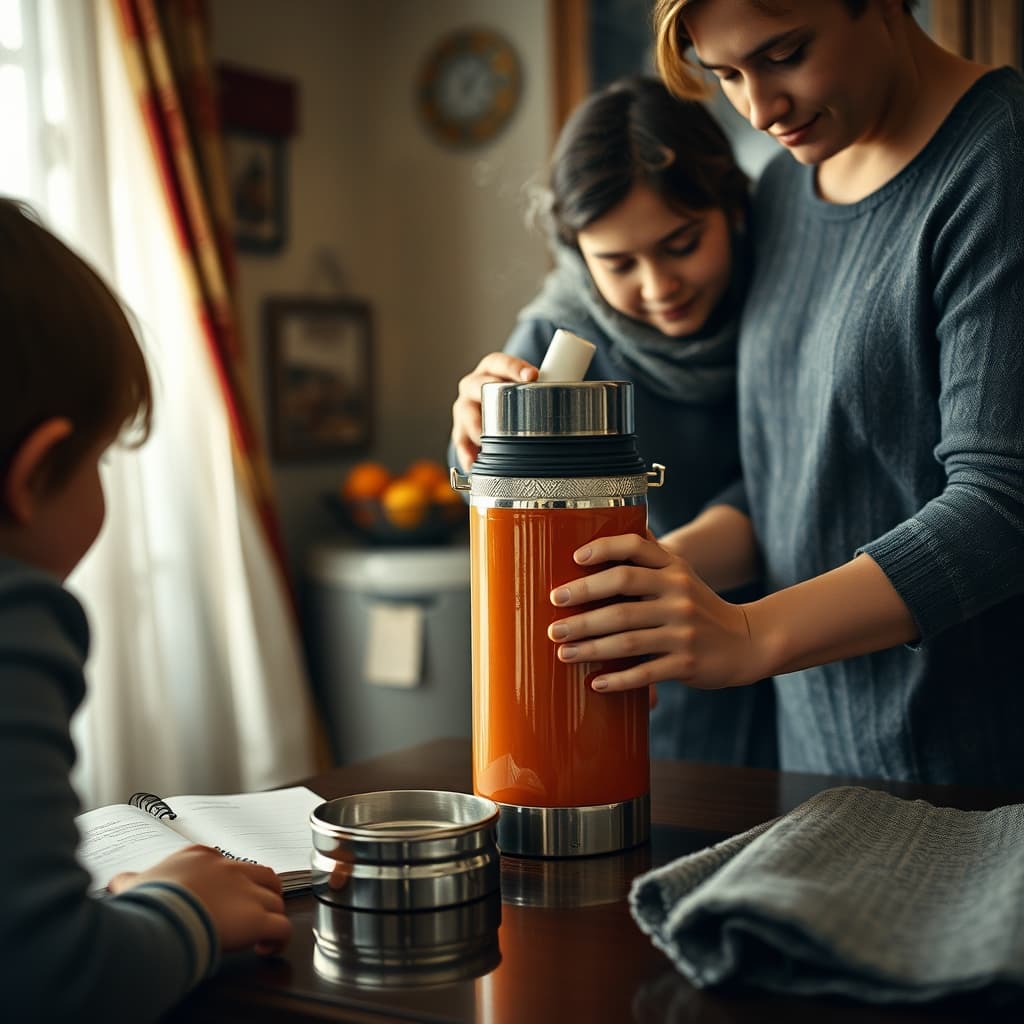
A food thermos brought down during holiday cleaning could regain a shine that made it look ready for another journey. Its polished lid, carrying handle, enamel colour, or stainless-steel body recalled meals sent to a workshop, field, hospital, school, picnic, or relative's house. The object shaped domestic ritual because it allowed care to travel while keeping a dish warmer or cooler than an ordinary pot.
Food thermoses vary widely. Some are double-walled steel containers, some have glass vacuum liners, and others are stacked tiffin-style carriers with limited insulation. Plastic, aluminium, enamel, cork, rubber, silicone, and plated metal may appear in one object. Capacity, date, manufacturer, damage, and intended use should be identified before making claims about performance or cleaning.
Packing a Meal Extended the Household
Soup, stew, rice, beans, stuffed vegetables, yoghurt, or a complete layered meal could be carried beyond the dining room. A thermos linked the cook to a worker who could not come home, a patient receiving familiar food, children on a journey, or relatives preparing for a crowded visit. Recipes and uses changed by region, income, season, transport, and the container's design.
The gesture of sending food was affectionate, but it required planning. Someone bought ingredients, cooked at the right time, preheated or chilled the vessel when appropriate, filled it without spilling, wrapped cutlery, organised delivery, recovered the container, and washed it. Women often coordinated this chain. Recording that labour keeps the thermos from becoming a sentimental symbol detached from the people who made the meal possible.
Holiday Cleaning Was Inspection as Well as Shine
Seasonal cleaning emptied cupboards and brought rarely used objects into view. The thermos might be washed, dried, polished, aired, and checked for odour. A bright exterior did not prove that its interior was safe. Cracked glass liners, chipped enamel, corrosion, loose handles, damaged threads, degraded gaskets, warped lids, and deep scratches could trap residue or cause failure.
Abrasive powder, wire wool, bleach, boiling water, dishwasher cycles, prolonged soaking, and strongly scented cleaners can damage some materials. A vacuum flask with a glass liner can shatter through impact or thermal shock. Cleaning should follow reliable manufacturer guidance where available. Unknown historic objects are better preserved dry and displayed than returned to food use without expert assessment.
Temperature Safety Cannot Be Judged by Memory
Insulation slows temperature change; it does not sterilise food or keep it safe indefinitely. Perishable dishes should enter the container at a safe temperature, the clean vessel should be closed promptly, and holding time should follow current food-safety guidance. Warm conditions favourable to bacterial growth can occur when a seal is poor, the vessel is only partly filled, or food remains for too long.
Reheating does not reliably undo every risk created by improper cooling or holding. Smell and appearance cannot confirm safety. Dairy, eggs, meat, rice, and other ingredients require particular care, while allergens must be declared according to the actual dish and shared utensils. For a community event, trained food handling and local regulations take priority over recreating an old serving custom.
For preservation, the thermos should be photographed closed, open, from below, and with each component separated safely. Marks, dents, repairs, labels, liner material, gasket condition, capacity, and family use belong in the catalogue. Historic food residue should not be tasted. If retained for research, it requires a conservator's advice because organic material can attract pests and damage surfaces.
A Digital Nostalgia Archive can connect the thermos with recipes, lunch routes, work schedules, hospital visits, picnic photographs, purchase receipts, cleaning notes, and the accounts of cooks and recipients. Its holiday shine mattered because maintenance renewed an object associated with practical care. Preserving that meaning means balancing affection with hidden labour, material limits, temperature control, allergen information, and the decision to retire an unsafe container from active service.