 Eski Pano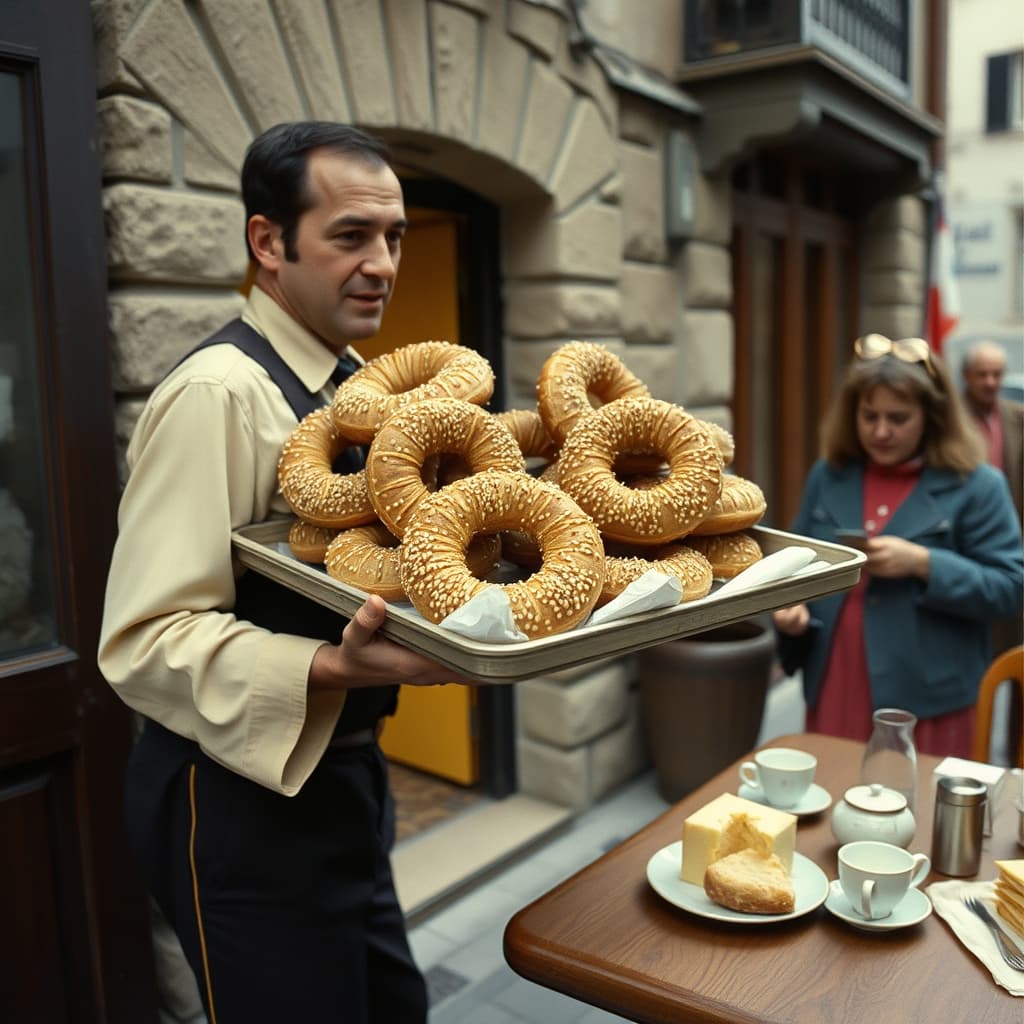
When stone-oven simit reached the table, its toasted sesame aroma could travel through every room before the paper wrapping was opened. The rings might arrive from a neighbourhood bakery at breakfast, after school, or with an early visitor. Their crisp crust and chewy interior made a modest purchase feel like an event shared over tea, cheese, olives, tomatoes, or whatever the household had.
Simit is not one standard product. Shape, thickness, dough hydration, fermentation, twisting, molasses mixture, sesame preparation, oven surface, baking temperature, and final texture vary between cities, bakeries, and periods. Gevrek and other regional names may overlap without being interchangeable. A useful archive records baker, location, date, recipe, flour, coating, oven, and local terminology instead of declaring one version authentic for everyone.
The Ring Was Built through Repeated Skill
Bakers divided dough to consistent weight, rolled strands, joined or twisted them, formed rings, dipped or brushed them with a diluted grape-molasses mixture, and coated them in sesame. Fermentation and handling had to match the day's flour, weather, and production pace. The recognisable shape came from trained hands repeating controlled movements, not from an effortless traditional instinct.
Sesame might be used raw, toasted, or treated according to the bakery's method. Molasses concentration, water, and other ingredients affected colour and crust. Historical recipes should be interpreted carefully because measures, flour strength, yeast, and ovens have changed. A home adaptation can document its differences without claiming to duplicate a commercial masonry oven.
A Stone Oven Was a Working System
The phrase stone oven can describe several constructions and fuels. Hearth material, chamber shape, insulation, firing, retained heat, steam, ventilation, and loading practice influence baking. Smoke and fire were managed by skilled workers under demanding conditions. Romantic images of glowing ovens should not hide burns, flour dust, heat stress, heavy trays, early shifts, fuel handling, and the need for safe chimneys and maintained equipment.
Historic ovens should not be fired for demonstration without structural, fire, ventilation, insurance, and food-safety assessment. Cracked masonry, unstable chimneys, carbon monoxide, unsuitable fuel, and crowded visitor areas can be dangerous. Modern bakery staff need protective practices, clear routes, safe peels and trays, temperature controls, and local regulatory compliance.
The Aroma Connected Bakery and Household Labour
Before a family shared simit, bakers mixed, shaped, coated, fired, loaded, unloaded, counted, and packed. Millers, sesame growers and processors, molasses producers, fuel suppliers, carriers, sellers, and cleaners formed a wider chain. At home, someone bought the rings, prepared tea and accompaniments, called others to the table, fed children, stored leftovers, and cleaned. Both commercial and domestic labour belong in the memory.
Fresh simit changes quickly as moisture moves between crumb and crust. Paper wrapping may protect it briefly without trapping as much condensation as sealed plastic while hot. Food should be protected from dust, pests, fuel residues, dirty surfaces, and unsafe handling. Stale bread can be reused in suitable recipes if it has been stored safely, but visible mould means the whole item should be discarded rather than trimmed.
Wheat and gluten are central allergens, and sesame is also a major allergen. Milk, egg, soy, or other ingredients may occur depending on the recipe and shared equipment. Accurate ingredient and cross-contact information is necessary; colour or texture cannot reveal the formula. Grape molasses contributes flavour and browning but does not transform the bread into a universally suitable health food.
A Digital Nostalgia Archive can connect simit with bakery ledgers, oven plans, peels, trays, flour sacks, sesame sources, molasses vessels, street routes, wrappers, photographs, recipes, and interviews with bakers and customers. The house filled with aroma because a fresh product carried the bakery's heat into domestic time. Preserving that pleasure means keeping regional difference, skilled work, fire safety, food hygiene, allergens, and every hand between grain and breakfast table.