 Eski Pano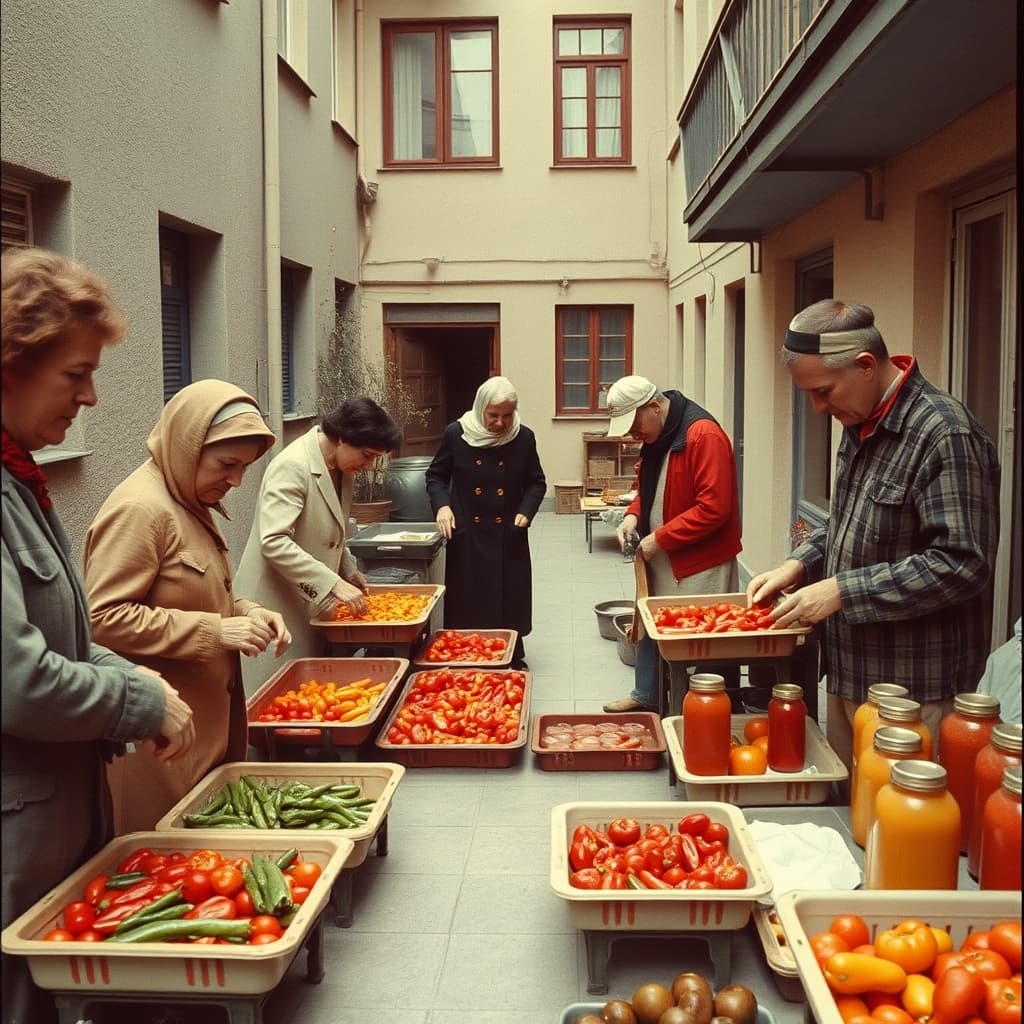
Winter preserving could turn an apartment building into a temporary workshop. Sacks of peppers, tomatoes, aubergines, fruit, or grain arrived within a narrow seasonal window; large pots and trays moved between flats; and a courtyard, balcony, roof, basement, or shared landing became part of production. Neighbours remember those weeks because coordination made a demanding household task visible across several doors.
There was no single apartment tradition. Families dried, salted, fermented, boiled, roasted, ground, froze, or bottled different foods according to region, income, migration history, available equipment, climate, and storage. A story may involve tomato sauce, pepper paste, tarhana, pickles, noodles, jam, dried vegetables, or pulses. Each method has its own safety requirements and should be documented separately rather than merged into one picturesque scene.
Cooperation Began with Timing and Space
Seasonal produce had to be bought, sorted, washed, processed, and stored before it softened or the weather changed. One household might know a market seller, another own a reliable grinder, and another have a sunny balcony or large burner. Sharing reduced cost and duplication. It also required agreements about dates, water, electricity, lift use, cleaning, storage, and whose turn came first.
Common space was never automatically available. Trays could narrow a corridor, smoke and steam entered windows, grinding made noise, and dripping produce stained floors. Residents with allergies, respiratory conditions, night shifts, small children, mobility needs, or no wish to participate experienced the work differently. Cooperation depended on consent, clear passage, reasonable hours, ventilation, and prompt cleaning.
The Collective Was Built on Unequal Labour
Women often planned quantities, selected produce, washed jars, prepared ingredients, monitored cooking, checked drying, labelled containers, and distributed the finished food while also managing paid work and care. Men and children might shop, carry sacks, turn grinders, light fires, or move tables, but roles varied. Calling the process communal should not hide who supplied the longest hours, knowledge, money, or physical effort.
Skill moved through observation and correction. A neighbour demonstrated how thinly to slice a vegetable, how dry a noodle must feel, or how a paste changed colour. Such knowledge is valuable evidence, yet memory is not a substitute for current food-safety guidance. Ingredients, equipment, climate, pathogens, and official recommendations change; an archived method should be recorded as historical practice, not published as universal instruction.
Preserving Required Method-Specific Safety
Low-acid foods in sealed containers can present a botulism risk if processed incorrectly. Oven canning, turning jars upside down, relying only on a lid's pop, or following an unverified family shortcut may be unsafe. Acidity, container size, heat process, altitude, recipe formulation, and storage all matter. Tested guidance from relevant food-safety authorities should govern modern canning.
Fermentation needs suitable salt concentration, clean food-safe vessels, ingredients kept under brine where required, controlled conditions, and attention to spoilage. Drying needs clean produce, airflow, protection from insects and dust, and sufficient final dryness. Freezing depends on reliable cold storage. Smoke, charcoal, or gas burners in enclosed or poorly ventilated apartment spaces create fire and carbon-monoxide hazards.
An archive should photograph the work stages, tools, shared spaces, ingredient sources, labels, storage rooms, and finished containers with dates and consent. Recipes need units, yield, process, source, changes, and uncertainty. Oral histories should include organisers, carriers, children, non-participants, building staff, and neighbours who objected. These perspectives reveal how cooperation was negotiated rather than assumed.
A Digital Nostalgia Archive can connect winter preserving with market receipts, building plans, borrowed equipment, handwritten recipes, municipal water and fire guidance, photographs, and several residents' voices. The habit left a quiet legacy in shared purchasing, tool exchange, and practical teaching. Preserving it responsibly means keeping collective warmth beside unequal labour, food safety, accessible common space, ventilation, conflict, and the right of every neighbour to choose whether to join.